Cat Scratching Furniture? Why It Happens and How to Stop It for Good
Scratching is not a behavior problem. It's a biological need. Block the wrong target, give them the right one, and most cats redirect within 7 to 14 days. Here's the exact protocol.
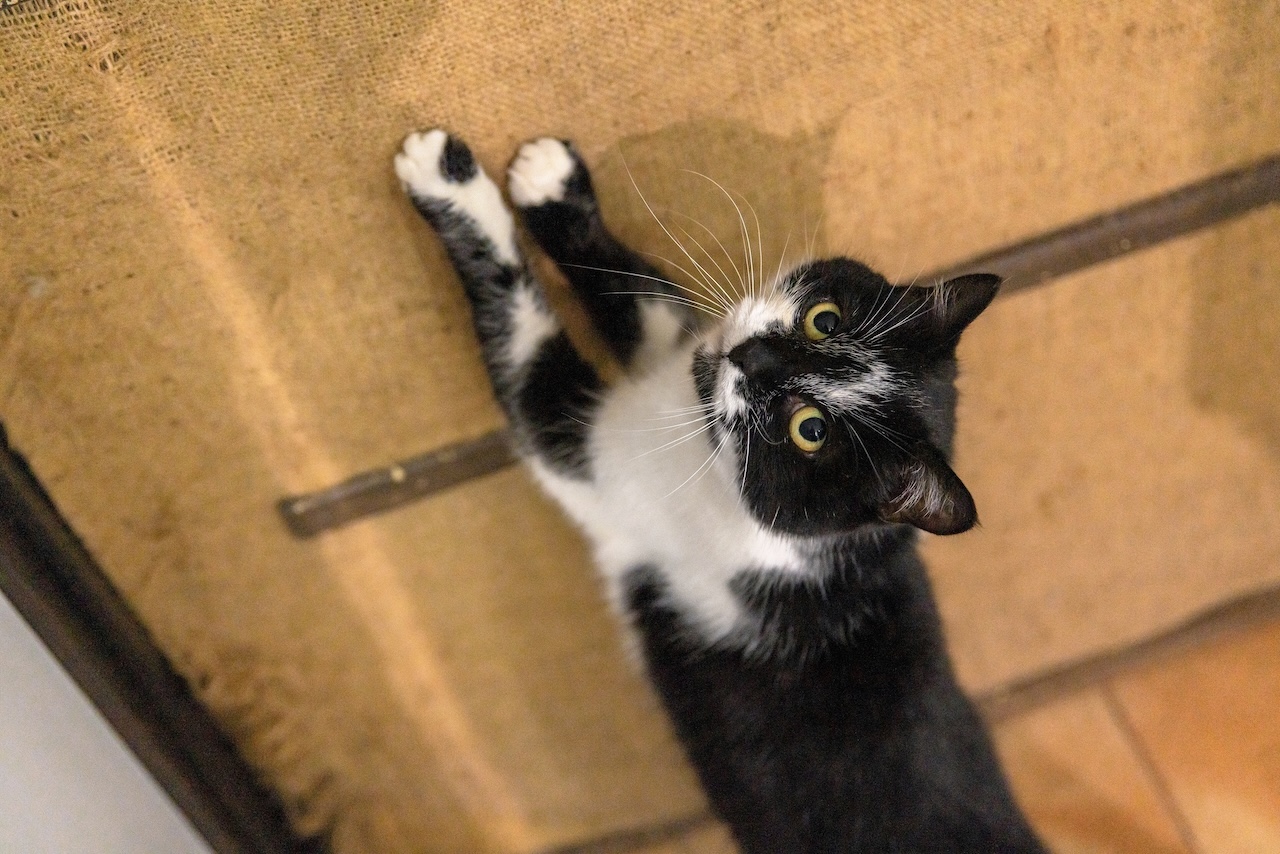
Cats don't scratch furniture out of spite or boredom. Scratching is hardwired. They do it to mark territory with scent glands in their paws, to stretch shoulder and back muscles, and to shed the outer sheaths of their claws. The fix is not to punish the cat or replace the couch. The fix is to make the post more appealing than the furniture and the furniture less appealing than the post. Most cats redirect within 7 to 14 days when this is done correctly.
Why Do Cats Scratch?
Scratching serves four functions, all of them necessary. The ASPCA classifies scratching as a normal, healthy feline behavior, not a behavioral defect to eliminate.
- Scent marking. Paw pads contain scent glands. Scratching deposits both visible marks and chemical signals that say "this is mine."
- Stretching. A full vertical scratch extends the entire spine, shoulders, and forelimbs. This is genuine exercise.
- Claw maintenance. The outer sheath of each claw sheds in layers. Scratching pulls the old layer off and exposes the sharp new one underneath.
- Emotional release. Cats scratch when excited, stressed, frustrated, or playful. It's a self-regulating behavior.
You cannot stop scratching. You can only redirect it. A cat that doesn't scratch is a cat that's sick, depressed, or declawed. The goal is to get the behavior aimed at the right surfaces.
The Post Is Wrong
The single biggest reason cats ignore scratching posts is that the post fails one or more basic requirements. Most posts sold in big-box pet stores fail at least two. International Cat Care emphasizes that scratching post design (height, stability, and texture) is the single biggest predictor of whether a cat will use it.
What a good post needs:
- Height: At least 32 inches for adult cats. They need to fully extend their body. A 16-inch post is a kitten post.
- Stability: It cannot wobble. Heavy base, wide footprint. If it tips during scratching, the cat won't trust it again.
- Material: Sisal rope is the most preferred. Sisal fabric and rough wood also work. Avoid carpet-covered posts because they teach cats that carpet is acceptable.
- Texture: Cats want resistance. They want to dig in and pull. Soft surfaces don't satisfy.
The Post Is in the Wrong Place
A scratching post in the basement is invisible. A scratching post in the corner of a guest room is invisible. Cats scratch in social, visible, high-traffic areas because that's where they want to mark territory.
They also scratch right after waking up. Posts placed near sleeping spots get used. Posts placed where the cat doesn't naturally go don't.
Where to put posts:
- Next to the spot they're already scratching (not across the room)
- Near sleeping areas, especially favorite nap spots
- In main social rooms, not hidden corners
- Near entryways to mark territory when household members come and go
Not Enough Posts
One post for one cat is rarely enough. Cats want options at different angles and in different rooms. Vertical posts for stretching. Horizontal scratchers for ground-level scratching. Angled scratchers for variety.
The minimum is one per cat plus one extra, just like litter boxes. Three cats need at least four scratching surfaces, distributed across the home.
The Furniture Is Too Attractive
Couch corners, armchair sides, and curtains are perfectly designed for scratching. They're tall, stable, in the middle of social space, and made of textured fabric. From a cat's perspective, you bought them the world's best scratching post and put it in the living room.
To redirect, the furniture has to become unappealing while the post becomes appealing.
Stress and Marking
Cats scratch more when they feel territorial pressure. A new pet, a new baby, outdoor cats visible through windows, a move, or tension between resident cats can all increase scratching frequency. They're marking more because they feel less secure. The American Association of Feline Practitioners identifies adequate scratching surfaces as one of five core environmental needs every cat requires. Stress-driven scratching often pairs with litter box avoidance and night zoomies; these are usually the same problem wearing different masks.
How to Redirect Scratching in 7 Days
Block the Target
Cover scratched furniture with double-sided sticky tape, aluminum foil, or a slipcover. The surface needs to feel wrong.
Place the Right Post
Put a sisal-wrapped post at least 32 inches tall directly next to the blocked spot. It must not wobble.
Make the Post Irresistible
Sprinkle catnip or use a Feliscratch attractant on the post. Praise and treat your cat the moment they touch it.
Reinforce
Reward post use immediately every time. Trim claws if overgrown to reduce damage during the transition.
Add Posts in Other Zones
Place posts near sleeping spots and social areas. Most cats redirect fully within 7 to 14 days when the setup is right.
What Not to Do
- Do not declaw. It's amputation, banned in many countries and U.S. cities, and causes lifelong pain and behavioral problems.
- Do not punish, yell, or use spray bottles. It damages trust without changing the behavior.
- Do not buy short or carpet-covered posts. They fail two requirements at once.
- Do not place the post in a corner the cat doesn't visit. It will get ignored.
- Do not give up after 3 days. Most cats need 7 to 14 days to fully redirect.
Frequently Asked Questions
The post is the wrong height, material, location, or unstable. Cats need a 32-inch sisal post placed where they want to scratch and rock-solid stable. If any fail, they pick the couch.
Yes, when you give them better options. Block furniture, place a correctly designed post in the same spot, reward use. Most cats redirect within 7 to 14 days.
Sisal rope is the most widely preferred. Sisal fabric is second. Cardboard works for horizontal scratchers. Avoid carpet-covered posts; they teach cats that carpet is fair game.
Declawing is amputation of the last bone of each toe. It's banned or restricted in many countries and U.S. cities and causes lifelong pain and behavioral problems. Soft Paws nail caps are a humane alternative.
Cover the scratched area with double-sided tape, foil, or a slipcover. Place an attractive sisal post directly in front of it. Sprinkle catnip on the post. Reward post use immediately.
One per cat plus one extra. Mix vertical, horizontal, and angled. Place them in different rooms and especially near sleeping spots.
Trimming every 2 to 3 weeks reduces damage but doesn't stop the behavior. Cats need to scratch regardless of claw length. Trim plus correct posts works best.
The Bigger Picture
Scratching problems are setup problems. The wrong post in the wrong place fails every cat that gets it. The right post in the right place works for almost every cat. The variable isn't the cat. It's the gear. If you have multiple pets, the same household stress that drives scratching often shows up as a dog scratching their own skin raw or a rabbit chewing baseboards; pets in tense households all signal it differently.
Every cat has a preference. Some prefer vertical posts, some prefer horizontal cardboard, some want angled scratchers. PawMatch AI factors in your cat's age, breed, and temperament to recommend the exact post type, scratcher material, and placement strategy that fits.
Stop Guessing. Get Matched.
Every cat scratches differently. PawMatch AI uses your cat's age, breed, and temperament to recommend the exact post style, materials, and placement that work for cats like yours. Free, personalized, takes 30 seconds.
Find My Cat's Match →Enjoyed this article?
Share it with another pet parent.