Cat Behavior
Cat Stopped Using the Litter Box? Why It Happens and How to Fix It Fast
1 in 3 cats refuse the box because of the wrong litter, dirty setup, or a hidden medical issue. Here are the 5 real causes, ranked by frequency, and how to fix it in 5 days.
📅 Updated April 27, 2026 ⏱ 8 min read ✍ By Christopher Lee Moran
1 in 3
Cats Affected
5 Days
Typical Fix Time
14×
Stronger Sense of Smell
#1
Cause of Cat Surrender
If your cat suddenly stopped using the litter box, the cause is almost always one of five things: a medical issue, the wrong litter, a dirty box, the wrong location, or stress. Around 10 percent of cats develop litter box problems at some point, and inappropriate elimination is the top behavioral reason cats are surrendered to shelters. Most cats return to the box within 2 to 7 days once the cause is identified.
Why Did My Cat Suddenly Stop Using the Litter Box?
Cats do not stop using the box out of spite. They are not punishing you. They have not forgotten how it works.
Sudden litter box rejection is communication. Something changed, and your cat is signaling it the only way they can. Cats are creatures of routine and territory, with a sense of smell roughly 14 times stronger than ours and 200 million scent receptors compared to our 5 million. What seems fine to you can feel intolerable to them.
The five most common causes, ranked by frequency:
Medical problem
Wrong litter type or texture
Dirty or under-cleaned box
Wrong box location or setup
Stress or environmental change
If the change happened in days rather than weeks, your first stop is the vet. Medical causes account for the largest share of sudden litter box rejection in adult cats.
1
A Medical Problem
This is the cause most owners miss, and it is the most urgent.
A cat that suddenly avoids the box, strains to urinate, cries while eliminating, produces only small amounts, or pees in unusual places like the bathtub or sink is likely in pain. Common medical causes include:
Urinary tract infections
Feline interstitial cystitis
Bladder stones or crystals
Kidney disease
Diabetes
Constipation
Arthritis (especially in cats over 8 years old)
Cats begin to associate the box itself with the pain and avoid it.
The fix: Schedule a vet visit before changing anything else. A urinalysis and basic bloodwork rule out the most common causes within 24 hours. If your cat is straining and producing nothing, treat it as an emergency. Urinary blockages, especially in male cats, can be fatal within 48 hours.
2
The Wrong Litter
Cats have strong texture preferences hardwired from their desert-dwelling ancestors. Most cats prefer fine-grained, unscented, clumping clay litter because it most closely resembles soft sand.
Common litter mistakes:
Scented litter (perfumes overwhelm a cat's nose)
Pellet, recycled paper, or pine litter (texture feels wrong on paws)
Crystal litter (sharp edges some cats reject)
Switching brands suddenly with no transition period
The fix: Run a litter test. Place two or three boxes side by side, each with a different litter type. Within a week your cat will tell you which they prefer. Once you know, never switch brands again without a 2-week gradual transition. Default starting point: unscented, fine-grain clumping clay at 3 to 4 inches deep.
3
The Box Is Not Clean Enough
Your standard of clean is not your cat's standard of clean. A box that has been used twice and not scooped can smell offensive enough that a cat refuses to use it again.
The cleaning standard for a single indoor cat:
Scoop solids and clumps twice per day
Full litter change every 7 to 10 days for clay litter
Wash the box with unscented soap and hot water once per month
Replace the box itself every 12 months (plastic absorbs odor permanently over time)
The multi-cat rule: One box per cat plus one extra. Two cats need three boxes. Three cats need four. This is not optional. Cats do not share boxes reliably, and crowding one box is a leading cause of accidents in multi-cat homes.
4
The Box Is in the Wrong Place
Cats want privacy and an exit route. They will not use a box that feels like a trap, that sits next to a loud appliance, or that is in a high-traffic area where they get startled mid-elimination.
Bad locations:
Next to the washer, dryer, or furnace
Inside a closet with a door that swings shut
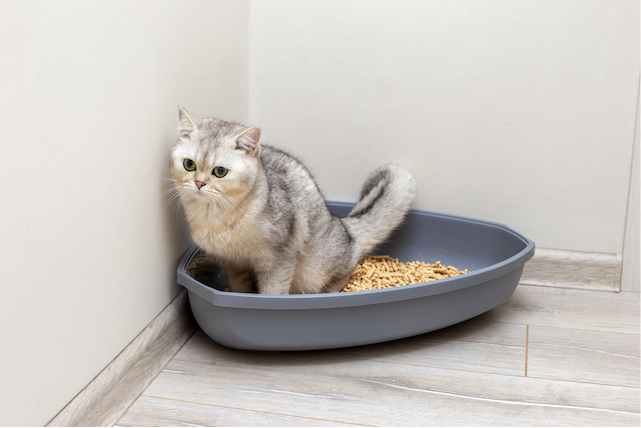
In a corner with no visible exit path
Near food or water bowls (cats will not eliminate where they eat)
In a basement that requires stairs (especially for senior cats with arthritis)
Good locations:
Quiet, low-traffic rooms
Two clear exit paths
Same floor of the house your cat actually spends time on
Several feet from food and water
Away from sudden noises
Box style note: Most cats prefer uncovered boxes. Covered boxes trap odor inside, which the cat smells far more strongly than you do, and they limit exit routes. The box should be at least 1.5 times the length of your cat from nose to tail base. Most commercial boxes are too small.
5
Stress and Environmental Change
Cats are deeply territorial, and anything that disrupts their environment can trigger litter box avoidance.
Common stress triggers:
A new pet
A new baby
A move
Construction or remodeling
New furniture in their core territory
Outdoor cats visible through windows
A change in your work schedule
Tension in a multi-cat household
When a cat feels their territory is threatened, they often urinate or defecate outside the box as a marking behavior. This is not a behavioral failure. It is a stress signal.
The fix: Identify the trigger and reduce it. Block window access to outdoor cats. Add vertical space and hiding spots. Use a synthetic feline pheromone diffuser (Feliway is the most studied) for at least 30 days. If a new pet is the trigger, separate spaces and slow reintroduction usually resolves it within a few weeks.
How to Fix Litter Box Problems in 5 Days
Day 1
Vet Visit
Rule out medical causes first. Bring a urine sample if possible. Everything else is wasted effort if your cat is sick.
Day 2
Deep Clean
Replace all litter. Wash boxes with unscented soap and hot water. Treat any accident spots with enzymatic cleaner, never ammonia. Ammonia smells like urine to cats and reinforces the behavior.
Day 3
Add a Box
Add one extra box in a new, quiet location. If you suspect litter is the issue, run the side-by-side litter test with 2 to 3 options.
Day 4
Reduce Stress
Audit the environment. Remove stressors. Add vertical space. Plug in a pheromone diffuser. Separate resources in multi-cat homes.
Day 5
Observe
Most cats return to the box within 48 to 72 hours once the underlying cause is corrected. If behavior continues past day 7 with no medical cause and a clean, well-placed box, the issue is almost always stress.
What Not to Do
Do not punish your cat. Cats do not connect punishment to past behavior. They connect it to you.
Do not assume it is behavioral until medical causes are ruled out.
Do not use ammonia-based cleaners on accident spots.
Do not change everything at once. Change one variable at a time.
Do not add a covered box thinking it will contain odor. It traps odor inside where the cat experiences it.
Frequently Asked Questions
How long does it take for a cat to start using the litter box again?
Most cats return to the box within 2 to 5 days once the underlying cause is corrected. Medical causes resolve as the cat heals. Litter and location issues often resolve within 24 hours.
Why does my cat pee on the bed or carpet but poop in the box?
This pattern almost always points to a urinary tract issue. Cats associate the box with painful urination but not painful defecation. See a vet within 48 hours.
Should I get a covered or uncovered litter box?
Most cats prefer uncovered boxes. Covered boxes trap odor where the cat experiences it most strongly, and they limit exit routes, which makes anxious cats avoid them.
How many litter boxes do I need?
One per cat plus one extra. Two cats need three boxes. Three cats need four. Boxes should be in different locations, not lined up next to each other.
Is it normal for cats to suddenly stop using the litter box?
Sudden change is always a signal. It is common but never normal. Treat it as your cat communicating that something needs attention, usually medical, environmental, or related to the box itself.
Can stress alone cause a cat to stop using the box?
Yes. Stress-related elimination is one of the top three causes in cats with no medical issue. Identifying and reducing the stressor usually resolves the behavior within 30 days.
What is the best litter for a cat that stopped using the box?
Unscented, fine-grain clumping clay is the most widely preferred by cats in behavioral studies. Start there before testing alternatives.
Will my cat ever use the box again?
In most cases, yes. Inappropriate elimination is frustrating but almost always solvable once the right cause is identified.
The Bigger Picture
Most litter box problems are not behavior problems. They are mismatch problems. The wrong litter for that cat. The wrong location for that household. The wrong box size for that body. Or a medical issue no one caught.
Every cat is an individual. The setup that works for one cat will fail for another. Matching the litter, box, and environment to the specific cat is what solves the problem permanently. That same matching principle is what PawMatch AI was built on, applied to every product decision a pet parent makes.
In This Guide
Get Personalized Picks
Take the 30-second quiz and get AI-curated litter, boxes, and care products matched to your cat.
Related Reading

Christopher Lee Moran
Animal Behavior Specialist
10+ years training high-drive and reactive animals. Founder of PawMatch AI's behavioral framework.
Stop Guessing. Get Matched.
Every cat is different. PawMatch AI uses your cat's age, breed, behavior, and home setup to recommend the exact litter, box style, and care products that fit. Free, personalized, takes 30 seconds.
Enjoyed this article?
Share it with another pet parent.