Dog Scared to Go Outside? The 5 Real Causes and Gradual Re-Exposure Fix
Sudden fear of outside is almost always trauma, pain, sound, or a missed socialization window. Find the real trigger, build back gradually, and most dogs are walking comfortably within a month.
Dogs that suddenly refuse to walk, plant at the door, or panic in the yard usually have one of five triggers: a specific traumatic incident, sound sensitivity, paw or joint pain, undersocialization to outdoor environments, or weather sensitivity. Forcing the dog outside makes every cause worse. The fix is gradual re-exposure that pairs distance from the house with high-value food, never pushing past the dog's threshold, and ruling out pain with a vet visit. Most dogs return to normal walks in 2 to 4 weeks.
Why Dogs Become Afraid of Outside
A dog that suddenly refuses to go outside is telling you something specific. The species evolved to explore, mark, and patrol territory; refusing that wiring is not stubbornness, it is a strong signal that the outside has become aversive in some way. The American Kennel Club groups the causes into trauma, pain, sound, and missed socialization, and field behaviorists consistently see the same pattern.
Five real triggers to work through:
- A specific traumatic incident
- Sound sensitivity and noise phobia
- Paw or surface pain
- Undersocialization or a fear period miss
- Weather sensitivity (heat, cold, rain, wind)
Sudden onset always points to one of the first three. Gradual onset over months points to socialization or weather. Senior dogs over 8 can also develop sound sensitivity and surface confidence loss as part of cognitive change, and that should always be ruled out with a vet exam before a behavior plan starts.
A Specific Traumatic Incident
This is the most common driver of sudden refusal. A loud noise, a dog rushing at them, a near-miss with a car, a hot pavement burn, a slip on ice, a stranger who startled them, or any sudden negative event creates a single trial learning event. The dog encodes "outside equals threat" in one exposure. Dogs that are sensitive, undersocialized, or in a developmental fear period (8 to 11 weeks and 6 to 14 months) are most vulnerable.
Signs trauma is the trigger:
- Refusal started in the last 1 to 14 days
- You can identify a specific event when you think back (fireworks, dog attack, slip, scare)
- Dog is fine indoors but freezes, trembles, or plants at the door
- Tail tucked, ears back, low body posture when approaching the door
- Reaction is worse at the specific time of day the event happened
Sound Sensitivity and Noise Phobia
Noise phobia is one of the most common anxiety disorders in dogs and one of the most often missed. Fireworks, thunder, gunshots, garbage trucks, construction, motorcycles, leaf blowers, school bus brakes, and sirens are the most common triggers. Once a dog forms a noise phobia, it tends to generalize: a dog terrified of fireworks may start reacting to slammed doors, dropped pans, or microwave beeps. The Tufts Cummings School behavioral medicine group consistently flags noise phobia as the most underdiagnosed canine fear.
Signs sound sensitivity is the trigger:
- Dog was fine outside before fireworks season, a thunderstorm, or moving to a noisier area
- Refusal is worse at predictable noise times (trash day, school bus times, construction hours)
- Trembling, panting, drooling, hiding before walks
- Dog tries to bolt back inside if a loud sound happens during a walk
- Often paired with indoor noise reactivity too
Paw or Surface Pain
This cause is wildly underdiagnosed because dogs hide pain well. A small cut, a burned paw pad from summer pavement, ice balls between toes in winter, an embedded foxtail or grass seed, a broken nail, an early arthritis flare, or a soft tissue injury can all turn a willing walker into a refusenik overnight. Hot pavement above 85 degrees ambient air is hot enough to burn pads. Salt and ice melt chemicals in winter cause painful contact dermatitis on paw pads.
Signs paw or surface pain is the trigger:
- Dog walks fine on grass but refuses pavement (or vice versa)
- Limping, favoring a paw, or licking a specific paw
- Stops walking after a short distance and wants to be carried
- Refusal worsened in extreme heat or cold
- Pads visibly red, dry, cracked, or have visible cuts
Undersocialization or a Fear Period Miss
Puppies that did not get exposure to varied outdoor environments before 16 weeks are at higher risk for adult outdoor fear. The critical socialization window closes around 12 to 16 weeks, and dogs raised in isolation, in a single environment, or during pandemic conditions often show outdoor fear as adolescents. The 6 to 14 month secondary fear period can also re-trigger fears that seemed resolved.
Signs undersocialization is the trigger:
- Fear has been present since adoption or since adolescence
- Dog is fine in familiar yard or specific known route, scared in any new environment
- Recoils from city sounds, traffic, strangers, crowds
- Worst in adopted adult dogs with unknown history
- Often paired with general shyness indoors too
Weather Sensitivity
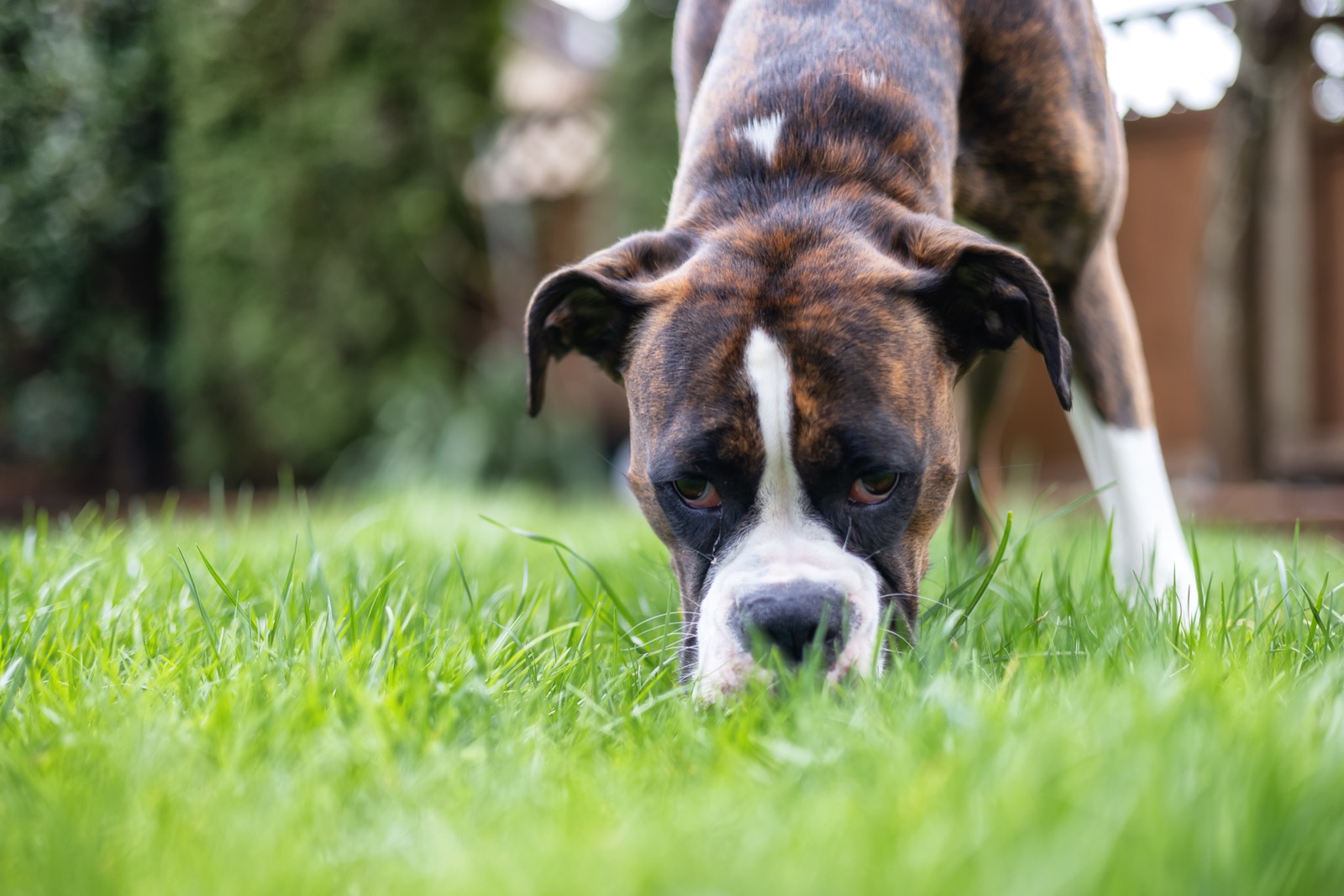
Some dogs simply hate certain weather. Small breeds, thin-coated breeds (Greyhounds, Whippets, Italian Greyhounds, Chihuahuas), and dogs with low body fat get cold fast. Brachycephalic breeds (Bulldogs, Pugs, Boxers, French Bulldogs) overheat fast. Rain hitting the back, wind on the face, or wet grass under paws are sensory experiences some dogs refuse to tolerate. This is not a behavior problem so much as a comfort problem.
Signs weather sensitivity is the trigger:
- Refusal aligned with specific weather conditions (only when it rains, only when below freezing, only in heat)
- Fine indoors with windows open to similar conditions
- Thin coat or breed with known weather sensitivity
- Shivers, trembles, or pants excessively when forced outside
- Pulls home immediately upon hitting the trigger condition
7-Day Re-Exposure Protocol
Audit the Trigger
Write down when the fear started, what changed, what the dog refuses specifically, and what they still tolerate. This is the data the rest of the plan is built on.
Vet Check
If the onset was sudden, the dog is limping, or you cannot identify a behavioral trigger, schedule the appointment. Rule out pain and medical first. You cannot train through actual physical pain.
Find the Threshold
Walk the dog toward the door with treats in hand. The exact spot where they hesitate, slow down, or refuse is your starting line. That spot is the new "outside." For severe cases, the threshold might be 3 feet from the closed front door.
Counter-Condition the Threshold
Stand at the threshold spot for 1 to 3 minutes. Feed high-value treats (chicken, cheese, freeze-dried liver) at a steady drip. Do not move forward. Do not coax. Just pay the dog for tolerating the spot.
Add 1 to 3 Feet
If yesterday went well, repeat the drill 1 to 3 feet beyond yesterday's threshold. Treats raining, no pressure, return inside before the dog crosses into fear. Always end on a successful rep.
Stretch Slowly
Add another 1 to 3 feet. Most dogs accelerate at this point, but resist the urge to rush. Adding too much distance too fast undoes the previous days' work in one bad session.
Decide and Plan the Next 2 Weeks
Improving? Continue adding small distance increments daily. Plateaued or worse? Drop back two days and rebuild. If a week of careful work produced zero gain, talk to your vet about a short course of anxiolytic medication or work with a credentialed veterinary behaviorist (DACVB).
What Not to Do
- Do not drag, carry, or pull the dog past their threshold. Forcing creates lasting trauma even when it appears to "work" in the moment.
- Do not punish the refusal. Punishment for fear amplifies fear. The dog cannot reason their way out, and you have added a second threat.
- Do not coddle with high anxiety in your own voice. Calm, neutral energy reads as safety. Worried sing-song "it's okay, it's okay" reads as confirmation that something is wrong.
- Do not skip the vet check on sudden onset. Pain looks like fear and fear can mask pain.
- Do not flood the dog with the trigger to "get over it." Flooding has been documented to produce learned helplessness, not real recovery.
- Do not keep using the same scary route. Drive to a quiet park, walk a different street, change times of day until the dog rebuilds confidence.
- Do not assume that a quiet dog has recovered. A dog that walks but is tucked, panting, and avoiding eye contact is still in fear, just shut down.
Frequently Asked Questions
Sudden fear of outside is usually triggered by a single bad event (loud noise, scare, attack by another dog), paw pain, sound sensitivity that built up over weeks, weather change, or a sensory overload during a developmental fear period. About 60 percent of cases trace to a specific identifiable event the owner can name once they think back through the past 2 weeks.
With a structured re-exposure plan, most dogs return to comfortable walks in 2 to 4 weeks. Mild cases resolve in under a week. Severe noise phobias or trauma cases can take 2 to 6 months and may need veterinary anti-anxiety support to make training stick. Forcing the dog outside almost always extends the timeline.
No. Forcing or dragging a fearful dog deepens the fear and can lead to defensive aggression. The dog learns that outside is unavoidable and you are the one delivering the threat. Use gradual exposure instead, starting with just the doorway and building distance from the house in 1 to 3 foot increments.
Refusing a specific threshold usually means something scary happened at or near that spot, or the dog has reached the edge of their current comfort zone. Sound triggers (garbage trucks, construction, school buses) often anchor to specific street corners. Work on rewarded approach to the threshold, not past it, until the dog relaxes there.
Yes. Adult-onset outdoor fear is common and usually tied to a specific incident: a fireworks night, a scare from another dog, a fall on ice, or pain from a developing orthopedic condition. Dogs over 8 can also develop sound sensitivity as part of cognitive decline. Adult onset always warrants a vet check first.
Thunder, fireworks, gunshots, construction noise, garbage trucks, motorcycles, leaf blowers, and sudden barking from other dogs are the top noise phobia triggers. Sound sensitivity can generalize, where a dog scared of fireworks starts reacting to similar lower-volume sounds like a slammed door or microwave beep.
Yes, frequently. Cut pads, burned pads from hot pavement, ice ball formation between toes in winter, embedded foxtails, broken nails, and early arthritis all make stepping outside painful. A dog that walks fine on grass but refuses pavement, or vice versa, almost always has a paw or surface pain issue.
See a vet if the fear came on suddenly without a clear cause, if the dog is limping or favoring a paw, if a senior dog has new sound sensitivity, or if 2 weeks of gentle re-exposure produced no improvement. Anti-anxiety medications and pain management can accelerate behavioral training in resistant cases.
Yes, in the right cases. Situational anxiolytics like trazodone or gabapentin can take the edge off for individual outings (fireworks, vet visits). Daily SSRIs like fluoxetine can lower the baseline anxiety so behavioral training works for chronic cases. Medication is a tool, not a substitute for the desensitization protocol.
The Bigger Picture
Fearful dogs are not broken dogs. They are dogs whose nervous systems registered something as dangerous, and the work is teaching the nervous system the danger is gone. That takes patience, the right environment, and ruling out pain first. Dogs that are scared outside often also show heavy barking and reactivity as a defensive strategy, and the two protocols stack well. The same dogs frequently become heavy shadowers indoors too; the velcro dog and clinginess guide covers the indoor side of the same anxiety baseline. Noise sensitive dogs often pant heavily after exposure, sometimes for hours, and the nighttime panting protocol helps you read whether your dog is recovering or stuck in arousal. And if you cannot tell from the front of the house what is happening in the yard, a pet camera for separation and anxiety monitoring gives you the data you need.
Every dog's fear pattern is different. PawMatch AI factors in your dog's breed, age, environment, and behavior profile to recommend the exact calming products, gear, and training tools that fit. Free, takes 30 seconds.
Stop Guessing. Get Matched.
Every dog is different. PawMatch AI uses your dog's age, breed, behavior, and home setup to recommend the exact calming products, gear, and training tools that help with outdoor fear. Free, personalized, takes 30 seconds.
Find My Dog's Match →