Dog Sleeping More Than Usual? 6 Causes Ranked and When to Call the Vet
Increased sleep in dogs is sometimes harmless and sometimes a serious warning sign. Rank your dog's pattern against the six common causes and you will know within a day whether to wait, change something, or call the vet.
Dogs that suddenly sleep more than usual have one of six underlying drivers, ranked from most to least common: normal age and seasonal variation, boredom and understimulation, recent illness or vaccination recovery, pain (arthritis, injury, dental), endocrine disease (hypothyroidism, Cushing's, kidney disease), and rarely, serious systemic illness like cancer or organ failure. The first step is comparing to the dog's own baseline. The second step is checking for paired symptoms. Any new lethargy that lasts more than 48 hours, or comes with appetite loss, vomiting, weakness, or pale gums, is a vet visit.
Why Dogs Sleep More Than Usual
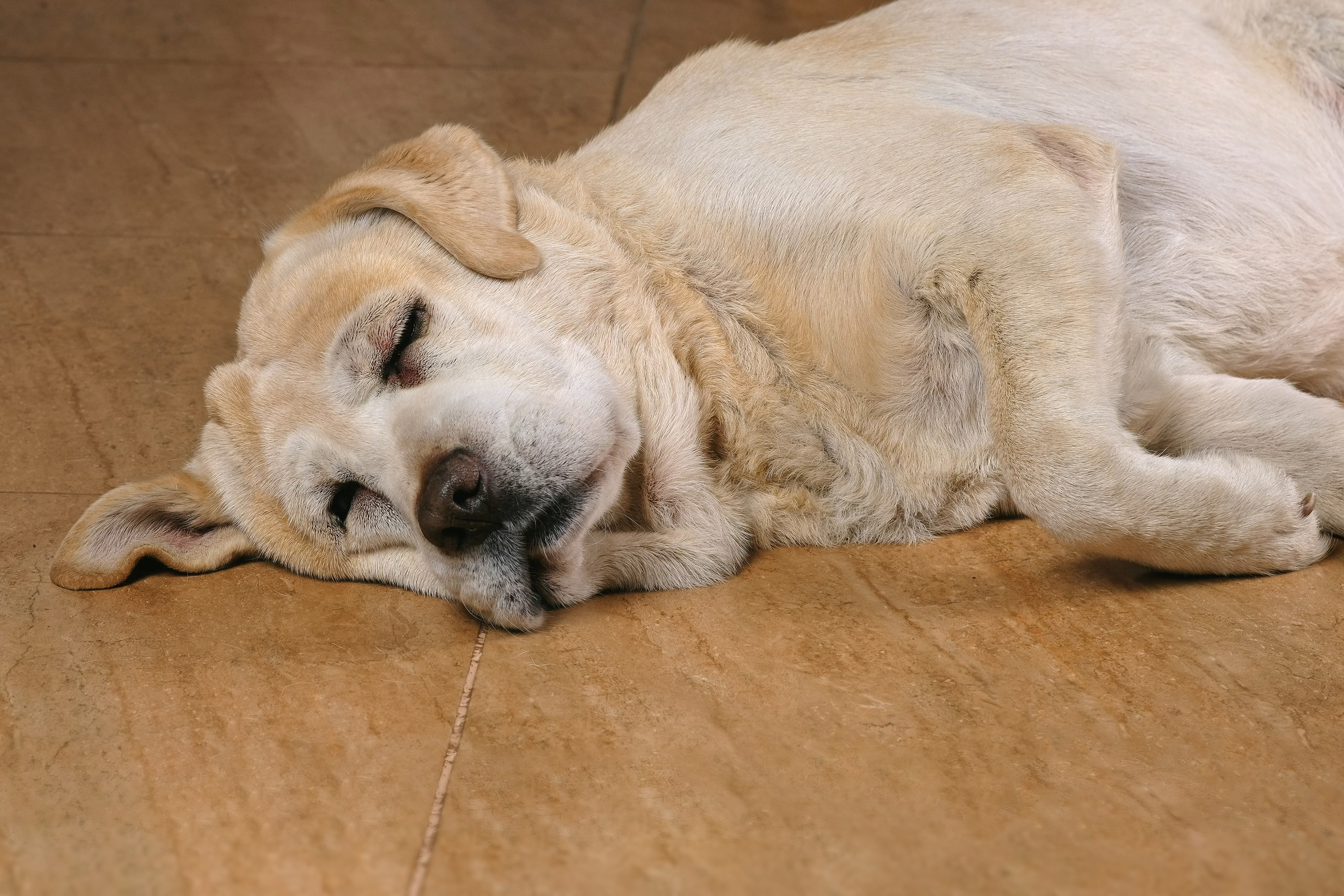
The first useful fact: dogs sleep a lot, and most owners underestimate the normal amount. The American Kennel Club puts the adult average at 12 to 14 hours per day. Puppies under 4 months need 18 to 20 hours, and seniors over 8 average 16 to 18 hours. Giant breeds (Great Danes, Saint Bernards, Newfoundlands) and brachycephalic breeds (Bulldogs, Pugs, French Bulldogs) sleep more than the average.
So the question is not "is my dog sleeping a lot." It is "is my dog sleeping more than their own baseline." Six causes to rank against, in order of frequency:
- Normal variation by age, breed, season, and weather
- Boredom and lack of stimulation
- Recent illness, vaccination, or recovery
- Pain from arthritis, injury, or dental disease
- Endocrine disease (hypothyroidism, Cushing's, diabetes, kidney disease)
- Serious systemic illness (anemia, infection, cancer, organ failure)
Track the dog's baseline for a week if you can. Then you have data, not guesses. If the change is sudden and severe, skip the tracking and go straight to the vet.
Normal Age, Breed, and Seasonal Variation
This is the most common cause of perceived extra sleep, especially in first-time dog owners. A 6 month old puppy that suddenly sleeps 16 hours is just leaving the puppy phase. A 9 year old dog that starts sleeping 17 hours is aging normally. A summer with daytime highs in the 90s produces more midday sleep across almost every breed. None of this is medically meaningful on its own.
Signs normal variation is the cause:
- Gradual change over weeks or months, not days
- Dog still has normal appetite, water intake, and energy when awake
- Tail wag, alert eyes, normal greeting behavior
- Sleeps more during weather extremes, less in mild weather
- No new physical findings (lumps, limping, breath odor, weight change)
Boredom and Lack of Stimulation
This one surprises owners. Dogs that have nothing to do often sleep through the day from sheer absence of input. It looks like extra rest, but it is more like resigned shutdown. Dogs that are crated all day, dogs in low-enrichment households, dogs whose primary owner started working longer hours, and dogs whose canine or human companion recently left often slide into this pattern.
Signs boredom is the cause:
- Recent change in household activity level
- Dog perks up sharply when given a new toy, training session, or walk
- Sleep is "lying around" rather than deep REM
- Increased weight from inactivity over weeks
- Often paired with destructive chewing or attention-seeking when awake
Recent Illness, Vaccination, or Recovery
Dogs recovering from anything mild (vaccine, minor GI bug, hot weather event, dental cleaning, anesthesia) often sleep extra for 24 to 72 hours. This is normal recovery. The body is using energy to mount an immune response or repair tissue.
Signs recovery is the cause:
- Recent vet visit, vaccination, or known mild illness in the last 1 to 3 days
- No additional concerning symptoms
- Gradual return to normal over 24 to 72 hours
- Will get up for food, water, bathroom breaks
- Soft tissue or surgery site (if any) healing on schedule
Pain from Arthritis, Injury, or Dental Disease
This is the most commonly missed cause in middle-aged and senior dogs. Dogs hide pain extremely well. Instead of crying, limping, or whining, many dogs in chronic pain just lie down more and engage less. Arthritis, hip dysplasia, intervertebral disc disease, soft tissue strain, ear infections, urinary tract infections, and dental disease (especially infected tooth roots) all produce this pattern.
Signs pain is the cause:
- Slow to get up, stiff after rest, slow on stairs
- Reluctance to jump on furniture they used to climb easily
- Yelp or flinch when touched in a specific area
- Bad breath, dropping food, or chewing on one side (dental pain)
- Head shaking, ear odor, or scratching at ears
- Dog over 7 years old
Endocrine Disease
Hypothyroidism, Cushing's disease, diabetes, and chronic kidney disease all commonly produce increased sleep along with other findings. These are middle-aged to senior dog problems and they are diagnosable with bloodwork.
Signs endocrine disease is the cause:
- Hypothyroidism: weight gain without appetite increase, dull coat, cold seeking, hair loss on flanks or tail
- Cushing's: increased thirst, increased urination, pot belly, thin skin, increased panting
- Diabetes: increased thirst, increased urination, weight loss despite appetite, cataracts
- Kidney disease: increased thirst, increased urination, weight loss, decreased appetite, bad breath
- Dog usually over 6 years old
Serious Systemic Illness
This is the smallest but most urgent category. Severe anemia (from internal bleeding, immune-mediated disease, or tick-borne illness), infection (sepsis, pyometra in unspayed females), cancer, heart disease, and organ failure all present with profound sleep increase. These dogs are not sleeping; they are crashing.
Signs serious illness is the cause:
- Will not get up even for food or water
- Pale, white, blue, or grey gums (normal is bubble-gum pink)
- Labored breathing, increased respiratory rate at rest (over 30 breaths per minute)
- Collapse, weakness, or stumbling
- Visible distended abdomen
- Vomiting blood, black stool, bloody urine
- Recent tick exposure
7-Day Plan to Figure Out the Cause
Baseline
Note sleep hours, appetite, water intake, energy when awake, and any new symptoms. Take a video of the dog walking, getting up, and being called. You will need this data.
Check the Easy Stuff
Recent vaccine? Recent dental? Hot weather? New routine? Less interaction at home? If yes to any, monitor for 48 hours and expect resolution.
Enrichment Test
Introduce a snuffle mat, food puzzle, or short training session. Does the dog re-engage easily? If yes, the cause may be boredom or normal variation. If no engagement, you are looking at something physical.
Body Check
Run hands gently over the entire body. Note any flinch, hot spot, lump, or area the dog protects. Check ear odor, mouth odor, gum color. Watch the dog walk, get up, and step over a low obstacle.
Pain Trial (Vet-Directed)
If you suspect pain, call the vet and ask about a short trial of a vet-recommended NSAID. Do not use human NSAIDs (ibuprofen, naproxen) which are toxic to dogs. If the dog becomes notably more active within 24 to 48 hours, pain was the driver.
Vet Visit if No Clear Cause
If the dog has been sleeping more than baseline for 5 to 7 days without an obvious cause and without re-engaging when offered enrichment, schedule the vet exam.
Bloodwork
A full senior wellness panel (CBC, chemistry, T4, urinalysis) catches the majority of endocrine, kidney, and inflammatory causes. Worth the spend any time a dog over 6 is sleeping notably more.
What Not to Do
- Do not give human pain medications. Ibuprofen, naproxen, acetaminophen, and aspirin are all dangerous to dogs.
- Do not wait through pale gums, collapse, labored breathing, or refusal to drink. These are emergency vet visits.
- Do not assume "old age" without bloodwork. Many treatable conditions look like aging.
- Do not push exercise on a lethargic dog. If the dog is sleeping more because of pain or illness, forcing activity makes things worse.
- Do not change the food drastically. A sudden diet change adds GI symptoms on top of the sleep change and clouds the picture.
- Do not skip dental care assuming sleep is unrelated. Infected teeth are a top hidden cause of senior dog lethargy.
- Do not assume the dog is "depressed" without ruling out medical first. True canine depression exists but is a diagnosis of exclusion.
Frequently Asked Questions
The six most common causes are normal age and breed variation, weather and seasonal change, boredom, illness or infection, pain from arthritis or injury, and endocrine disease like hypothyroidism. A sudden change from baseline that lasts more than 48 hours warrants a vet check, especially if paired with appetite loss, vomiting, or weakness.
Adult dogs sleep 12 to 14 hours per day on average. Puppies under 4 months need 18 to 20 hours. Seniors over 8 sleep 16 to 18 hours. Giant breeds and brachycephalic breeds sleep more than the average. Track your dog's normal baseline so you can spot real change.
Increased sleep is normal in seniors, but sudden change is not. A senior dog that sleeps 16 hours is normal. A senior dog that suddenly starts sleeping 20 plus hours, will not get up, or sleeps through meals needs a vet visit. Cognitive dysfunction, pain, kidney disease, and Cushing's all cause increased sleep in older dogs.
Lethargic dogs show low energy on top of increased sleep: reluctance to walk, slow response to name, disinterest in food or toys, weakness, dull eyes, and reduced facial expression. Lethargy is different from normal extra sleep because the dog cannot or will not engage even when awake.
Yes. Dogs with insufficient mental stimulation often sleep through the day from sheer lack of input. This is different from healthy sleep and can be tested by introducing new enrichment: a snuffle mat, a frozen Kong, or a 10 minute training session. If the dog perks up immediately, boredom was the driver.
Same-day vet visit if the dog will not get up for food, has pale gums, vomiting, diarrhea, collapse, difficulty breathing, or visible pain. Emergency vet if gums are blue, white, or grey, if breathing is labored, or if the dog is unresponsive. These signal life-threatening conditions like internal bleeding, sepsis, or shock.
Yes. Dogs sleep more in summer heat to conserve energy and avoid overheating. This is normal and reverses with cooler weather. Make sure the dog has cool resting spots, hydration, and air circulation. Excess summer sleep that comes with panting, drooling, or wobbling is heat stress and needs immediate cooling.
Yes, mild lethargy and increased sleep for 24 to 48 hours after vaccination is normal and expected. Beyond 48 hours, or paired with vomiting, facial swelling, or hives, call the vet. Tick-borne illness, recent dental cleaning, and recovery from any surgery also produce a few days of extra sleep.
Yes, dogs can experience situational depression after a household change (loss of a companion, new baby, owner schedule change). Signs include sleep increase, appetite drop, withdrawal, and disinterest in favorite activities. Most cases resolve in 2 to 6 weeks with added enrichment and routine, but persistent symptoms need a vet check to rule out medical causes first.
The Bigger Picture
Increased sleep is one of the broadest symptoms in canine medicine. It can mean nothing or it can mean everything. The work is comparing to the dog's own baseline and watching for paired symptoms. Most cases turn out to be normal aging, weather, boredom, or recovery. The minority that turn out to be pain, endocrine disease, or serious illness are the cases where early detection matters most. Dogs that sleep more during the day often also start pacing at night as cognitive patterns shift, and the two together strongly suggest a senior workup. Heavy panting at rest, especially at night, is its own red flag covered in the nighttime panting guide. And many cases that look like illness turn out to be enrichment deficits; the signs your pet is bored checklist is the fastest way to rule that in or out. Dogs whose chronic skin issues are flaring tend to sleep more from inflammation alone, which is why the why dogs itch so much protocol sometimes resolves what looked like a sleep problem.
Every dog's baseline is different. PawMatch AI factors in your dog's breed, age, environment, and health profile to recommend the exact supplements, enrichment toys, and senior care products that fit. Free, takes 30 seconds.
Stop Guessing. Get Matched.
Every dog is different. PawMatch AI uses your dog's age, breed, health, and home setup to recommend the exact supplements, enrichment toys, and senior care products that help with energy and sleep. Free, personalized, takes 30 seconds.
Find My Dog's Match →