Dog Panting at Night for No Reason? The 5 Real Causes and the Red Flags
Dogs do not pant at rest without a reason. The cause is heat, anxiety, pain, Cushing's disease, or heart and respiratory issues. Identify which and you find the fix or the emergency.
A dog panting heavily at night while resting in a cool environment is communicating something. The five real causes are: too warm a sleeping environment, anxiety, pain (most often arthritis or dental), Cushing's disease, and heart or respiratory disease. The first two are fixable with environmental and behavioral changes. The last three are medical and need a vet workup. The single most useful at-home check is counting the resting respiratory rate: normal is 10 to 30 breaths per minute. Consistently above 30 to 40 in a resting dog is abnormal. New-onset panting in a senior dog or a dog with known health issues warrants a same-week vet visit.
Why Dogs Pant at Night
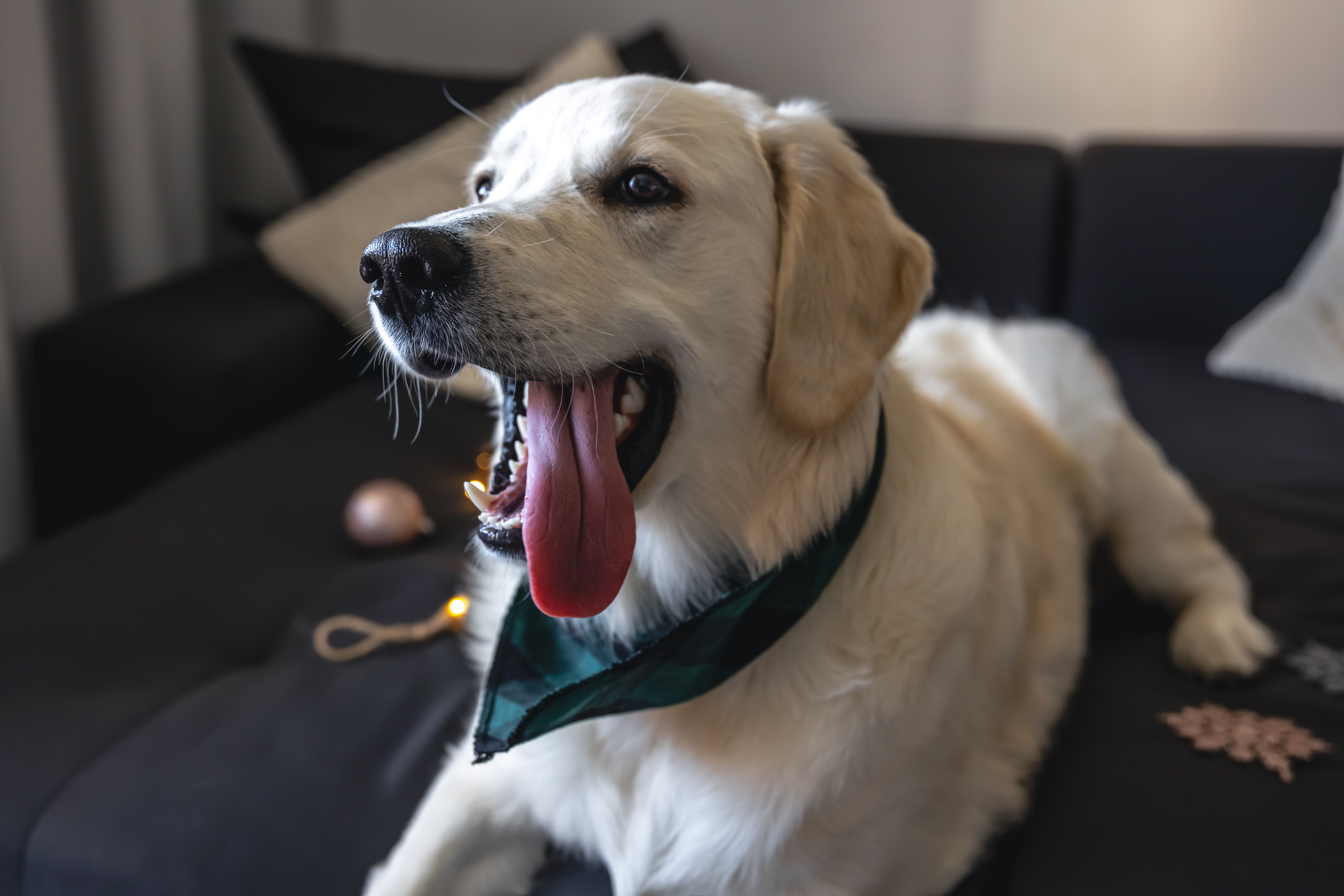
Panting is the primary cooling mechanism for dogs. Unlike humans, dogs do not sweat through their skin (they have only minor sweat glands in their paw pads), and panting moves air across the moist tongue and respiratory tract to evaporate heat. Panting in a hot or active dog is normal. Panting in a cool, resting dog at night is not. According to the American Kennel Club, normal panting cools the dog. Abnormal panting signals a medical or behavioral issue that needs attention.
The five real causes of nighttime panting in a resting dog:
- Heat or a warm sleeping environment
- Anxiety
- Pain, especially arthritis or dental
- Cushing's disease (hyperadrenocorticism)
- Heart or respiratory disease
The Cornell Riney Canine Health Center groups abnormal panting into thermoregulatory, behavioral, and pathological categories. Behavioral causes (anxiety) are often paired with pacing or other body language. Pathological causes (pain, Cushing's, heart disease) are often paired with appetite, urination, energy, or other symptom changes.
Heat or Warm Sleeping Environment
The most common and easily missed cause. Dogs handle heat far worse than humans, and what feels comfortable to you may be too warm for your dog. Thick-coated breeds (Huskies, Bernese, Saint Bernards, Goldens), brachycephalic breeds (Bulldogs, Pugs, French Bulldogs, Boxers), and overweight dogs are at highest risk.
Bedrooms with closed doors, heat-trapping carpets, electric blankets on the bed, raised dog beds near radiators, or summer rooms without AC easily push above the dog's comfort zone. Most dogs sleep best at 68 to 72°F.
Signs heat is the trigger:
- Panting starts shortly after settling for the night
- Stops when the dog moves to a cooler location (tile floor, hallway, near a vent)
- Dog drinks more water than usual
- Worse in summer or in heated rooms in winter
- Coat is hot to the touch
- Breed is heat-sensitive
Anxiety
Anxiety triggers the sympathetic nervous system, which increases heart rate and respiratory rate. Anxious dogs pant heavily without an obvious heat trigger. The panting is paired with other behavioral signs: pacing, whining, restlessness, inability to settle, clinginess, or destructive behavior.
Common nighttime anxiety triggers include thunderstorms, fireworks, recent routine changes, separation anxiety, new household members, and generalized anxiety disorder. In seniors, cognitive dysfunction often manifests as anxious panting during sundowning hours.
Signs anxiety is the trigger:
- Panting paired with pacing or restlessness
- Dog cannot settle in any location
- Worse during specific triggers (storms, fireworks, absence)
- Whining, yawning, lip licking
- Trembling or shaking
- Otherwise healthy: normal appetite, weight, energy during the day
Pain (Often Arthritis or Dental)
Panting is one of the most reliable signs of chronic pain in dogs. The pain itself activates the stress response, and the dog pants because of elevated heart rate, discomfort, and inability to find a comfortable position. Daytime distractions mask the pain. At night, lying still with no distractions, the pain becomes the dominant sensation.
Arthritis is the leading cause of pain-driven panting in dogs over 7. Dental disease is second. Less common but important sources include intervertebral disc disease, pancreatitis, abdominal pain, and post-surgical recovery.
Signs pain is the trigger:
- Dog is over 7 years old
- Stiffness, limping, or reluctance to jump or climb stairs
- Difficulty getting up from lying down, repositioning frequently
- Yelping when touched or rising
- Reduced appetite or activity
- Bad breath, drooling, or chewing on one side (dental)
- Pacing paired with panting in a senior dog
Cushing's Disease (Hyperadrenocorticism)
Cushing's disease is overproduction of cortisol, usually from a pituitary tumor (85 to 90 percent of cases) or an adrenal tumor. Excessive panting is one of the hallmark signs, along with increased thirst and urination, increased appetite, pot-bellied appearance, thinning hair, heat intolerance, and a generally tired but hungry appearance.
According to VCA Animal Hospitals, Cushing's is most common in middle-aged to older dogs (typically 7 and older) and certain breeds: Poodles, Dachshunds, Boston Terriers, Boxers, Beagles, and some Terriers. The disease is treatable but lifelong, and untreated Cushing's significantly affects quality of life.
Signs Cushing's is the trigger:
- Heavy panting in a cool environment
- Increased thirst (drinking and urinating much more than normal)
- Increased appetite, often ravenous
- Pot-bellied or sagging abdomen
- Thinning or sparse hair coat
- Visible skin changes: thin, fragile, dark spots
- Lethargy paired with the increased appetite
Heart or Respiratory Disease
Heart and lung disease both produce nighttime panting and labored breathing. The dog's body is working harder to oxygenate, and the symptoms often worsen when lying down because fluid pools in the chest. Common causes include congestive heart failure (most common in small breeds with mitral valve disease), dilated cardiomyopathy (more common in large breeds), laryngeal paralysis in older Labradors and Golden Retrievers, and chronic bronchitis.
This is the most serious category of nighttime panting causes and warrants prompt veterinary evaluation.
Signs heart or respiratory disease is the trigger:
- Heavy panting at rest, especially when lying down
- Coughing, especially at night or after exercise
- Exercise intolerance, tires faster than usual
- Bluish or pale gums (cyanosis)
- Restlessness, refuses to lie on side, prefers sitting up
- Distended abdomen (fluid accumulation in late-stage heart disease)
- High resting respiratory rate (consistently over 30 to 40)
7-Day Plan to Address Nighttime Panting
Count the Sleeping Respiratory Rate
Count breaths (one inhale plus one exhale equals one breath) for 60 seconds while the dog is sleeping. Normal is 10 to 30. Above 30 to 40 is abnormal.
Cool the Environment
Drop the room temperature to 68 to 72°F. Remove thick bedding. Add a fan or cooling mat. See if panting improves.
Observe Context
Note the time panting starts, body posture, paired behaviors (pacing, whining, coughing). Three nights of observation reveals the pattern.
Vet Visit If Red Flags
Senior dog, known heart or lung issues, paired coughing, blue gums, sudden onset, or inability to settle all warrant a same-week appointment.
Pain Assessment
If the dog is over 7, ask the vet for an orthopedic and dental exam. Most undiagnosed pain in seniors is arthritic or dental.
Bloodwork and Screening
Full senior bloodwork plus urinalysis to screen for Cushing's, diabetes, kidney, and liver issues. Cushing's-specific testing if symptoms align.
Decide
Environmental fix only? Continue monitoring. Medical diagnosis? Follow the targeted treatment plan and recheck panting in 2 to 4 weeks.
What Not to Do
- Do not assume panting is just heat. Cushing's, pain, and heart disease can all present as panting in a cool room.
- Do not give human painkillers. Ibuprofen, acetaminophen, and aspirin can be toxic in dogs.
- Do not use human sleep aids. Benadryl, melatonin, and others should only be used at vet-dosed levels with guidance.
- Do not skip the resting respiratory rate count. This is a critical early warning for heart and lung disease.
- Do not delay a vet visit for new-onset panting in a senior dog. The most common causes are treatable with prompt diagnosis.
- Do not assume your dog is fine if appetite and energy are normal. Many causes of nighttime panting present before other symptoms.
- Do not ignore coughing paired with panting. Cough plus panting plus restlessness is heart failure until proven otherwise.
Frequently Asked Questions
There is always a reason. The five common causes are heat or warm sleeping environment, anxiety, pain (often arthritis or dental), Cushing's disease, and heart or respiratory disease. New-onset nighttime panting in a resting dog warrants a vet check, especially if the dog is over 7, has a known health issue, or shows other symptoms.
10 to 30 breaths per minute when calm and at rest. Count breaths for 60 seconds while the dog is sleeping or relaxed. Rates consistently above 30 to 40 in a resting dog are abnormal and warrant a vet visit. This is one of the most useful at-home health checks for early heart or lung disease.
Yes. Anxiety produces increased heart rate and panting, often paired with pacing, whining, or restlessness. Common triggers include thunderstorms, fireworks, separation, recent routine changes, and cognitive dysfunction in seniors. Anxious panting usually has other behavioral signs alongside it.
Yes. Panting is one of the most reliable indicators of pain in dogs, particularly chronic pain like arthritis. Pain panting often appears at night when the dog is still and distractions are gone. Dental pain, abdominal pain, and back pain are also common producers. Treating the pain typically resolves the panting.
Cushing's disease (hyperadrenocorticism) is overproduction of cortisol, usually from a pituitary or adrenal tumor. Symptoms include excessive panting, increased thirst and urination, pot-bellied appearance, thinning hair, and heat intolerance. It is most common in middle-aged to older dogs. Diagnosis is via blood tests and management is with medication.
Yes. Congestive heart failure and other cardiac diseases often produce nighttime panting, restlessness, and an inability to settle. Dogs may also cough, especially at night or after exercise, show exercise intolerance, and develop a bluish tint to the gums. Same-week vet visit for any suspected cardiac signs.
Worry when panting is heavy, persistent, paired with restlessness or inability to settle, accompanied by coughing or blue gums, present in a cool environment, or new in a senior dog. Same-day vet visit for any panting paired with collapse, severe lethargy, or distress. Slow-onset panting with other symptoms warrants a vet check within a few days.
Panting in a cool environment usually means pain, anxiety, Cushing's disease, heart or respiratory disease, or a medication side effect. Steroid medications often cause panting. If your dog pants heavily in air-conditioned spaces while at rest, schedule a vet visit to investigate the cause.
Benadryl is not a treatment for panting and should not be used as such. It is sometimes prescribed by vets for situational anxiety in dogs, but dosing and use should be vet-guided. If anxiety is causing panting, address the underlying anxiety with behavioral and environmental changes plus vet-prescribed anxiolytics if needed.
The Bigger Picture
Nighttime panting in a resting dog is a symptom that always has a cause. The simplest is heat, fixable with a cooler room. The most missed is pain, fixable with a vet diagnosis and the right medications. The most serious is heart or respiratory disease, which is highly treatable when caught early. The single most useful at-home tool is the resting respiratory rate count. Get familiar with your dog's normal number and check weekly. A trend upward is the earliest warning sign of brewing trouble.
If your senior dog also paces at night, our guide on old dog pacing at night covers the combined cognitive, pain, and anxiety pattern. If sleep changes are part of a broader pattern of slowing down, dog sleeping more than usual helps separate normal aging from illness. For dogs that are also fearful or avoidant during the day, dog scared to go outside covers the anxiety expression in daytime situations. And if itching is also happening at night, dog itching at night covers the environmental triggers that often pair with discomfort.
Every dog's combination of age, breed, environment, and health is different. PawMatch AI factors in your dog's full profile to recommend the exact bedding, cooling products, supplements, and care setup that fit. Free, takes 30 seconds.
Stop Guessing. Get Matched.
Every dog's combination of age, breed, environment, and health is different. PawMatch AI uses your dog's full profile to recommend the exact bedding, cooling products, supplements, and care setup that ease nighttime panting. Free, personalized, takes 30 seconds.
Find My Dog's Match →