Hamster Running on Wheel All Night? What It Means and Whether to Worry
Hours of nocturnal wheel running is biologically normal. Wild hamsters travel up to 5 miles a night. The question isn't whether they should run, it's whether the rest of the setup is right.
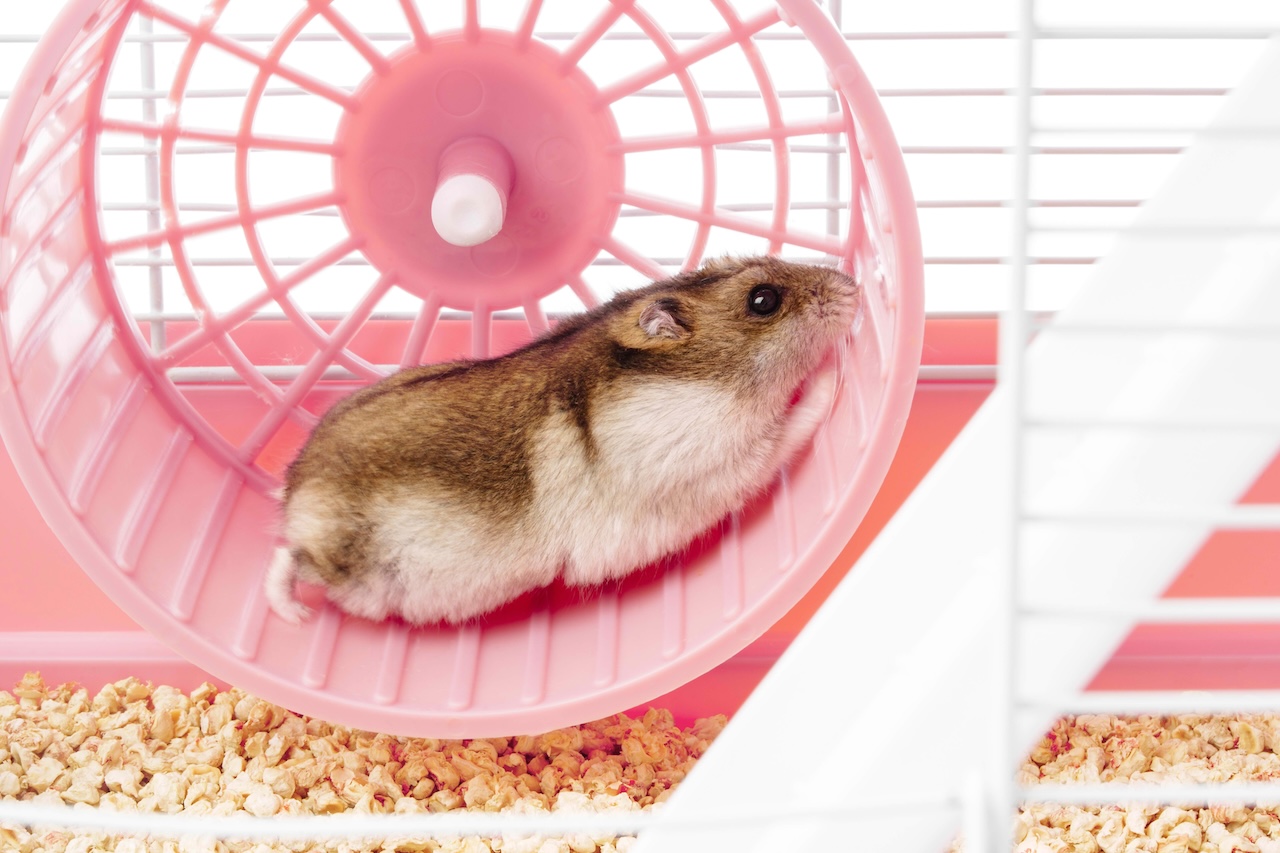
Hamsters running on a wheel all night is normal. They are nocturnal and crepuscular, biologically wired to move during dawn, dusk, and through the dark hours. Wild hamsters cover up to 5 miles a night foraging. A pet hamster running for several hours is doing exactly what their species evolved to do. The real question is whether the wheel is the right size, the cage is large enough, and there's enough enrichment outside the wheel. When all three fail, normal running tips into obsessive running and that's when to act.
Why Hamsters Run on Wheels
Hamsters are not lazy desk pets. They are small, athletic, foraging mammals adapted for high-distance nightly movement across desert and grassland habitats. The RSPCA notes that wheel running is a healthy expression of natural exercise drive in captive hamsters, provided the wheel is appropriately sized.
Three biological drivers:
- Foraging instinct. Wild hamsters travel long distances each night searching for seeds, insects, and roots. The drive remains in pet hamsters with nothing to forage for.
- Circadian biology. Hamsters are nocturnal and crepuscular. Their bodies are built to be active when yours wants to sleep.
- Energy regulation. Active running maintains muscle, prevents obesity, and supports cardiovascular health. Hamsters without wheel access become obese fast.
If your hamster runs from 9 PM to 4 AM with breaks for food and grooming, that's healthy. If they run frantically in 24-hour cycles or refuse to leave the wheel even to eat, the cage setup needs work.
The Wheel Is Too Small
This is the most common and most damaging mistake. Most pet store wheels sold with starter kits are 5 to 8 inches and far too small for a Syrian hamster. The hamster's spine arches upward to fit. Over months and years, this causes spinal damage and chronic pain.
Minimum wheel sizes:
- Syrian hamsters: 11 inches minimum, 12 to 14 inches preferred
- Roborovski dwarfs: 8 inches minimum
- Campbell's and winter white dwarfs: 8 to 9 inches minimum
Watch your hamster run. If their back curves up at all, the wheel is too small. The spine should stay flat or slightly extended, never arched.
The Cage Is Too Small
Pet store cages are almost always too small. A hamster confined to a cramped cage with only a wheel for stimulation will run obsessively because there's nothing else to do. The wheel becomes their only outlet for foraging, exploration, and territorial behavior all at once.
Minimum cage floor space: 600 square inches of unbroken, ground-level floor for any hamster. Bigger is better. Tubes and tunnels do not count toward this minimum. The ASPCA emphasizes that adequate floor space and enrichment are core welfare requirements, not optional upgrades.
Multilevel cages with small platforms and tubes look enriching but provide far less usable space than they appear. Hamsters need horizontal floor area for digging, exploring, and foraging.
Not Enough Enrichment
If the wheel is the only entertainment in the cage, the hamster will use it constantly. They need foraging opportunities, digging substrate, chew options, hides, and tunnels to express the full range of natural behaviors.
Essential enrichment:
- At least 6 inches of unscented paper or aspen bedding for digging
- Multiple hides in different cage zones
- Scattered food (don't bowl-feed; let them forage)
- Chew options (wood, untreated cardboard)
- Sand bath for dust bathing and grooming
- Tunnels and tubes
Stress and Bar Biting
If your hamster runs frantically, bites cage bars, paces back and forth, or chews their own fur, those are stress signs, not normal behavior. Common stressors include too-small cage, too-small wheel, overhandling, loud environment, or being kept in pairs (Syrians and Roborovskis are usually solitary as adults).
Medical and Welfare Concerns
Daytime running in a normally nocturnal animal is unusual and worth noting. Hamsters that run during peak daylight hours, refuse to leave the wheel for food and water, develop bald patches on their feet or belly from contact friction, or rapidly lose weight should see an exotic vet.
Other red flags: wet tail (a serious GI illness), labored breathing, repeated falling off the wheel, or sudden behavior changes.
7-Day Healthy Habitat Setup
Audit Cage Size
Measure floor space. 600 square inches minimum, bigger is better. Most pet store cages fail this test.
Replace the Wheel
Solid silent wheel sized correctly: 11+ inches Syrian, 8+ inches dwarf. Spine must stay flat during running.
Add Deep Bedding
At least 6 inches of unscented paper or aspen bedding for burrowing and stress relief.
Add Enrichment
Tunnels, hides, chew toys, sand bath, scattered food. The wheel can't be the only stimulation.
Stabilize Temperature
65 to 75°F. Avoid windows, vents, direct sun. Sudden cold can trigger pseudo-hibernation.
Set a Routine
Feed at the same time each evening. Handle gently and briefly during natural waking hours.
Observe and Adjust
Healthy wheel running concentrates evening and night. Add or rotate enrichment if running becomes the only behavior.
What Not to Do
- Do not use wire mesh wheels. They catch toes, tails, and break legs.
- Do not use small wheels because they came with the cage. Spinal damage is permanent.
- Do not house Syrian or Roborovski hamsters together as adults. Most are solitary.
- Do not handle during daylight unless necessary. Sleep disruption causes chronic stress.
- Do not use scented or pine bedding. Both cause respiratory damage.
- Do not assume "lots of running" means happy. Context matters: cage size, wheel size, enrichment.
Frequently Asked Questions
Yes. They are nocturnal and crepuscular. Wild hamsters travel up to 5 miles per night. Several hours of wheel running is healthy when cage and wheel are sized correctly.
Wild hamsters travel up to 5 miles. Pet hamsters often run 4 to 8 miles, sometimes 10+. This is normal exercise when other welfare needs are met.
Syrians: 11 inches minimum. Dwarfs: 8 inches minimum. Spine must stay flat during running. If the back arches, the wheel is too small.
Usually a too-small cage, lack of enrichment, or wheel-only stimulation. Increase floor space to 600+ square inches, add deep bedding, tunnels, and chew options.
Cheap plastic and wire wheels squeak from axle friction. Solid silent wheels with sealed bearings run nearly silent. Wire wheels also injure feet and tails.
If your hamster runs frantically all day, refuses to leave the wheel for food, develops bald patches, or loses weight. Daytime running can signal stress, illness, or pain.
No. Wheels are an exercise necessity. Hamsters without wheels develop stress behaviors, obesity, and shorter lifespans. The fix is the right wheel, not no wheel.
The Bigger Picture
Hamster welfare lives or dies on cage size, wheel size, and enrichment. Pet store starter kits fail all three. Most "problem" hamsters are responding to a setup that was wrong from day one. The fix is rarely the hamster, it's the habitat. The same setup-first principle applies to starting a fish tank and to housing a rabbit. New pet parents who pair this with a proper first-week setup checklist avoid most early mistakes.
Every hamster species has different space, wheel, and enrichment needs. A Syrian needs a different setup than a Roborovski. PawMatch AI factors in your hamster's species, age, and current cage to recommend the exact wheel, bedding, and enrichment products that fit.
Stop Guessing. Get Matched.
Every hamster species has different space and wheel needs. PawMatch AI uses your hamster's species, age, and current setup to recommend the exact wheel, bedding, and enrichment products that fit. Free, personalized, takes 30 seconds.
Find My Hamster's Match →Enjoyed this article?
Share it with another pet parent.