Why Does My Dog Eat Grass? The 4 Real Reasons and When to Worry
Most grass eating is normal canine behavior driven by instinct and taste, not illness. A small subset is GI upset, dietary gaps, or boredom. Here is how to tell which one you are dealing with.
A long-running theory holds that dogs eat grass to make themselves throw up. The actual research, including a landmark 2008 University of California Davis study, found that under 10 percent of grass-eating dogs showed signs of illness beforehand and under 25 percent vomited afterward. For the vast majority, grazing is just behavior. The four real causes ranked by frequency are: instinct and boredom (about 70 percent of cases), occasional GI upset, fiber and micronutrient gaps in the diet, and simple taste preference. Most grass eating is fine. The exceptions matter, and we cover the specific red flags that mean call a vet.
Why Dogs Eat Grass
Grass eating in dogs is called allotriophagia, a subtype of pica that involves consuming non-food items. Unlike pica in humans, which is almost always pathological, grass eating in dogs appears in healthy and unhealthy animals alike. The American Kennel Club notes that the behavior is so common across breeds and ages that researchers consider it within the range of normal canine behavior.
Wild canids like wolves and coyotes also eat grass, and stomach content studies from wild populations consistently find plant material. The behavior likely predates domestication, and the theory that grass intake aided parasite expulsion in wild dogs has anecdotal support but no controlled research to confirm it.
Four reasons dogs eat grass:
- Instinct and boredom (most common, roughly 70 percent of cases)
- Occasional gastrointestinal upset
- Fiber or micronutrient gaps in the diet
- Taste and texture preference
The Cornell Riney Canine Health Center groups grass eating with other normal foraging behaviors and only flags it as concerning when paired with weight loss, persistent vomiting, or eating non-grass items like rocks, dirt, or fabric.
Instinct and Boredom (Most Common)
The single biggest reason dogs eat grass is that it is interesting and available. The texture, the smell, the act of foraging, all engage the same hunting and exploring circuits that drove their ancestors. Dogs are descended from omnivorous scavengers, and modern dogs retain the genetic and behavioral disposition to sample plant material.
Bored dogs eat more grass than enrichment-rich dogs. A dog that spends most of the day in a yard with little stimulation will graze. A dog that gets walks, training, puzzle toys, and social time will graze less. This is the same mechanism behind dogs that chew shoes, dig holes, or counter surf: under-stimulated dogs invent activities.
Signs instinct or boredom is the driver:
- Dog is otherwise healthy, normal energy, normal weight
- Grass eating is casual, not frantic
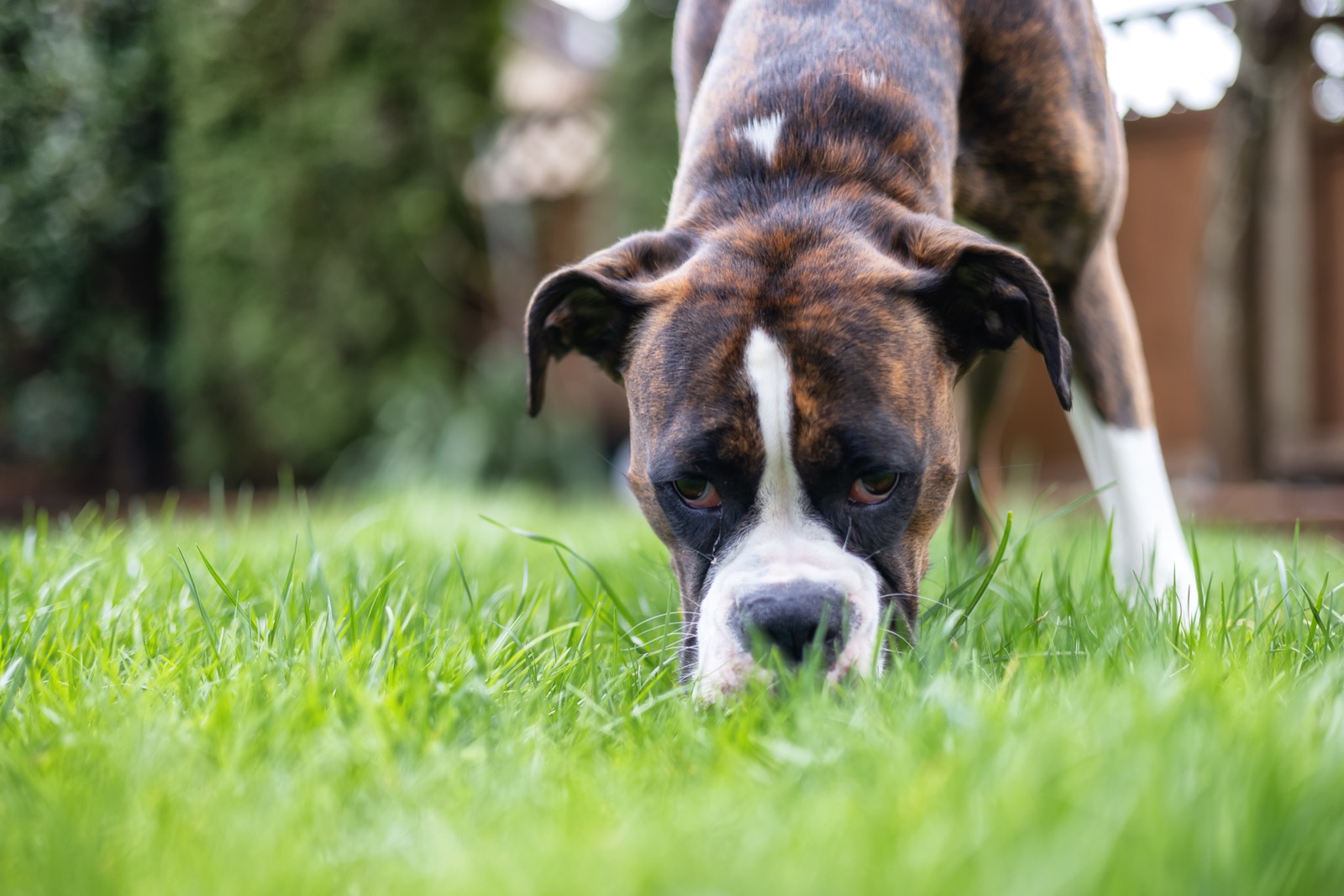
- Happens during walks or relaxed yard time
- No vomiting afterward, or only occasional
- Dog has limited toys, walks, or social interaction
Occasional Gastrointestinal Upset
A subset of dogs eat grass when they feel nauseous. The behavior is usually distinct from casual grazing: the dog seeks grass urgently, gulps it quickly without chewing, and often vomits within 5 to 30 minutes afterward. The vomit typically contains the grass and may include bile or partially digested food.
According to VCA Animal Hospitals, self-induced vomiting via grass eating is a real but uncommon behavior. The 2008 UC Davis study found that only a minority of dogs showed nausea signs before grass eating, but for that minority, the pattern is consistent and recognizable.
Signs GI upset is the driver:
- Frantic, urgent grass seeking
- Gulping rather than chewing
- Vomiting within 30 minutes afterward
- Vomiting contains grass plus bile or yellow foam
- Often happens first thing in the morning (empty stomach bile reflux)
- Excessive licking of lips, surfaces, or paws beforehand
- Skipped a meal or ate something unusual recently
Dietary Fiber or Micronutrient Gaps
Dogs need fiber. Most commercial complete diets include 2 to 4 percent crude fiber, which is enough for healthy stool formation and normal gut motility. Dogs on low-fiber, homemade, or unbalanced raw diets sometimes show increased grazing behavior, and switching to a higher-fiber complete diet reduces the behavior in two to four weeks.
Micronutrient gaps also drive pica behaviors in some dogs, though research on the link to grass eating specifically is limited. Iron, B vitamins, and trace minerals are the usual suspects in pica cases.
Signs dietary gaps are the driver:
- Dog is on a homemade, raw, or unconventional diet without nutritionist oversight
- Grazing is paired with eating dirt, sticks, or fabric (pica)
- Stool is small, hard, or infrequent
- Coat is dull, skin is dry
- Energy is lower than normal
Taste and Texture Preference
Some dogs just like grass. Fresh spring growth is sweet, the texture is interesting, and the act of chewing engages the same satisfaction centers as chewing a toy. Dogs with a strong oral fixation, terriers and retrievers especially, often graze the most.
This is the simplest cause and the easiest to manage: the dog likes the activity and there is no underlying issue.
Signs taste preference is the driver:
- Selective grazing, picking specific blades or types
- More active in spring and early summer when grass is sweet
- Casual posture, not frantic
- No vomiting afterward
- Dog has normal energy, normal weight, normal stool
- Breed disposed to oral fixation (Labs, Goldens, Beagles, terriers)
7-Day Plan to Assess Grass Eating
Observe and Log
Note the time, the duration, the body posture (casual vs frantic), and whether vomiting follows. Three days of logging usually reveals the pattern.
Audit the Lawn
Confirm no herbicides, pesticides, fertilizers, or snail bait. Check for mushrooms. Remove any animal feces.
Check the Diet
Confirm the food is a complete and balanced commercial diet meeting AAFCO standards for the dog's life stage. If on a homemade or raw diet without nutritionist oversight, plan a transition.
Add Enrichment
A 30 to 45 minute walk in the morning, a puzzle feeder for dinner, and two short training sessions. Most behavioral grazing drops within a week.
Check Stool Quality
Small hard stools or chronic soft stools may signal fiber or GI issues. Add a tablespoon of plain pumpkin per 20 pounds daily for a week and watch the change.
Vet Visit if Needed
Trigger criteria: frantic grass eating with vomiting more than once a week, weight loss, dull coat, blood in vomit, pica behaviors with non-grass items, or any new GI symptoms.
Decide
Healthy dog, casual grazing, safe lawn? No further action needed. Frantic patterns, vomiting, or pica? You are now in a workup, not a behavior issue.
What Not to Do
- Do not punish your dog for eating grass. The behavior is usually normal and punishment only adds stress.
- Do not assume grass eating means your dog has worms. Run a fecal exam if other parasite signs are present, but do not deworm without diagnosis.
- Do not let your dog graze on lawns treated with chemicals. Most herbicides and pesticides are toxic.
- Do not let your dog eat unknown plants in the yard. Lily of the valley, foxglove, oleander, sago palm, azalea, and many others are highly toxic.
- Do not give human anti-nausea meds without vet guidance. Pepto-Bismol contains salicylates, which can be problematic in some dogs.
- Do not switch the dog's food abruptly. Even if a diet change is warranted, transition over 7 to 10 days to avoid GI upset.
- Do not ignore frantic, repeated grass eating with vomiting. Once a week or more warrants a vet visit.
Frequently Asked Questions
Dogs eat grass for four main reasons: instinct and boredom (most common, accounts for roughly 70 percent of cases), occasional GI upset, dietary fiber or micronutrient gaps, and simple taste preference. Most grass eating is normal behavior in healthy dogs and does not require treatment.
Sometimes. A 2008 University of California Davis study found that fewer than 25 percent of dogs vomited after eating grass and only 10 percent showed signs of feeling unwell beforehand. Frantic gulping followed by vomiting can indicate GI upset, but most grass eating is casual and unrelated to nausea.
Daily grass eating in a healthy dog is generally not harmful as long as the lawn is free of pesticides, herbicides, fertilizers, and fungi. If the dog is also losing weight, vomiting often, or eating dirt and other non-food items, see a vet to rule out gastrointestinal disease or nutritional deficiency.
Stop them if the lawn was recently treated with chemicals, if they are pulling up roots and eating dirt, or if they vomit afterward consistently. Otherwise, occasional grass eating is normal canine behavior and you do not need to interrupt it.
Plain grass is generally safe. Risks come from herbicides, pesticides, fertilizers, snail bait, mushrooms hidden in the grass, and intestinal parasites passed in animal feces on the lawn. Avoid letting your dog graze on chemically treated lawns and never on parks where unknown chemicals may be used.
Grass blades can irritate the throat and stomach lining, especially when gulped quickly. Some dogs use grass to induce vomiting when they feel nauseous. If vomiting happens more than once a week or contains blood, see a vet. Occasional grass-induced vomiting in an otherwise healthy dog is not an emergency.
Not typically. The folk theory that dogs eat grass to expel parasites is not supported by research. However, dogs with worms may show appetite changes, weight loss, and pica behaviors. Run a fecal exam if your dog also has diarrhea, weight loss, or a dull coat.
Possible but uncommon if you feed a complete and balanced commercial diet. Dogs on homemade or raw diets without veterinary nutrition oversight can develop fiber, mineral, or vitamin gaps that may drive grazing. Switching to a complete diet usually reduces the behavior in two to four weeks.
Puppies graze for the same reasons adults do, plus heightened curiosity. The risk is higher because puppies have less developed immune systems and may pick up parasites from contaminated lawns. Keep puppies off public lawns until they finish their core vaccinations and run a fecal exam at the first vet visit.
The Bigger Picture
Grass eating is one of the most common canine behaviors and one of the most misunderstood. The folk wisdom that dogs eat grass to throw up is partly true for a small subset and wrong for the majority. Most grass eating is normal foraging behavior in healthy dogs. The cases that matter are the frantic gulping followed by repeated vomiting, the dog eating dirt and rocks alongside grass, or the dog losing weight. Those cases need a vet workup, not a behavior intervention.
If your dog also engages in other unusual eating behaviors, the broader pattern matters. Our guide on how to stop dogs from eating poop covers coprophagia, which often pairs with grass eating in bored or under-enriched dogs. Persistent licking and scratching can signal the same underlying nutritional or allergic issue, and our guide on why dogs itch so much covers the diet-skin connection. For dogs that are also slowing down, dog sleeping more than usual helps separate normal aging from concerning lethargy. And if vomiting is the main concern, the feline parallel in cat throwing up after eating walks through the same diagnostic logic that applies to dogs.
Every dog's diet, environment, and behavior pattern is different. PawMatch AI factors in your dog's breed, age, activity level, and health profile to recommend the exact food, supplements, and enrichment that fit. Free, takes 30 seconds.
Stop Guessing. Get Matched.
Every dog is different. PawMatch AI uses your dog's age, breed, diet, and activity profile to recommend the exact food, supplements, and enrichment products that reduce unusual eating behaviors. Free, personalized, takes 30 seconds.
Find My Dog's Match →