Cat Drinking a Lot of Water? When It Is Normal and When It Is a Medical Emergency
Sudden increased thirst is one of the earliest detectable signs of three serious feline diseases. It is rarely random, and catching it inside the first two weeks changes outcomes dramatically.
Healthy cats consume roughly 50 to 60 ml of water per kilogram of body weight per day, including moisture in food. Sustained intake above 100 ml/kg/day is polydipsia and is a red flag. The three most common medical causes ranked by frequency are chronic kidney disease, diabetes mellitus, and hyperthyroidism. All three are most common in cats over 8, all three are detectable with a bloodwork and urinalysis pair, and all three are treatable when caught early. New-onset thirst lasting more than 2 to 3 days needs a vet visit, not a wait-and-see week.
Why Cats Drink a Lot of Water
Cats evolved from desert ancestors. Their kidneys are unusually efficient at concentrating urine, and a healthy cat eating wet food may rarely visit the water bowl at all. When a cat that has never been a big drinker suddenly camps at the bowl, fountain, faucet, or toilet, the cause is almost always one of two categories: a benign environmental shift, or an underlying disease that is impairing the cat's ability to retain water.
The Cornell Feline Health Center lists chronic kidney disease as the most common disease of senior cats and identifies increased thirst and urination as the earliest clinical signs. The Merck Veterinary Manual identifies hyperthyroidism as the most common endocrine disorder of older cats, with polydipsia as a hallmark early sign. The AVMA reports that feline diabetes mellitus is rising in prevalence and presents most commonly with polydipsia, polyuria, polyphagia (increased hunger), and weight loss.
The five most common causes of excessive water drinking in cats, ranked by clinical frequency:
- Chronic kidney disease (CKD)
- Diabetes mellitus
- Hyperthyroidism
- Urinary tract infection or inflammation
- Environmental, diet, or behavioral causes
The first three account for the vast majority of polydipsia cases in cats over 8. Causes 4 and 5 are more common in younger cats but should not be assumed before bloodwork rules out endocrine and renal disease.
Normal Daily Water Intake by Cat Weight
This is the baseline reference. Use it before deciding whether your cat is drinking too much.
- 4 lb (1.8 kg) cat: 90 to 110 ml/day total (including food moisture)
- 6 lb (2.7 kg) cat: 135 to 165 ml/day
- 8 lb (3.6 kg) cat: 180 to 220 ml/day
- 10 lb (4.5 kg) cat: 225 to 270 ml/day
- 12 lb (5.4 kg) cat: 270 to 325 ml/day
- 15 lb (6.8 kg) cat: 340 to 410 ml/day
Cats on canned wet food typically take 70 to 80 percent of their water from food, so bowl intake is often 30 to 60 ml/day. Cats on dry food make up the deficit at the bowl, so 100 to 200 ml/day from the bowl is normal for a dry-fed cat. Polydipsia begins above roughly 100 ml/kg/day total, but any sustained noticeable increase from your cat's baseline is worth investigating.
Chronic Kidney Disease (CKD)
CKD is the single most common reason senior cats start drinking more water. As kidney function declines, the kidneys lose the ability to concentrate urine. The cat compensates by drinking more and urinating more (often in larger litter clumps), which is the body trying to flush waste products through diluted urine. By the time owners notice the water bowl is empty more often, the cat has typically lost 65 to 70 percent of functional kidney tissue. The disease is detectable far earlier with senior bloodwork using SDMA values.
CKD is progressive but highly manageable. Stage 1 and Stage 2 cats can live for years with appropriate diet, hydration, and monitoring. Catching it early at the polydipsia stage is meaningfully better than catching it at the vomiting and weight-loss stage.
Signs CKD is the trigger:
- Cat is 8 or older (CKD prevalence rises sharply after age 10)
- Larger or more frequent urine clumps in the litter box
- Gradual weight loss over weeks to months
- Decreased appetite, especially for wet food the cat used to love
- Vomiting, sometimes intermittent
- Dull coat, ungroomed appearance
- Subtle bad breath with an ammonia tinge
Diabetes Mellitus
Feline diabetes is overwhelmingly type 2, driven by obesity, dry-food-heavy diets, and genetic predisposition. The pancreas struggles to produce enough insulin, blood sugar rises, glucose spills into the urine, water follows the glucose, and the cat urinates excessively. To replace the lost fluid, the cat drinks heavily. Owners often notice a litter box that is constantly soaked and a water bowl emptying twice a day.
The good news is that early-diagnosed feline diabetes has one of the best outcomes of any chronic feline disease. With insulin and a strict low-carb wet-food diet, a meaningful share of cats achieve diabetic remission and come off insulin entirely, particularly when treatment begins within the first few months of symptom onset.
Signs diabetes is the trigger:
- Cat is middle-aged to senior, often 8 to 13
- Cat is overweight or recently was overweight
- Eating more than usual but losing weight
- Litter box urine clumps are dramatically larger than baseline
- Sweet or fruity smell to breath (advanced cases with ketosis)
- Plantigrade stance (walking on hocks) in advanced neuropathy cases
- Weakness, dehydration, vomiting in late stages (this is a true emergency, called diabetic ketoacidosis or DKA)
Hyperthyroidism
Hyperthyroidism is an overactive thyroid gland, almost always caused by a benign thyroid adenoma, in cats over 10. The excess thyroid hormone speeds up metabolism, increases heart rate and blood pressure, drives weight loss despite a massive appetite, and frequently causes increased thirst and urination as a secondary effect.
Hyperthyroid cats are often described by owners as "wired," vocal, restless, and shedding more than usual. They may pace, meow at night, or appear unusually anxious. The increased thirst is real but can be subtle compared with the dramatic weight loss and appetite.
Signs hyperthyroidism is the trigger:
- Cat is over 10 (occasionally 8 to 9, rarely younger)
- Significant weight loss despite eating more
- Hyperactive, restless, vocal, sometimes aggressive
- Unkempt or matted coat
- Increased heart rate (over 220 bpm at rest)
- Vomiting or soft stool
- Palpable thyroid nodule on the neck (vet finding)
Urinary Tract Infection or Cystitis
Less common than the big three but still significant, particularly in younger cats. Bacterial UTIs are uncommon in cats under 8 but become more frequent with age, especially as a secondary infection with CKD or diabetes. Feline idiopathic cystitis (FIC) is sterile bladder inflammation common in younger cats triggered by stress, and can present with increased drinking and frequent painful urination.
Cats with UTIs or FIC often also stop using the litter box or use it in unusual ways. If you are seeing litter box avoidance alongside increased drinking, this combination is highly suggestive of urinary tract involvement.
Signs urinary involvement is the trigger:
- Frequent visits to the litter box with small amounts of urine
- Straining or vocalizing in the box
- Blood in urine (pink or red tinge)
- Licking the genital area excessively
- Urinating outside the box, often on cool smooth surfaces
- Increased thirst but often more modest than CKD or diabetes
- Stress-related context (move, new pet, schedule change)
Environmental, Diet, and Behavioral Causes
Before assuming disease, rule out the benign causes. Cats genuinely do drink more when it is hot, when they switch from wet to dry food, after exercise, after eating something salty, or when a new water source (especially a fountain) is more appealing than the old one. These are proportional, temporary, and tied to an identifiable trigger.
There is also a subset of cats with psychogenic polydipsia, where stress or compulsive behavior drives excessive drinking with no medical cause. This is rare and is a diagnosis of exclusion after disease is ruled out.
Signs the cause is environmental:
- Recent switch from wet to dry food
- Recent heat wave or seasonal temperature spike
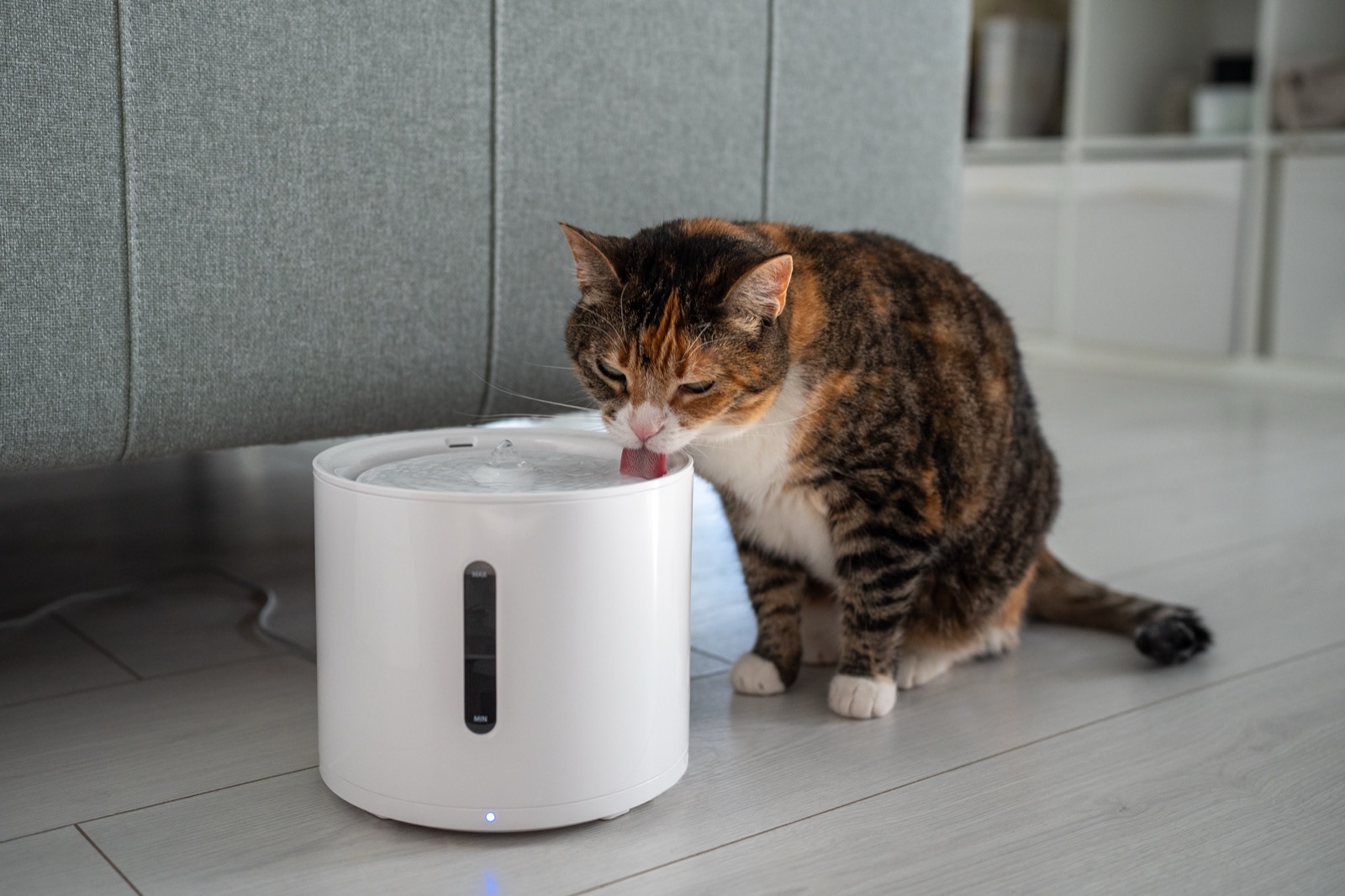
- New water fountain introduced (cats often drink more from moving water)
- Recent salty treat or human food shared
- Increase is mild (10 to 20 percent above baseline) and stable
- Cat is otherwise eating, behaving, and urinating normally
How to Measure Cat Water Intake at Home
The first step before a vet visit is to bring objective data, not "the bowl feels emptier." Here is the protocol.
Choose One Bowl
Choose one consistent water bowl. Remove all other water sources (or measure them separately). If you have a fountain, measure the reservoir before and after.
Fill Known Volume
Fill the bowl with a known volume. Use a measuring cup or weigh the water with a kitchen scale (1 ml of water equals 1 gram).
Evaporation Control
Set a second identical bowl with the same volume in the same room and the same height. Cover it lightly with a paper towel that allows airflow but prevents drinking by other pets.
Measure After 24 Hours
After exactly 24 hours, measure what is left in both bowls. Subtract the evaporation-control amount from the drinking-bowl amount. The result is your cat's actual bowl intake.
Repeat for 3 Days
Repeat for 3 days. Average the results. Compare against the normal range for your cat's weight (50 to 60 ml/kg/day total intake, accounting for food moisture).
Add Food Moisture
If your cat is on canned wet food, add the moisture content of the food. Most cans are 75 to 80 percent water, so a 5.5 oz can (156 g) provides about 117 ml of water. Two cans of wet food daily provide roughly 230 ml of water before the cat ever drinks from the bowl.
Bring Data to Vet
Bring the average to your vet visit, along with the bowl-measurement notes. This data shortens the diagnostic process significantly.
What Not to Do
- Do not restrict your cat's water access to "test" if they really need it. This is dangerous and can rapidly cause dehydration in a cat with kidney disease or diabetes.
- Do not wait more than a few days to schedule a vet visit when intake is clearly elevated. The big-three diseases have meaningfully better outcomes when caught early.
- Do not assume increased drinking is "just because of the new fountain" without measuring. Environmental causes are real but they are not the most common explanation in a senior cat.
- Do not give your cat human medications, electrolyte drinks, or supplements without vet guidance. Many are toxic to cats.
- Do not skip the urinalysis even if the bloodwork looks normal. Urine specific gravity below 1.035 is one of the earliest signs of kidney disease and can show up before blood values shift.
- Do not assume a young cat is safe from polydipsia. Diabetes is rising in younger cats, and FIC is most common in cats under 7.
- Do not change to a homemade diet to "support kidneys" without working with a vet. Homemade renal diets are very difficult to balance correctly.
Frequently Asked Questions
A healthy cat needs roughly 50 to 60 milliliters of water per kilogram of body weight per day, including moisture from food. A 10-pound (4.5 kg) cat needs around 225 to 270 ml total. Cats on wet food drink much less from a bowl, often 30 to 60 ml. Cats on dry food drink more, often 100 to 200 ml from a bowl.
Polydipsia is defined as drinking more than 100 ml per kilogram of body weight per day. For a 10-pound cat, sustained drinking over about 450 ml (roughly 1.9 cups) in a day is a red flag. Any sudden, noticeable increase in water intake, even below this threshold, warrants a vet visit.
Yes. Sudden increased thirst is one of the earliest detectable signs of three serious feline diseases: diabetes mellitus, chronic kidney disease, and hyperthyroidism. Catching them early dramatically changes the prognosis. Increased water intake lasting more than 2 to 3 days should be checked with bloodwork and urinalysis.
Increased thirst (polydipsia), increased urination (polyuria), increased hunger with weight loss, and lethargy. Many diabetic cats are middle-aged, overweight, and on dry food. Bloodwork and urinalysis confirm diagnosis. Early treatment, particularly diet change to low-carb wet food plus insulin, can lead to diabetic remission in a meaningful share of cats.
In cats over 8, the three most likely causes are chronic kidney disease, hyperthyroidism, and diabetes mellitus. All three are common, all three are detectable with senior bloodwork and a thyroid panel, and all three are treatable when caught early. Any cat over 8 with new-onset thirst needs a vet workup.
Yes. Cats drink more in hot weather, when on dry food, after exercise, and after eating salty treats. These are temporary and proportional. Sustained increased drinking that does not match weather, activity, or diet changes is the pattern that signals disease.
Fill the water bowl with a known volume (use a measuring cup or kitchen scale, where 1 ml equals 1 gram). After 24 hours, measure what is left. Account for evaporation by setting an identical bowl with the same volume in the same room. Subtract the evaporation amount. Track for 3 days to get a reliable average.
Increased thirst and urination, gradual weight loss, decreased appetite, vomiting, dehydration, and bad breath that smells slightly ammonia-like. Chronic kidney disease (CKD) is the most common disease of senior cats. Diagnosis is by bloodwork (creatinine, BUN, SDMA) and urinalysis (urine specific gravity below 1.035 is suggestive).
Within a few days of noticing a sustained change. There is no benefit to waiting. Bring a recent measurement of water intake and, if possible, a fresh urine sample. Bloodwork, thyroid panel, and urinalysis will diagnose the most common causes in a single visit.
The Bigger Picture
Of all the symptoms cats can show, sudden polydipsia is the most undervalued. Owners notice it, hesitate, and watch the water bowl for two weeks before booking a vet visit. By the time the cat is also losing weight and vomiting, kidney function has dropped further and treatment options have narrowed. The number on the bowl is more informative than almost any single behavior change, and acting fast on it is the difference between an early-stage diagnosis and a crisis appointment.
Cat health signals cluster. The same cat that is drinking more often also starts eating less wet food, avoiding the litter box, or sleeping more than usual. When you see two of these together, treat it as one signal pointing at one underlying problem, almost always endocrine or renal.
Every cat has different baseline hydration needs, diet structures, and risk factors. PawMatch AI factors in your cat's age, breed, weight, and current diet to recommend the exact food, fountain, and care setup that fit cats like yours. Free, takes 30 seconds.
Stop Guessing. Get Matched.
Every cat is different. PawMatch AI uses your cat's age, breed, weight, and current diet to recommend the exact food, fountain, and senior care products that support healthy hydration and early detection. Free, personalized, takes 30 seconds.
Find My Cat's Match →