Cat Yowling at Night? Senior Cognitive Dysfunction, Thyroid, and the Sleep Fix
A cat yowling at night is almost never random. It is one of the loudest signals cats give that something biological or medical needs attention, especially in cats over 10.
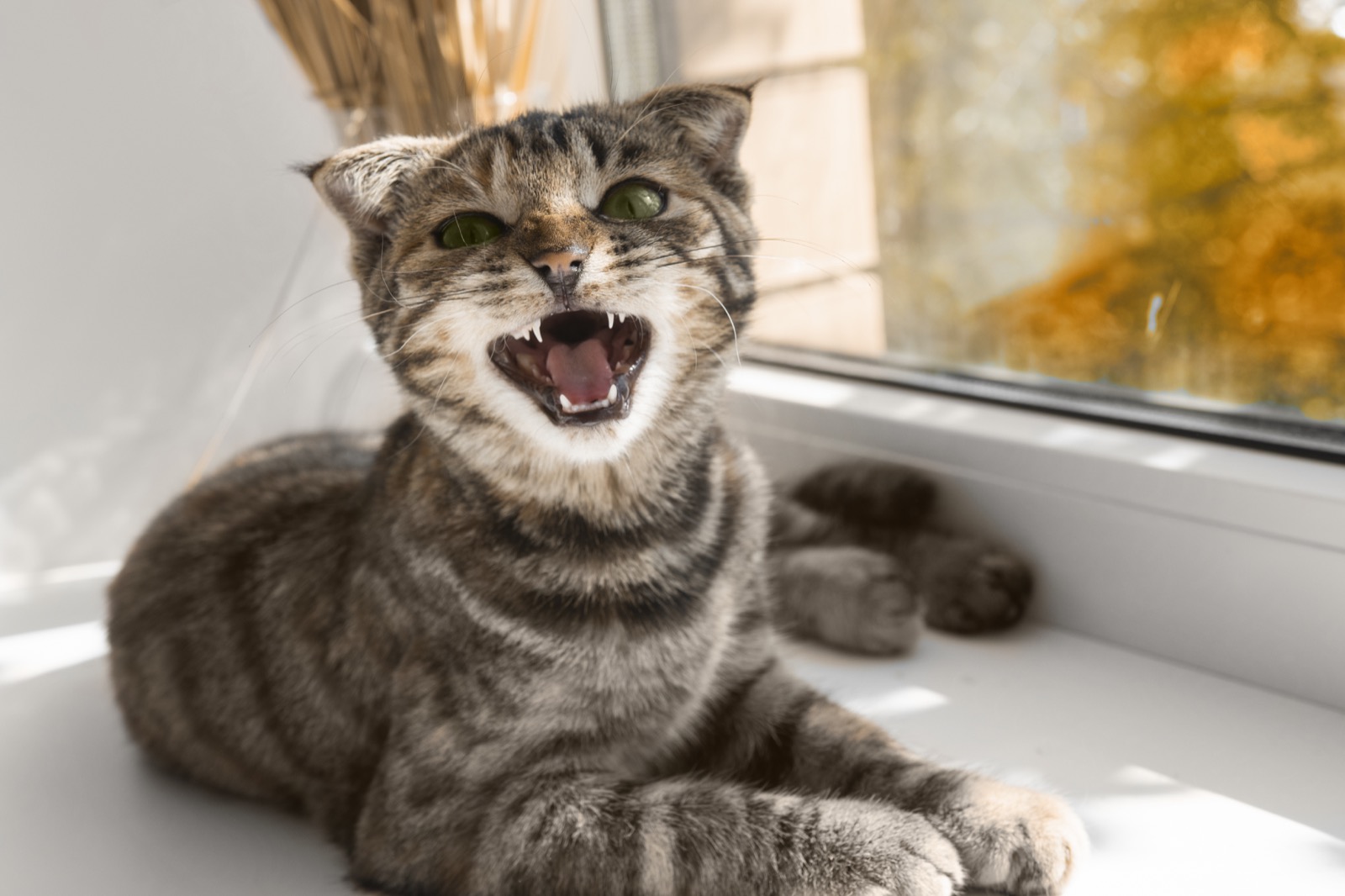
Cat yowling at night is fundamentally different from regular meowing. The pitch is lower, the duration is longer, and the emotional content reads as urgent, plaintive, or distressed even to people who have never heard a cat yowl before. In senior cats, the leading causes are feline cognitive dysfunction syndrome (the cat equivalent of dementia) and hyperthyroidism, both common after age 10 and both treatable. In younger cats, the leading causes are unspayed or unneutered mating behavior, attention-seeking that has been reinforced, and unspent energy. This guide separates the medical from the behavioral, walks through the five real causes, and ends with the 7-day sleep protocol that resolves most cases.
Why Cats Yowl at Night
Yowling is a high-effort vocalization. Cats do not produce it casually. In the wild, yowling functions across long distances for mating, territorial defense, and distress signaling. House cats use it for similar reasons but the trigger is usually something we have changed: indoor lighting flattens day-night cues, free-feeding removes the hunt-eat-sleep cycle, and a small territory amplifies any source of frustration. Senior cats add another layer because the aging feline brain changes how cats perceive their environment and time of day.
The International Cat Care guidance on cognitive dysfunction describes the most common pattern: a previously quiet senior cat starts vocalizing loudly at night, often standing in a hallway or near a door, sometimes staring at the wall, sometimes calling without obvious target. Owners often interpret the behavior as the cat being upset or confused. They are right. The cat is confused, and the disorientation is neurological.
Three biological drivers explain almost all cases:
- Disrupted circadian rhythm. Indoor lighting, irregular feeding schedules, and age-related brain changes all flatten the day-night signal. Cats lose track of when to sleep.
- Sensory loss. Hearing and vision decline after age 11. Cats that cannot hear themselves vocalize louder. Cats that cannot see well get disoriented at night.
- Medical pain or metabolic disease. Hyperthyroidism speeds metabolism and disrupts sleep. Arthritis causes pain that worsens with stillness. Hypertension causes restlessness. All three are common in older cats and all three can drive nighttime vocalization.
The first job is always to figure out which category applies, then treat that. Behavioral interventions stacked on top of an untreated medical problem produce frustration for everyone.
The 5 Real Causes of Cat Yowling at Night
Feline Cognitive Dysfunction Syndrome (CDS)
Cognitive dysfunction is the cat version of dementia. It is more common than most owners realize. The Merck Veterinary Manual cites studies showing roughly 28 percent of cats aged 11 to 14 show at least one CDS sign, rising to over 50 percent in cats over 15. Most cases go undiagnosed because owners attribute the behavior to "just getting old."
The classic presentation is a previously calm senior cat that begins yowling in the middle of the night, often from a fixed location like a hallway or near a door. The cat may stand and stare at a wall, walk in circles, or appear to be looking for something. Sleep schedules invert: the cat sleeps more during the day and is awake and vocal at night.
CDS is progressive but management can slow decline significantly. The acronym vets use to track signs is DISHA: Disorientation, Interaction changes, Sleep/wake cycle changes, House-soiling, Activity changes.
Signs CDS is the cause:
- Cat is over 11 years old
- Yowling started or worsened in the past 6 to 12 months
- Cat sometimes seems "lost" or stares at corners
- Sleeps more during the day, awake at night
- New or worsening litter box accidents
- Reduced interest in interactions or play
- Wandering at night, often returning to the same spots
Hyperthyroidism
Hyperthyroidism is the most common endocrine disease in older cats. It is caused by a benign thyroid tumor that overproduces thyroid hormone, dramatically speeding metabolism. The disease is highly treatable and most cats live years after diagnosis with appropriate management.
The reason it appears in a yowling article: hyperthyroid cats are biologically wired to be restless. They lose weight despite eating more, they vocalize more, they sleep less, and a significant percentage develop nighttime yowling specifically. Owners often describe these cats as "more talkative than they used to be" or "wound up." The Cornell Feline Health Center recommends a thyroid panel for any cat over 8 showing behavior changes.
Signs hyperthyroidism is the cause:
- Cat is over 9 years old
- Weight loss despite normal or increased appetite
- Increased water intake and urination
- Restlessness, especially at night
- Vomiting more than usual (over 2 to 3 times a month)
- Rough or unkempt coat
- Heart rate above 220 beats per minute at rest
Hearing Loss or Vision Loss
Cats start losing high-frequency hearing around age 11. By 15, many cats have significant hearing loss. Vision loss is usually slower but accelerates with conditions like hypertension that damage the retina. The relevance to yowling: cats that cannot hear themselves cannot regulate their volume, and cats that cannot see well are disoriented at night when light cues are minimal.
The pattern is recognizable. A cat that used to come when called stops responding. A cat that used to be quiet starts vocalizing loudly, often when alone in another room, as if checking whether the rest of the household still exists. Vision-impaired cats walk into furniture, hesitate at thresholds, or appear startled when touched.
Signs sensory loss is the cause:
- Cat is over 11
- Does not respond to familiar sounds (treat bag, can opener, name)
- Sleeps through household noise that used to wake them
- Vocalizes loudly when alone or at night
- Bumps into furniture or hesitates at stairs and doorways
- Pupils stay dilated in bright light or vary unevenly between eyes
Mating Behavior (Unspayed Females, Unneutered Males)
Intact cats yowl. It is built into the species. Female cats in heat (estrus) produce the loudest, most persistent yowling most owners ever hear from a cat. The vocalization lasts hours at a time, repeats day and night, and continues for several days before pausing and starting again every 2 to 3 weeks during breeding season.
Intact males yowl in response. A male will yowl at a nearby female's scent, at other males, and at his own reflection in a dark window. The vocalization is loud, low, and territorial. This is the easiest cause to diagnose: if the cat is intact and yowls in repeating multi-day cycles, mating behavior is the answer.
Signs mating is the cause:
- Cat is intact (not spayed or neutered)
- Female in cyclical pattern: 3 to 5 days of intense yowling, 7 to 14 days quiet, repeat
- Female adopts hindquarter-raised posture when stroked along the back
- Male spraying urine indoors
- Male yowling at windows, especially after dark
- Behavior worse in spring and summer
Pain, Anxiety, or Attention-Seeking
The fifth category is the catch-all for cases where medical workup is clean and mating is ruled out. Pain is the most underdiagnosed driver. Cats hide pain by default. Arthritis affects 60 to 90 percent of cats over 12, most of it never diagnosed. Dental disease affects an even higher percentage. Internal pain from constipation, urinary issues, or abdominal disease can drive vocalization too.
When medical and pain are cleared, the remaining causes are anxiety (new pet, schedule change, household move) and reinforced attention-seeking. The latter is the most preventable. If a cat yowls and the owner responds (with food, attention, eye contact, opening the bedroom door, or even just shushing), the cat learns that yowling produces a result. Cats are excellent operant learners. The behavior becomes a habit within a few weeks of accidental reinforcement.
Signs pain or anxiety is the cause:
- Recent change in household (new pet, baby, schedule, move)
- Cat seems hunched, reluctant to jump, or moves stiffly
- Yowling stops or reduces when picked up or comforted
- Bad breath, drooling, or pawing at the mouth (dental pain)
- Reduced grooming, especially of the back half
- Specific time-locked vocalization (always at 5am, always when bedroom door closes)
7-Day Sleep Fix Protocol
This protocol assumes medical causes have been ruled out or are being treated in parallel. For cats with confirmed CDS, hyperthyroidism, or other medical issues, run this alongside medical treatment.
Vet Baseline
(If not done in past 6 months.) Bloodwork with thyroid panel, urinalysis, blood pressure if cat is over 9. This sets the floor. Behavioral interventions stacked on untreated thyroid disease do not work.
End Free-Feeding
Switch to scheduled meals: small breakfast, small midday meal, larger dinner immediately after evening play. The hunger-satiety cycle is one of the strongest signals the feline body uses to regulate sleep timing.
Add Evening Hunt-Style Play
Ten to fifteen minutes with a wand toy, ending with the cat catching the toy. Follow immediately with the largest meal of the day. The hunt-eat-groom-sleep sequence triggers natural sleep biology. This is the same protocol that resolves cat zoomies at night.
Set Up Night Anchoring
Night lights along the cat's usual nighttime path: hallway, litter box, food and water station. For senior cats, this prevents disorientation. A Feliway Classic diffuser in the main living area helps reduce anxiety-driven vocalization.
Add Daytime Engagement
Two short play sessions plus one puzzle feeder meal. The goal is to anchor activity to daylight and rest to night. Cats that have been awake more during the day sleep more deeply at night. This is especially important for senior cats whose day-night cycles are flattening.
Implement Zero-Response Policy
No talking, no eye contact, no moving when the cat yowls at night. Closed bedroom door if needed. Expect 2 to 3 nights of extinction burst (worse before better) if attention-seeking was part of the pattern. Resolve to wait it out. One response restarts the cycle.
Audit and Adjust
Most cats show clear improvement by day 7. If the cat is still yowling, increase evening play intensity, recheck for medical causes, and consider a consult with a board-certified veterinary behaviorist (DACVB). Senior cats with confirmed CDS may need additional months of routine reinforcement plus prescription diet to fully stabilize.
What Not to Do
- Do not yell at the cat. Punishment increases anxiety and worsens behavioral yowling.
- Do not feed at 3am, even to make the cat quiet. You are paying for the wake-up.
- Do not let the cat out at night. Outdoor cats face dramatically higher mortality from cars, predators, and disease.
- Do not skip the vet workup for senior cats. Behavior changes in cats over 10 are medical until proven otherwise.
- Do not stop a treatable disease's medication because the yowling improved. Hyperthyroidism and arthritis need continuous management.
- Do not assume the cat will "grow out of it." Yowling in senior cats typically worsens without intervention.
- Do not give over-the-counter sedatives or melatonin without veterinary direction. Some are toxic to cats and dosing is critical.
Frequently Asked Questions
The five most common drivers are senior cognitive dysfunction, hyperthyroidism, hearing or vision loss, unspayed or unneutered mating behavior, and pain. In senior cats, cognitive dysfunction and hyperthyroidism account for the majority of cases. In younger cats, unspent energy or attention-seeking are more likely. The behavior is rarely random and almost always points to a treatable cause.
Feline cognitive dysfunction syndrome (CDS) is the cat version of dementia. Roughly 28 percent of cats aged 11 to 14 show at least one sign, rising to over 50 percent in cats over 15, according to the Merck Veterinary Manual. Signs include night yowling, disorientation, altered sleep cycles, soiling outside the litter box, and reduced social interaction. It is progressive but manageable.
Yes. Hyperthyroidism is the most common endocrine disease in older cats. It causes restlessness, increased vocalization, increased appetite with weight loss, and night activity. Cornell Feline Health Center recommends thyroid panels for any cat over 8 showing behavior changes. Treatment with medication, diet, or radioactive iodine resolves the symptoms in most cases.
Deaf cats cannot hear themselves, so they cannot regulate volume. They often vocalize louder and more often, especially at night when there is less visual stimulation. Many cats develop age-related hearing loss after 12. The fix is increased daytime engagement, night lights so they can navigate visually, and a consistent sleep routine that anchors them without sound cues.
If the yowling is mating behavior, yes. Intact females in heat yowl loudly and persistently for several days at a time, repeating every 2 to 3 weeks during breeding season. Intact males yowl in response to nearby females or other males. Spaying or neutering resolves mating-driven yowling in the vast majority of cases within weeks of surgery.
Yes, especially in older cats. Cats hide pain by default, and night yowling can be one of the few signs that arthritis, dental disease, or internal pain is present. Sudden new yowling in a previously quiet senior cat warrants a vet exam with a focus on joints, mouth, and abdomen. Pain-driven yowling improves quickly with appropriate pain management.
First rule out medical causes with a vet exam and bloodwork including a thyroid panel. Then implement the sleep fix: structured evening play ending in a meal, scheduled feeding instead of free-feeding, night lights for senior cats, and complete consistency in not responding to nighttime vocalization. Most behaviorally driven yowling improves within 1 to 2 weeks.
Yes. Meowing is short, conversational, and directed at humans. Yowling is longer, louder, lower-pitched, and often sounds distressed or wailing. Yowling carries more biological weight and is more likely to indicate a medical issue, especially in adult cats. Persistent yowling, particularly in a senior cat, deserves a full medical workup.
Untreated CDS yowling tends to worsen over months to years. With intervention (vet workup, supplements like SAMe or s-adenosylmethionine, melatonin in some protocols, environmental enrichment, and prescription diets like Hill's b/d), many cats show meaningful reduction within 4 to 8 weeks. The condition is progressive but treatment slows decline significantly.
The Bigger Picture
A cat yowling at night is one of the loudest signals in the species, and it almost always points somewhere specific. Senior cats are pointing at cognitive change, thyroid disease, or pain. Intact cats are pointing at hormones. Younger cats with clean medical workups are pointing at reinforced habits or unspent energy. The structural fix layers medical clearance, scheduled feeding, evening hunt-style play, and night anchoring on top of each other. Cats that meow at night without yowling usually need the same protocol with less urgency. Cats with 3am zoomie patterns overlap heavily, especially in younger cats. Senior cats often show the same syndrome dogs do, where old dogs pace at night for the same neurological reasons cats yowl. Owners noticing the cat is also staring at walls should treat that as part of the same workup, not a separate issue.
Every senior cat deserves a tailored care plan. PawMatch AI factors in your cat's age, breed, weight, and existing diagnoses to recommend the food, supplements, enrichment, and senior care products that fit. Free, takes 30 seconds.
Stop Guessing. Get Matched.
Senior cats need senior-specific care. PawMatch AI uses your cat's age, breed, weight, and known diagnoses to recommend the exact food, supplements, and enrichment that quiet nighttime yowling and protect aging brains. Free, personalized, takes 30 seconds.
Find My Cat's Match →