Fish Dying After Water Change? The 5 Mistakes That Cause It
Fish dying right after a water change is almost never bad luck. Five specific mistakes cause it, and every one is fixable with a tighter protocol.
Fish die after water changes for five reasons: untreated chlorine or chloramine in the new water, temperature shock from cold or hot tap water, pH swing from source water that differs from tank water, changing too much water at once, or disrupting the biological filter by cleaning it the same day. The cure is not a fancier product but a tighter protocol. Match temperature, dose dechlorinator into the bucket before pouring it in, keep changes at 20 to 30 percent, and never scrub the filter on the same day.
Why Fish Die After Water Changes
Water changes are supposed to save fish, not kill them. They dilute nitrate, remove dissolved organic compounds, and restore mineral balance. When done badly, they introduce shocks the fish cannot recover from. The deaths look mysterious because the tank is now cleaner than before, but the act of changing the water created the toxin. The American Veterinary Medical Association aquatic resources identify acute water quality changes as one of the leading causes of fish death in home aquariums.
The five mistakes, ranked by frequency:
- Adding chlorinated or chloraminated tap water without dechlorinator
- Refilling with water at the wrong temperature
- Swinging pH because source water and tank water do not match
- Changing too much water at once (over 50 percent)
- Cleaning the filter and changing water on the same day
These mistakes compound. A 60 percent change with cold chlorinated water and a fresh filter clean is a triple shock that can kill an entire tank overnight. The fix is a slower, smaller, more deliberate protocol, not exotic products.
The signs of post-water-change death are predictable. Fish gasp at the surface within minutes to hours. Gills may look red, pale, or streaked. Fish lay on the substrate, twitch, or swim erratically. Death follows within 6 to 72 hours depending on the severity. If you see early signs, the protocol below can sometimes reverse it. If fish are already dead, the protocol prevents the next round.
Untreated Chlorine or Chloramine
Municipal tap water is treated with chlorine or chloramine to kill bacteria. Both are lethal to fish at the concentrations used in drinking water (1 to 4 parts per million). Chlorine damages gill tissue on direct contact and kills the beneficial bacteria in your filter. Chloramine is even worse because it does not off-gas naturally and stays toxic until chemically neutralized.
The classic mistake is filling the bucket from the tap, then dumping it in the tank. Even if you add dechlorinator afterward, the gills have already taken damage in the first 30 to 60 seconds. The other classic mistake is using a stale bottle of dechlorinator that has lost potency.
Signs chlorine or chloramine was the cause:
- Fish gasping within minutes of refill
- Pale or reddened gills
- Fish flashing or twitching against substrate
- Beneficial bacteria die-off causing ammonia spike 2 to 5 days later
- You did not use dechlorinator, or added it after the water was in the tank
- Recent change in municipal water treatment (utilities sometimes switch to chloramine without notice)
Temperature Shock
The new water has to match the tank within roughly 2 degrees Fahrenheit. Pouring 60-degree tap water into a 78-degree tank drops the temperature locally to 65 or lower around the fish. That kind of swing causes a stress response, immune suppression, and in severe cases, immediate respiratory collapse.
The mistake is convenience: running the tap "until it feels warm" with a finger test. Your finger is wrong. Cold tap water in winter can hit 45 to 50 degrees in northern climates. Hot water heaters can deliver 120-plus degrees that pulls heavy metals from the pipes and is too hot for fish.
Signs temperature shock was the cause:
- Fish swimming erratically, then sinking to bottom
- Cold-water fish like goldfish actually less affected (more tolerance) than tropical species
- Tank thermometer reads more than 4 degrees off from before the change
- You filled the bucket without checking water temperature
- Recent seasonal change (very cold winter or hot summer tap water)
- Multiple fish affected simultaneously
pH Swing From Mismatched Source Water
Tank water and tap water often have different pH, hardness, and mineral content. Established fish acclimate to the tank water over weeks. Dumping in source water that differs by more than 0.4 pH units, or that has very different general hardness (GH) or carbonate hardness (KH), causes a chemistry shock. The fish's electrolyte balance disrupts faster than its body can compensate.
The most common version is a tank that has drifted acidic over time (driftwood tannins, biological waste, low KH). The tap water comes in at neutral or basic pH and the swing knocks the fish out.
Signs pH swing was the cause:
- Fish twitching, flashing, or lying flat on substrate after the change
- Tank water tested before the change was significantly different pH from tap
- You have driftwood, peat, or other tannin sources in the tank
- Sensitive species (discus, neon tetras, bettas) affected most
- Symptoms appear within 30 minutes to 4 hours
- Lower KH in tank water increases susceptibility
Changing Too Much Water at Once
Beginner advice often says "do a big water change when in trouble," but that advice can kill the fish faster than the original problem. A 70 or 80 percent change strips out dissolved minerals, swings pH and hardness, dumps dissolved gases, and exposes fish to the maximum amount of new-water shock at once. Fish acclimated to specific water parameters cannot adapt to that swing in minutes.
The exception is true emergencies (ammonia or nitrite over 1 ppm, fish actively dying) where massive change is justified because the alternative is certain death. Even then, do it slowly: 25 percent at a time, separated by 30 to 60 minutes.
Signs the change size was the cause:
- You changed 50 percent or more
- Fish were fine before, then crashed within hours
- All fish affected, not just one
- Tank had not been changed in weeks or months (so chemistry had drifted)
- New water and tank water had visible differences in clarity or color
- Soft-water or sensitive species hit hardest
Cleaning the Filter and Changing Water on the Same Day
The biological filter is a living colony of nitrifying bacteria growing on the filter media, substrate, and decor. These bacteria convert ammonia (from fish waste) to nitrite, then to nitrate. They are the difference between a stable tank and a toxic chamber. Aggressive filter cleaning, especially with tap water, kills enough bacteria to crash the cycle. Add a water change on the same day and the remaining bacteria face a dilute environment with reduced food, and you get a delayed ammonia spike 2 to 5 days later that kills the tank.
Signs filter disruption was the cause:
- You cleaned the filter and changed water the same day
- Filter media was replaced (not just rinsed)
- Filter was scrubbed with tap water, not tank water
- Carbon or chemical media replaced at the same time as bio media
- Fish died 2 to 5 days after the "successful" change, not immediately
- Ammonia or nitrite spiked the day before the deaths
Safe Water Change Protocol
Test Parameters
The day before, test current tank parameters: ammonia, nitrite, nitrate, pH, temperature. Note all numbers.
Prepare the Bucket
Use a dedicated aquarium bucket, never one that has held soap or chemicals.
Fill the Bucket
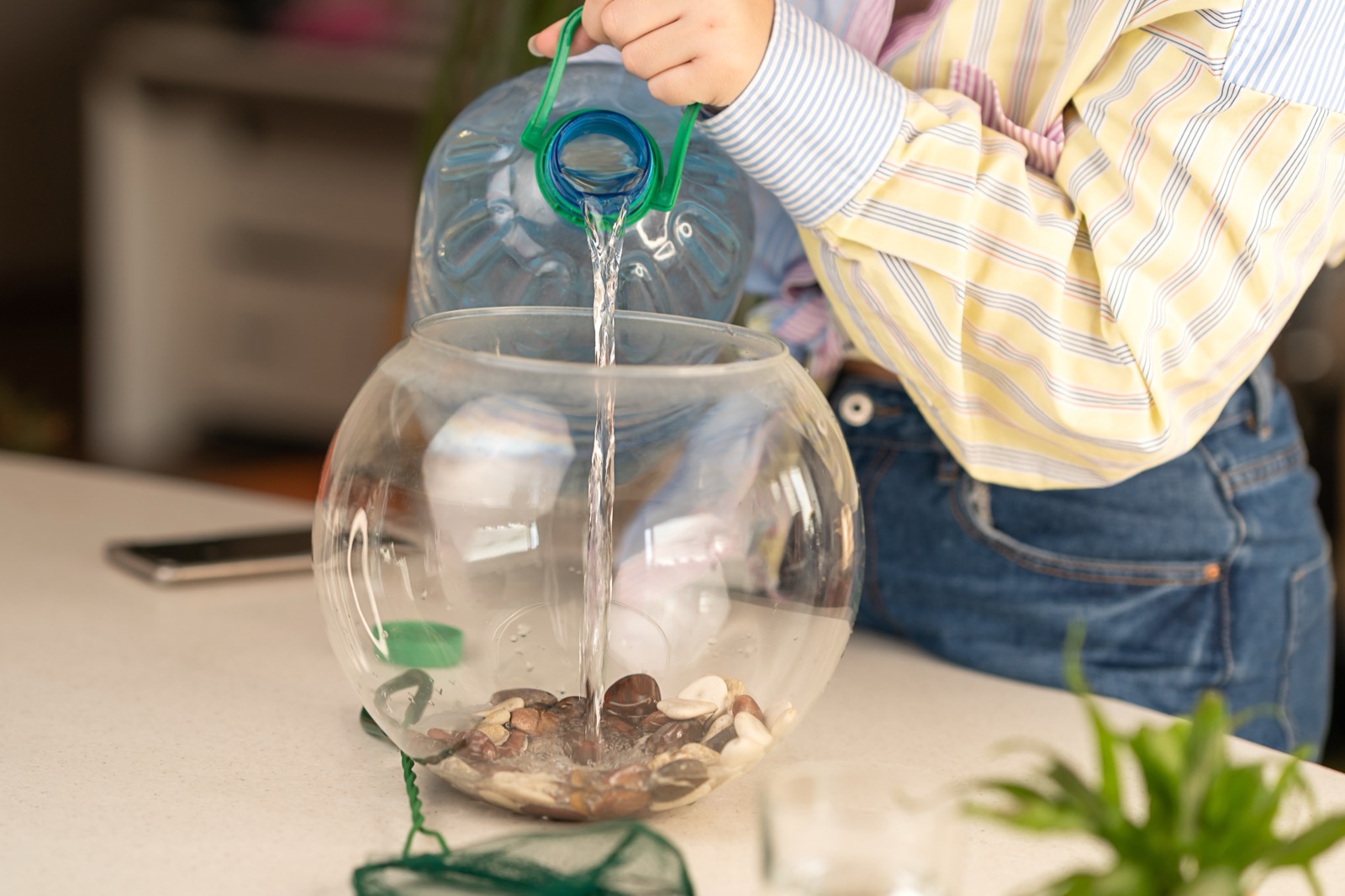
Fill the bucket with tap water. Mix hot and cold to match tank temperature within 2 degrees. Verify with a stick thermometer.
Add Dechlorinator
Add dechlorinator to the bucket. Dose for the full tank volume as insurance. Stir gently for 30 seconds.
Verify Chlorine Removal
Test the dechlorinated water for chlorine (test strip works) to confirm.
Drain Tank Water
Drain 20 to 30 percent of the tank water using a gravel siphon. Vacuum the substrate gently (do not deep-stir, which can release pockets of toxic gas in old setups).
Pour Water in Slowly
Pour the dechlorinated, temperature-matched water in slowly. A small siphon or a cup poured against the glass prevents substrate disturbance and reduces shock.
Observe Fish
Observe fish for 15 minutes. Look for gasping, flashing, or hiding that was not present before.
Resume Normal Care
Resume normal lighting and feeding the next day if behavior is normal.
Skip Filter Cleaning
Do not clean the filter on water change day. Wait at least a week. If the filter needs cleaning, rinse media gently in the bucket of drained tank water.
Schedule Next Change
Schedule the next water change for 7 days out. Consistency beats heroic intermittent changes.
What Not to Do
- Do not pour tap water directly into the tank. Always dechlorinate in the bucket first.
- Do not use hot water from the water heater. It leaches metals and minerals from the tank lining.
- Do not change more than 30 percent in a single weekly maintenance change.
- Do not skip the thermometer. Finger tests are off by 5 to 10 degrees regularly.
- Do not scrub the filter with tap water. Tank water only.
- Do not change water and clean the filter on the same day.
- Do not assume your dechlorinator works forever. Replace the bottle yearly.
- Do not add new fish on water change day. Combined stress kills fragile fish.
- Do not skip testing parameters before and after large changes. Numbers tell you what is happening.
Frequently Asked Questions
Five mistakes cause almost every post-water-change death: forgetting dechlorinator, using water at the wrong temperature, swinging pH with mismatched source water, changing too much water at once, or scrubbing the filter and killing beneficial bacteria. The fix is a tighter water change protocol, not a different fish.
The safe weekly water change is 20 to 30 percent for an established tank. New tanks under 6 weeks should change 10 to 15 percent twice a week. Changes over 50 percent are reserved for emergencies (ammonia spikes, medication overdose) and need very careful temperature and pH matching.
Yes, untreated tap water kills fish. Municipal water contains chlorine or chloramine that damages gill tissue and beneficial bacteria within minutes. Always use a dechlorinator like Seachem Prime, API Stress Coat, or Tetra AquaSafe. Dose for the full tank volume, not just the new water, when in doubt.
Yes. Changing more than 50 percent at once can shock fish through sudden shifts in temperature, pH, hardness, or dissolved gases. Established fish acclimated to specific water conditions die from the swing, not the new water itself. Small frequent changes (20 to 30 percent weekly) are safer than rare large ones.
Delayed deaths usually trace to chlorine damage, temperature shock the fish could not recover from, or a pH swing that destabilized its electrolyte balance. Gill damage from chlorine takes hours to manifest as respiratory failure. Test the new tap water with a chlorine and pH strip before the next change.
Clean the filter only every 4 to 6 weeks, and only by rinsing media in tank water you just drained. Never use tap water on filter media. Never do a filter clean and water change on the same day. Spacing them prevents the beneficial bacteria crash that causes ammonia spikes 2 to 5 days later.
If your tap has chlorine only, water can be left to off-gas for 24 hours and used without dechlorinator. If your tap has chloramine (most modern municipal supplies), it will not off-gas and you must use a dechlorinator. Easier to just always use dechlorinator on every water change.
New tank syndrome is the ammonia and nitrite spike that hits when fish are added to an uncycled tank. The biological filter has not grown the bacteria needed to convert waste. Fish die from ammonia poisoning within 1 to 4 weeks. Cycling the tank for 4 to 6 weeks before adding fish prevents it.
The Bigger Picture
Water changes should extend fish lives, not end them. The five mistakes that cause post-change deaths are all fixable with a protocol that takes 10 extra minutes per change: dechlorinate in the bucket, match temperature, cap the change at 30 percent, skip the filter clean, and test before and after. Fish loss patterns that look mysterious almost always trace back to one of those five. For tanks that crash repeatedly even with careful changes, the underlying issue is usually undersized filtration, overstocking, or skipped cycling, and the full diagnostic is in our post on why fish keep dying. Cloudy water that follows a water change is a separate but related signal, covered in the cloudy fish tank fix. If fish are gasping at the surface after a change, you are likely dealing with chlorine damage or dissolved oxygen disruption, and the emergency protocol is in the surface gasping post.
Every tank is different based on size, water source, livestock, and filtration. PawMatch AI factors in your tank size, water source, and stocking to recommend the exact dechlorinator, test kit, and water care products that fit. Free, takes 30 seconds.
Stop Guessing. Get Matched.
Every tank is different. PawMatch AI uses your tank size, water source, livestock, and filtration to recommend the exact dechlorinator, test kit, and water care products that fit. Free, personalized, takes 30 seconds.
Find My Fish's Match →