Hamster Biting Cage Bars? What It Means and the Cage Upgrade That Stops It
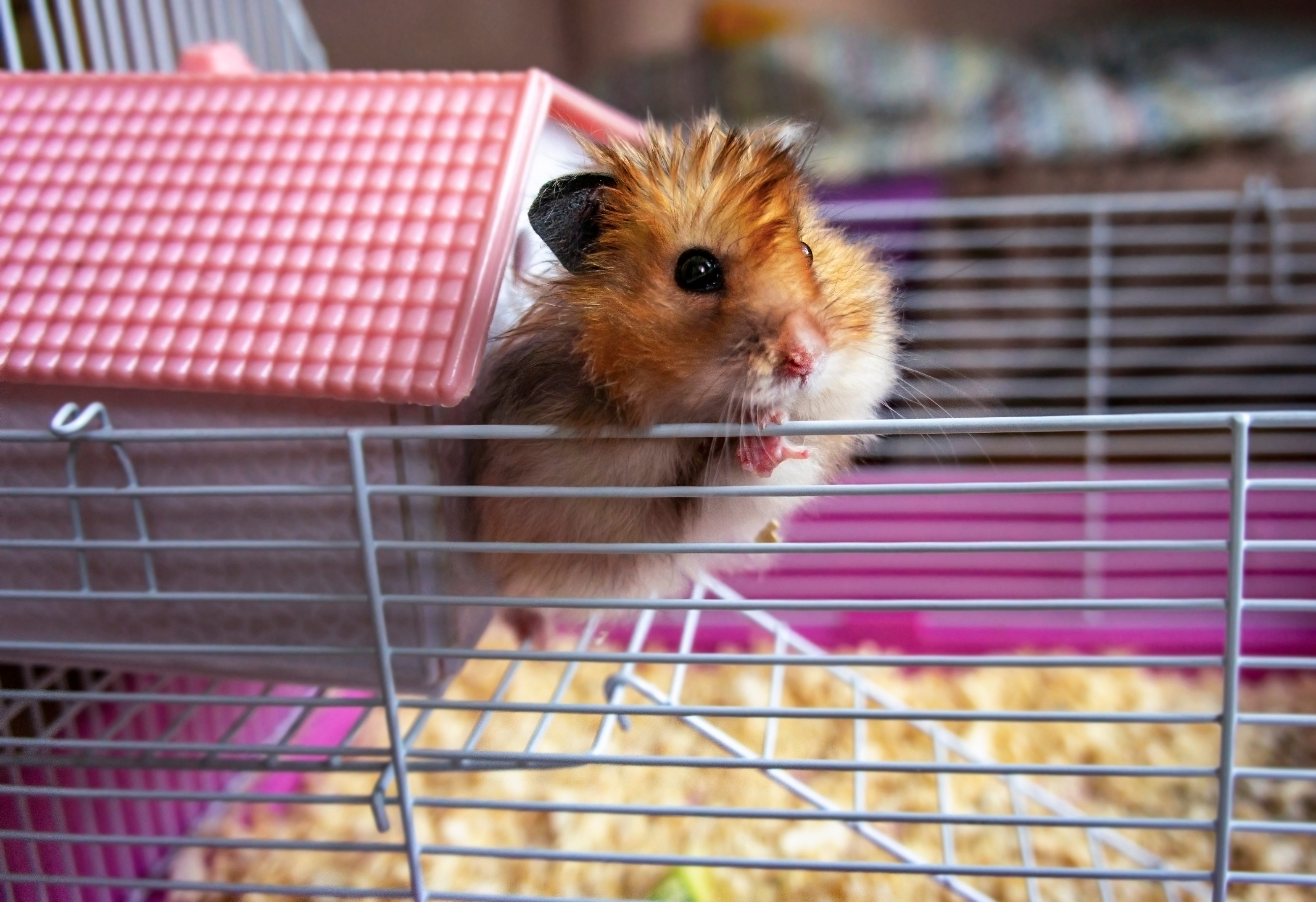
Bar biting is your hamster telling you the cage is too small. It is the single most reliable sign that the habitat is failing the animal, and the fix is almost always more space.
Hamster bar biting is a stereotypic behavior, meaning a repetitive coping action triggered by unmet welfare needs. The single largest cause is a cage that is too small. The pet store cage that came with your hamster is almost certainly undersized by modern standards. Other causes include shallow bedding, lack of enrichment, and boredom. The fix is a habitat that meets the 600+ square inches of unbroken floor space standard, 6+ inches of bedding, and rotating enrichment. Most hamsters stop bar biting within 1 to 2 weeks of moving to an adequate setup.
Why Hamsters Bite Cage Bars
In the wild, Syrian and dwarf hamsters cover hundreds of meters per night running, foraging, and exploring. They burrow tunnel systems 2 to 3 feet deep with multiple chambers for food, sleeping, and waste. In captivity, they need an environment that lets them express some version of those behaviors. When the cage is too small, the bedding too shallow, or the enrichment too thin, the hamster has no outlet for its natural drive. The teeth go onto the bars instead.
The ASPCA lists adequate cage size and enrichment as foundational welfare requirements for hamsters and identifies stereotypic behaviors like bar biting as signs the habitat is inadequate. The behavior is not random and not a personality trait. It is a measurable welfare signal.
The five most common causes of bar biting in pet hamsters:
- Cage too small (the dominant cause)
- Bedding too shallow to allow burrowing
- Lack of enrichment and rotation
- Boredom from no wheel time or no foraging
- Stress from cage location, lighting, or noise
Cage Too Small
The dominant cause. Most pet store cages marketed for hamsters range from 200 to 400 square inches of floor space. Modern welfare standards from German, Dutch, and UK welfare bodies put the minimum at 600 square inches, with 800 to 1000+ recommended for Syrian hamsters. The math does not work. Most hamsters in pet store cages are living in a space less than half the recommended minimum.
VCA Animal Hospitals recommends large habitats with horizontal floor space for hamsters, noting that cages marketed as "starter" or "small pet" cages are often insufficient for adult hamsters.
Signs cage size is the trigger:
- Cage is under 600 square inches of unbroken floor space
- Bar biting happens every night or for long stretches
- Hamster is otherwise healthy, eating, and drinking
- Pet store cage that came with the hamster
- Cage has lots of tube extensions but a small main floor
Bedding Too Shallow
Hamsters are obligate burrowers. They evolved to dig tunnel systems and sleep underground. Without deep enough bedding, they cannot express this fundamental behavior. The result is frustration, stereotypic behavior, and bar biting. Most pet store setups have an inch or two of shavings, which is functionally useless to a hamster.
Signs shallow bedding is the trigger:
- Less than 6 inches of bedding depth
- Hamster constantly digs at the cage floor or corners
- No visible tunnels or burrow attempts
- Bar biting concentrated in early evening when burrowing would naturally happen
- Wood shaving bedding rather than burrowing-suitable bedding
Lack of Enrichment and Rotation
A hamster cage with one chew block and a wheel does not meet enrichment needs. Hamsters are active foragers, climbers, and explorers. They need a wheel of the correct size, multiple hides, foraging opportunities, sand bath, chews, and rotating novel items.
The Merck Veterinary Manual recommends environmental enrichment as core to hamster welfare, including hiding places, exercise wheels of appropriate diameter, and varied substrate for exploration.
Signs enrichment is the trigger:
- Wheel is too small (under 8 inches for dwarfs, under 10 to 11 inches for Syrians)
- One or two hides total in the cage
- No sand bath available
- Same toys for months without rotation
- Hamster runs the same loop repeatedly
Boredom From No Active Time
A hamster that runs out the wheel within an hour and then has nothing to do until dawn will gnaw on the bars to occupy itself. Boredom and lack of enrichment go together but boredom specifically refers to the long stretches of nighttime active time when hamsters need things to do.
Signs boredom is the trigger:
- Bar biting happens late at night, hours after the wheel session
- Cage has minimal foraging or food-search opportunities
- Same diet, same bowl feeding, same routine every day
- Hamster shows other repetitive behaviors (running same loop, pacing)
Stress From Cage Location or Environment
A cage in a noisy room, near a TV, in direct sunlight, or where there is constant activity above the hamster (humans looming overhead) raises stress and worsens stereotypic behavior. Cage placement matters more than most owners realize.
Signs environmental stress is the trigger:
- Cage in a high-traffic, loud area
- Cage above the hamster's eye level so humans loom overhead
- Direct sunlight on cage
- Cage near a heating vent, AC unit, or window
- Hamster hides constantly during the day and is jumpy at night
Syrian vs Dwarf Hamster Cage Sizes
The species matters for cage planning. Both need the same minimum unbroken floor space, but Syrians are solitary and need slightly more in practice because they use the full space.
Syrian hamsters. Always housed alone after weaning. Minimum 600 square inches floor space, 800 to 1000 recommended. Wheel diameter 10 to 11 inches minimum because Syrians are larger and arch their backs on small wheels. Bedding 8 to 10 inches deep. A 40 gallon breeder tank, a 110 quart bin cage, or a large rodent-converted commercial cage works.
Dwarf hamsters (Roborovski, Campbell's, Winter White). Can be housed in same-sex pairs from young ages if introduced correctly, but most welfare bodies recommend solo housing because pair bonds often break down with adult aggression. Minimum 600 square inches floor space. Wheel 8 to 9 inches minimum diameter. Bedding 6 to 8 inches deep. Same cage options as Syrian, slightly more flexible.
Chinese hamsters. Solitary. Same sizing as dwarfs. Slightly longer body, so wheel 9 to 10 inches.
The myth that dwarfs need smaller cages because they have smaller bodies is wrong. They run the same distances per night and need the same behavioral outlets. The bigger the cage within reason, the lower the rate of bar biting and other stereotypic behaviors.
14-Day Plan to Stop Bar Biting
Measure Current Cage
Length times width of the unbroken floor (do not count tube extensions). If under 600 square inches, plan an upgrade.
Photograph Setup
Note wheel size, bedding depth, number of hides, number of chew items, cage location.
Source New Cage
40 gallon breeder tank, 110 quart bin, or large commercial habitat. Get a properly sized wheel if current one is too small.
Build Bin Cage
If going that route. Cut large mesh ventilation panels into the lid and one side. Sand sharp edges. Test for security.
Move to Temporary
Move the hamster to a temporary container with familiar bedding and a hide. Set up the new cage.
Fill New Cage
Fill new cage with 6 to 10 inches of paper or aspen bedding. Add multiple hides, sand bath, chews, foraging items, properly sized wheel.
Transfer Hamster
Place a small amount of old bedding into the new cage so familiar scent is present. Let the hamster explore on its own.
Observe
Bar biting in adequate cages usually drops sharply within the first week. If still present, check wheel size, bedding depth, and enrichment count.
Convert to Foraging
Sprinkle most of the daily food across the bedding and inside cardboard tubes. Refill the bowl only with fresh produce.
Add Sand Bath
Add a sand bath if not yet present. Chinchilla sand in a small dish. Hamsters use sand baths for grooming and stress relief.
Begin Tame Work
Begin slow tame work if your hamster is new. Sit near the cage during the hamster's active hours. Offer a piece of millet through the bars.
Reassess
Most hamsters in proper setups are no longer bar biting at this point. If still biting, move the cage to a calmer location and add 1 to 2 new enrichment items per week.
What Not to Do
- Do not use a CritterTrail or similar tube-and-base habitat as a permanent hamster home. They are too small and the tubes restrict movement.
- Do not use cedar or pine shavings. Phenols in soft woods damage hamster respiratory systems.
- Do not buy wheels under 8 inches diameter. Small wheels force the hamster to arch its back, causing long-term spinal issues.
- Do not use wire-bottom cages or wheels with rungs. Both cause foot injuries.
- Do not house Syrian hamsters together at any age past weaning. They are solitary and will fight, often fatally.
- Do not punish or spray water at a bar-biting hamster. The behavior is welfare driven, not training driven.
- Do not assume the pet store cage is adequate just because it says "hamster" on the box. Pet store cages are usually too small.
- Do not skip the upgrade hoping enrichment alone will fix it. Cage size is the foundation.
Frequently Asked Questions
Bar biting almost always means the cage is too small, the hamster is bored, or it is stressed. It is a stereotypic behavior, which means it is a repetitive coping mechanism for unmet needs. Pet store cages are usually undersized for hamsters and bar biting is one of the first signs the animal is unhappy in its space.
Modern welfare standards call for a minimum of 600 square inches of unbroken floor space for any hamster, and 800 to 1000 square inches for Syrian hamsters. Most pet store cages are 200 to 400 square inches and considered too small. A 40-gallon breeder tank or DIY bin cage usually meets the standard.
Yes. Chronic bar biting damages teeth, causes facial sores, and is associated with elevated stress hormones. It is a welfare red flag that indicates the hamster's environment is not meeting its needs. Resolving the cause usually resolves the behavior within a few weeks.
Sometimes, but only if cage size and enrichment are already adequate. Chew toys alone do not fix a too-small cage. If the cage meets minimum size standards and the hamster still bar bites, more chew variety can help. If the cage is undersized, no number of chew toys will fix it.
Yes, when built correctly. A large clear storage bin (110+ quart) with proper ventilation cut into the lid or sides makes an excellent hamster habitat. Bin cages are popular in the hamster welfare community because they are large, escape-proof, and affordable compared to commercial cages of equivalent size.
Hamsters are nocturnal and most active at night. If the cage is too small or under-enriched, the hamster has nothing to do for the 8 to 12 hours of nighttime activity except gnaw the bars. Moving the cage to a separate room and providing a bigger habitat with deeper bedding usually solves it.
Slightly smaller is acceptable but the minimum is still 600 square inches of floor space. Dwarfs are smaller bodies but still need running, foraging, and burrowing space. Many welfare organizations recommend the same minimum floor space for all hamster species because the behavioral needs are similar.
Minimum 6 inches of bedding for any hamster, and 8 to 10 inches for Syrians. Hamsters are obligate burrowers and need to dig real tunnels to express natural behavior. Shallow bedding is a common cause of bar biting because the hamster has no way to burrow.
Fix the cage first. Trying to tame a hamster in an inadequate setup rarely works because the underlying stress level is too high. Once the hamster is in a properly sized, well-enriched cage, taming progresses in normal time, usually 2 to 4 weeks of slow trust building.
The Bigger Picture
A bar-biting hamster is not a difficult hamster. It is a hamster trying to tell you its world is too small. The pet industry sold most owners cages that fail modern welfare standards, and bar biting is the predictable result. Once the cage meets the 600 square inch standard with 6+ inches of bedding, a properly sized wheel, and rotating enrichment, the behavior almost always resolves on its own within 2 weeks.
The same pattern shows up across small mammal welfare. Hamsters running the wheel all night sometimes signal the same underlying environmental gaps that fuel bar biting. Rabbits chewing baseboards are responding to the same enrichment shortfalls. Spotting the early signs of pet boredom is the fastest way to prevent stereotypic behavior from becoming a habit.
Hamsters need different cage sizes, wheel diameters, and enrichment than other rodents. A Syrian setup is not the same as a dwarf setup, and pet store kits do not match what welfare research recommends. PawMatch AI factors in your hamster's species, age, and current habitat to recommend the exact cage, wheel, bedding, and enrichment that fit. Free, takes 30 seconds.
Stop Guessing. Get Matched.
Every hamster is different. PawMatch AI uses your hamster's species, age, and current habitat to recommend the exact cage, wheel, bedding, and enrichment that fit. Free, personalized, takes 30 seconds.
Find My Pet's Match →