Why Is My Cockatiel Hissing? What That Sound Means and How to Respond
A hiss is not a personality quirk. It is a warning that your cockatiel feels threatened and is asking you to back up before it bites. Read it right and you can rebuild trust in weeks instead of months.
A cockatiel hiss is a defensive warning vocalization that means the bird feels cornered, threatened, or territorial. It is one of at least five distinct cockatiel sounds, and it is the only one that signals stop. Reading hissing alongside crest position and beak posture tells you exactly what the bird needs. The right response is space and a slow rebuild of trust, not pushing through.
Why Cockatiels Hiss
Cockatiels are flock prey animals. In the wild they spend most of their day flying, foraging, and communicating with the flock through chirps and contact calls. Hissing is the warning sound reserved for moments when a perceived predator gets too close and the bird cannot fly away. In a cage, with no flight option, that warning gets used more often than it would in nature.
The hiss is part of a full body display. Watch for the combination of vocalization, crest, beak, and posture, because the hiss alone tells you "back off" but the body language tells you exactly what triggered it. VCA Animal Hospitals classifies hissing as a normal defensive vocalization and not a sign of a "mean" bird.
The five most common situations that trigger hissing in pet cockatiels:
- Fear from a sudden approach, hand intrusion, or new object
- Territorial defense of cage, food, or a chosen nest spot
- Hormonal protection of a bonded human, mate, or eggs
- Pain or illness that turns routine touch into a threat
- Lack of trust from a new, rehomed, or under-socialized bird
Fear From a Sudden Approach
The most common cause. A cockatiel that hisses when you reach toward the cage, when a hand enters the bars too fast, when a new object appears in the room, or when a stranger leans in is reacting to a perceived predator approach. The bird has no flight option in a cage, so it does the next best thing: warns the predator to leave.
This kind of hiss is paired with a pinned-flat crest, body pulled back, and sometimes a fast retreat to a corner. The beak may be open with the tongue visible. The bird is not angry, it is scared.
Signs fear is the trigger:
- Crest is fully flat against the head
- Body leans away from you or moves to the back of the cage
- Eyes are wide, pupils may pin (rapidly dilate and contract)
- Hissing happens when hands or new objects approach
- Bird flies or hops away if given the chance
Territorial Defense
Cockatiels claim cages, food bowls, perches, and sometimes specific cage corners as their own. A bird that hisses when you reach into its cage but is friendly outside of it is territorial. Same goes for hissing during food refills or when you move a toy. This is normal behavior in a confident, settled bird, but it makes daily care harder.
Territorial hissing often comes with a forward lean, raised crest, and small lunges or beak grabs at the cage bars.
Signs territorial defense is the trigger:
- Hisses inside the cage but is calm out of it
- Hisses worsen during feeding or cage cleaning
- Body leans forward, not away
- Crest is up, alert position
- Bird may bite at offered fingers but accept treats from outside the cage
Hormonal Protection
Mature cockatiels (around 9 to 12 months old) cycle through hormonal seasons annually. Hens may select a cage corner, food bowl, or even a dark hidey-hut as a nest site and defend it fiercely. Males may guard a bonded human or mate. Hormonal hissing is sharper, comes faster, and is harder to walk back because it is driven by biology, not just learning.
The Merck Veterinary Manual lists hormonal aggression as a routine cause of sudden behavior shifts in companion psittacines and notes that environment management is the most effective intervention.
Signs hormones are the trigger:
- Sudden onset of hissing in a previously friendly bird
- Crest up, tail flared, wings slightly held away from body
- Hen burrows into corners or under cage paper
- Increased regurgitation onto a toy, mirror, or human
- Behavior worse in spring or after extended daylight
Pain or Illness
A previously calm bird that suddenly hisses at routine handling may be hurting. Birds hide illness as a prey species survival strategy, and hissing is one of the last signs you may see. Pain from a sore wing, internal organ issue, or impacted feather follicle changes how the bird reacts to touch.
The Association of Avian Veterinarians considers sudden behavior changes in companion birds, including new aggression or vocalization patterns, a reason for an exam within 7 days.
Signs pain or illness are the trigger:
- Hissing started recently in a friendly bird with no environment change
- Fluffed feathers for long periods
- Tail bobbing with breathing
- Reduced appetite, weight loss, or change in droppings
- Sleeping during normal active hours
Lack of Trust in New or Rehomed Birds
A newly homed cockatiel hisses because it has no reason to trust you yet. Rehomed birds from previous owners, pet store birds with limited socialization, and birds from breeders who did not handle them all hit a window where hissing is the default response to humans. This is fixable but takes time.
Signs lack of trust is the trigger:
- Bird is new to the home in the last 1 to 3 months
- Hisses at most or all human approach
- Has not yet stepped up or eaten from your hand
- Hides at the back of the cage when you enter the room
- Otherwise eating, drinking, and active when you are not present
Hissing Decoded: 5 Cockatiel Sounds and What They Mean
Cockatiels have a rich vocabulary, and hissing is one of at least five distinct sound categories. Knowing the difference saves you from misreading a friendly contact call as anger or a real warning as cute chatter.
Contact calls. Soft repeated chirps used to locate flock members. If you leave the room and your bird chirps, it is asking where you are. Reply back and the bird settles.
Flock or alarm calls. Loud, repeated sharp calls used to alert the flock to danger or to summon you back. Different from the contact call by volume and urgency. Common at sunrise and sunset.
Whistles and song. Wolf whistles, learned tunes, and warbling are signs of a confident, content cockatiel. These are voluntary and usually mean the bird feels safe.
Chatter and beak grinding. Soft chatter, mumbling, and the grinding "chrr chrr" sound made before sleep are positive. Beak grinding specifically signals contentment, like a cat purring.
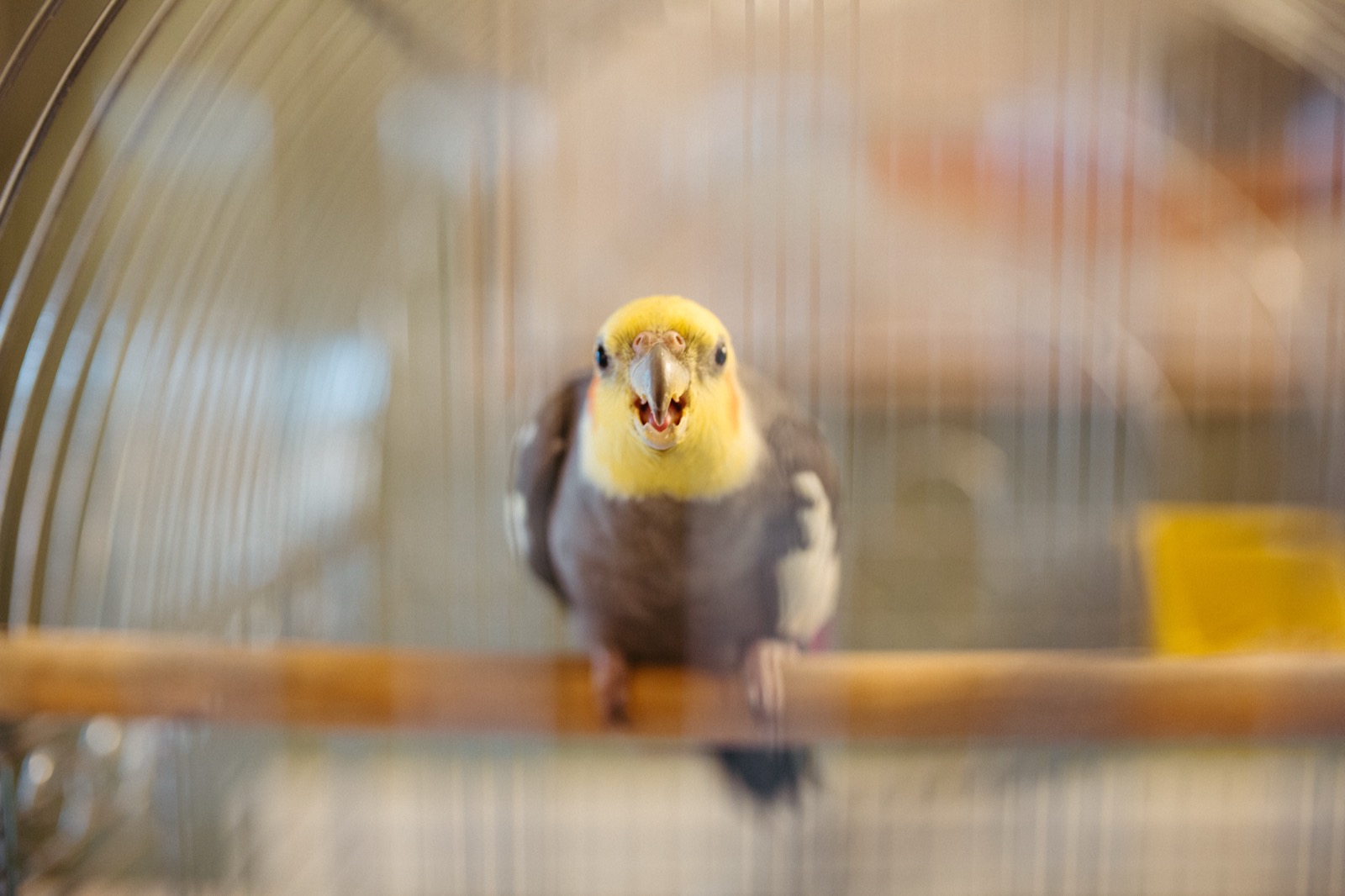
Hissing. The defensive warning. Long low hsssss, open beak, often paired with a flat crest and rocking body. This is the only cockatiel sound that means stop.
If the sound is paired with a flat crest, leaning away, and pinned eyes, it is fear. If the sound is paired with a raised crest, forward lean, and lunging, it is territorial. Reading hissing alongside body language is what separates a guess from an accurate read.
Cockatiel Body Language Reading Guide
The crest is the single most informative cockatiel feature. Pair crest position with hissing and you have most of the answer.
Crest fully up and forward. Alert, curious, sometimes startled. If paired with hissing, it is territorial or warning, not afraid.
Crest straight up. Excited or interested. Not a warning sign in isolation.
Crest relaxed and slightly back. Calm, content. Paired with whistling or beak grinding means a happy bird.
Crest pinned flat against the head. Fear, threat, or sometimes aggression. Paired with hissing, this is "I am scared and will defend myself."
Crest flat with wings held slightly out. Highly stressed. The bird is preparing to flee or fight. Back off completely.
Open beak with tongue visible. Active warning. Combined with hissing, it means a bite is coming if you keep approaching.
Eyes pinning (rapid pupil dilation). High arousal. Could be excitement or warning. Read the rest of the body to tell which.
Tail flared. Aggressive or defensive display. Often paired with hissing in territorial situations.
14-Day Plan to Rebuild Trust With a Hissing Cockatiel
Stop and Observe
Stop all attempts to touch or step up the bird. Note exactly when and where hissing occurs. Identify the most likely cause from the 5 categories above.
Vet if Sudden
If the hissing is sudden in a previously friendly bird, book an avian vet exam for the next 7 days.
Quiet Presence
Sit 6 feet from the cage with a book or laptop for 20 to 30 minutes. Talk softly. Do not stare. Do not approach.
Reduce Daylight
Reduce daylight to 12 hours with a consistent cover and uncover time. Remove any potential nest sites (huts, dark corners, fluffy fabric).
Treat Through Bars
Identify the bird's preferred treat. Millet spray is the cockatiel gold standard. Offer it through the cage bars, hand still and outside the cage.
Move Closer
If the bird took the treat through the bars yesterday, repeat. Move slightly closer over the day. No reaching in yet.
Open Cage Door
Sit nearby with treats. Let the bird come out or stay in. No pressure to do anything.
Target Training
Begin target training with a small stick or chopstick. Touch stick to the bars, reward when the bird looks at it.
Extend Target Work
If target training is working, extend it. Reward the bird for touching the stick with its beak.
Perch Step-Up
Introduce a step-up perch. Offer a stick perch instead of fingers for now. Reward step-ups onto the perch with treats.
Continue Training
Continue target and perch step-up training. Most cockatiels show visible reduction in hissing by this point.
Hand Step-Up
Try a hand step-up if perch step-up is fluent. If the bird hisses, return to perch step-up and try again in 2 to 3 days.
Out-of-Cage Session
Hold a calm 5 minute out-of-cage session on a play stand with treats and toys.
Reassess
Most cockatiels in low-stress homes show major progress by now. If hissing is unchanged, return to day 1 and check for medical issues, hormones, or a stressor you missed.
What Not to Do
- Do not grab a hissing bird with a towel unless it is a medical emergency. Forced handling teaches the bird that hissing does not work and that biting is the only option left.
- Do not yell or spray water as punishment. Both increase fear and destroy trust.
- Do not cover the cage as a consequence. Use cage covers only for the regular sleep cycle.
- Do not stare directly at a hissing bird. Direct eye contact is predatory to a prey species.
- Do not skip the avian vet for sudden onset hissing in a previously friendly bird.
- Do not introduce a new pet, especially a cat or dog, into the bird's space while it is hissing at baseline. Add stressors only after the bird is settled.
- Do not give up at week 2. Trust rebuilding in rehomed or under-socialized cockatiels often takes 6 to 8 weeks.
Frequently Asked Questions
Hissing is a warning that your cockatiel feels threatened, cornered, or territorial. It is asking you to back up. Common triggers include reaching into the cage too fast, approaching during hormonal seasons, surprising the bird while sleeping, or invading a nest-like spot the bird is guarding.
Hissing is closer to fear than anger. It is the cockatiel equivalent of a warning growl. The bird is trying to avoid escalating to a bite by telling you to stop. Pushing past a hiss almost always leads to biting.
Yes, slightly. Females hiss more during nesting and egg-laying behavior, especially if they have selected a cage corner as a nest site. Males also hiss during hormonal seasons and when protecting a bonded mate or perceived territory.
Stop the trigger and rebuild trust at the bird's pace. Identify what caused the hiss, back off immediately, and approach more slowly with treats and calm voice over multiple sessions. Most trust issues resolve in 2 to 6 weeks of consistent low-pressure interaction.
You went past the warning. The bird hissed to say back off, you stayed too close or pushed forward, and it escalated to a bite. The fix is recognizing the hiss as a hard stop signal and giving the bird space immediately.
A long, low, snake-like hsssss sound, often paired with an open beak, rocking body, and crest pinned flat. It is distinct from chirps, contact calls, and the wolf-whistle vocalizations cockatiels are known for. The hiss is always a warning, never a casual sound.
Possibly. A previously friendly bird that suddenly hisses at routine handling may be in pain. Check for fluffed feathers, tail bobbing, droppings changes, or hiding. Sudden behavior shifts in birds warrant an avian vet visit within a week.
New cockatiels are stressed for the first 1 to 3 weeks in a new home. Hissing is normal during this acclimation period. Reduce interaction to just feeding and quiet presence in the room for the first week, then build up handling slowly. Trust takes 4 to 8 weeks to develop in most new birds.
Not as a punishment. Covering as discipline damages trust. Use cage covers only for the regular sleep cycle. If the hissing is from being startled or overstimulated, give quiet space without making the cover into a consequence.
The Bigger Picture
A hissing cockatiel is not broken. It is communicating in the only language a prey species has when flight is not an option. Read the hiss, read the crest, identify the trigger, and the bird will tell you everything you need to know. Most hissing cockatiels in stable homes settle into calm, affectionate companions once trust is built and territorial or hormonal triggers are managed.
Cockatiel behavior issues share roots with other companion birds. A bird that screams all day is using volume to express the same kinds of unmet needs that drive hissing. A budgie that plucks its feathers is expressing it through self-grooming. The shared driver is environment mismatch, and the fix starts with understanding what your specific species needs. The behavior also tracks the wider species-agnostic pattern: most warning signals are about understimulation, not aggression, and the signs that your pet is bored translate cleanly across mammals and birds.
Cockatiels need different cage sizes, foraging toys, perches, and diet than budgies or larger parrots. PawMatch AI factors in your bird's species, age, and current setup to recommend the exact products that fit. Free, takes 30 seconds.
Stop Guessing. Get Matched.
Every cockatiel is different. PawMatch AI uses your bird's species, age, and current setup to recommend the exact cage, perches, foraging toys, and diet that fit. Free, personalized, takes 30 seconds.
Find My Bird's Match →