Ball Python Not Eating? Why Feeding Strikes Are Normal and the 6 Real Causes
A ball python refusing food is rarely an emergency, and most owners overreact. Track weight, fix husbandry, and most snakes resume eating within 4 to 12 weeks without intervention.
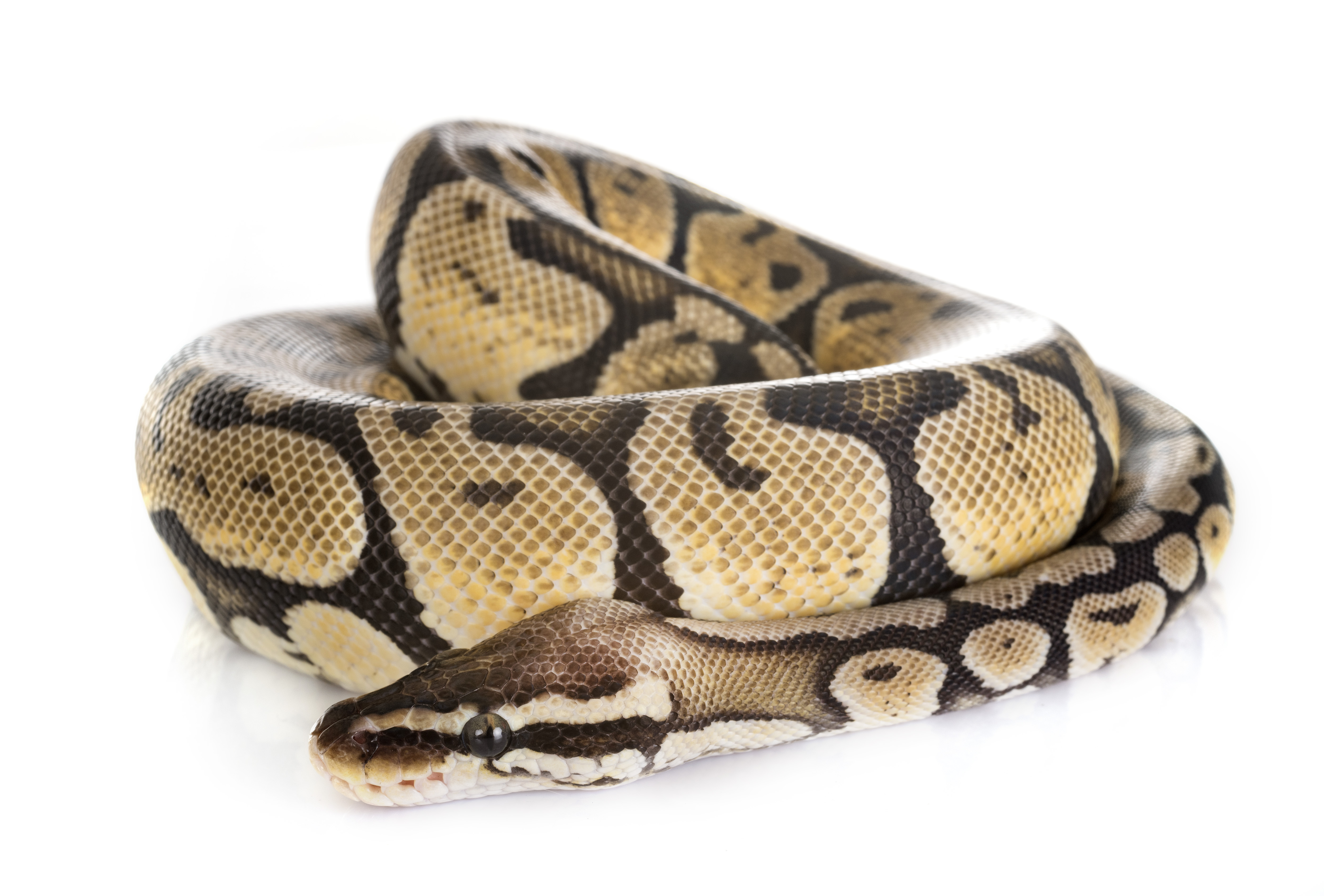
Ball pythons are the most common snake in the pet trade and the most common species reported by panicked owners as "not eating." This is partly because ball pythons are champion fasters. Wild adults regularly skip meals for 6 to 9 months during the dry season and during breeding. Mature males sometimes fast a full year. Captive ball pythons inherit that behavior. The single most important metric is body weight. A snake holding weight is fine. A snake losing more than 10 percent of body weight needs investigation. Below are the six causes ranked by frequency, the husbandry checklist, and the exact prey presentation protocol.
Why Ball Pythons Stop Eating
Ball pythons evolved in West and Central Africa, where the dry season cuts prey availability for months at a time. The species developed an extreme tolerance for fasting. In captivity, this manifests as predictable seasonal feeding strikes (October through March in the Northern Hemisphere), breeding-season strikes in mature males, and a general low tolerance for husbandry mistakes. The other half of "not eating" cases are temperature too cold, prey size wrong, or shed cycle.
The six causes ranked by frequency:
- Seasonal feeding strike (fall and winter, common in mature snakes)
- Husbandry off: temperature, humidity, or no proper hide arrangement
- Prey wrong: size, type, scent, presentation temperature, or live versus frozen
- Breeding behavior (mature males, females cycling)
- In or near a shed cycle
- Illness: respiratory infection, parasites, mouth rot, mites
The Merck Veterinary Manual snake section lists ball python anorexia as the most overdiagnosed presenting complaint in pet snakes, with husbandry correction resolving the majority of cases.
Seasonal Feeding Strike
The single most common cause. Ball pythons in the Northern Hemisphere often slow or stop eating between October and March. Pet snakes do this even with steady indoor temperatures and a consistent photoperiod. The cue appears to be internal and circannual, not directly tied to enclosure conditions. Mature males fast hardest, females less so, juveniles least.
Signs seasonal strike is the trigger:
- Snake is over 12 months old
- Time of year is October through March
- Snake is otherwise alert, active at night, hides during the day
- Weight is stable or loss is under 5 percent
- All husbandry parameters check out
- Strike resolves naturally in late winter or early spring
Husbandry Off
The second most common cause. Ball pythons need a tight thermal gradient, moderate humidity, and at minimum two tight enclosed hides (one on each side). Owners who use tall open tanks, ambient room heat, no thermostat, or single open hides will see feeding strikes that look seasonal but are actually environmental.
Signs husbandry is the trigger:
- Warm side basking surface under 88°F or over 95°F
- Cool side under 75°F
- Humidity below 50 percent (snake will look dry, shed in patches)
- Humidity above 80 percent at all times (causes scale rot, respiratory infection)
- Only one hide, or hides are too tall or too open
- Enclosure in a high-traffic area
- Heat source without thermostat
Prey Wrong
Ball pythons are particular. Prey too small, too large, too cold, wrong species, wrong scent, or presented wrong all cause refusals. The two most common prey mistakes are presenting frozen-thawed at room temperature (snake cannot detect heat signature) and offering live rats that scare the snake.
Signs prey is the trigger:
- Prey not warmed before offering (frozen-thawed must hit 100 to 105°F internal)
- Prey species switch (snake started on mice, now offered rats, or vice versa)
- Prey size too small (less than body width) or too large (over 1.25 times body width)
- Offering in bright light or daytime
- Tongs too short, hand visible to snake
- Live prey too active, snake retreats
Breeding Behavior
Mature males (over 700 grams, over 2 years) often fast hard during breeding season as testosterone rises and they search for females rather than food. This is a feature, not a bug. Females cycling may also refuse food intermittently as follicles develop.
Signs breeding behavior is the trigger:
- Male over 700 grams, over 2 years old
- Active prowling at night, repeatedly crossing the enclosure
- Refuses food but holds weight or loses under 5 percent
- Time of year is October through March
Shed Cycle
Ball pythons usually refuse food in the 7 to 14 day window before and during a shed. Eyes turn blue/cloudy ("in blue"), the snake hides more, and prey is ignored. This is normal. Resume feeding 5 to 7 days after the shed completes.
Signs shed cycle is the trigger:
- Eyes look milky, blue, or cloudy
- Belly scales appear pinker than usual
- Skin looks dull, slightly grayish
- Snake hides constantly
- Refusal pattern lasts 10 to 21 days then ends post-shed
Illness
A minority of feeding strikes are medical. Respiratory infection, mouth rot, mites, parasite load, or inclusion body disease (IBD) all suppress feeding. These need a reptile-experienced vet.
Signs illness is the trigger:
- Open-mouth breathing, audible wheeze
- Bubbles or mucus from nostrils
- Mouth held partially open at rest
- Mites visible (pepper-like specks on scales, especially around eyes and chin)
- Sunken eyes
- Stargazing (head held upward involuntarily)
- Weight loss over 10 percent with no seasonal explanation
- Stool changes, undigested prey
When to Worry: The Weight Loss Threshold
The single best metric is body weight. Weigh on a digital kitchen scale (gram accuracy) every 1 to 2 weeks during a feeding strike. Track in a notebook or phone note.
- Loss under 5 percent: normal. No action needed.
- Loss 5 to 10 percent: verify husbandry, do not panic. Continue offering food at normal intervals.
- Loss 10 to 15 percent: vet visit within 1 to 2 weeks. Husbandry audit. Consider parasite screen.
- Loss over 15 percent: vet visit within 48 hours. Treat as medical until proven otherwise.
A healthy adult ball python at 1,500 grams losing 75 grams (5 percent) over 3 months of fasting is fine. The same snake at 1,275 grams (15 percent loss) needs immediate workup.
7-Day Diagnostic Protocol
Weigh and Audit
Weigh the snake. Record. Audit husbandry: warm side surface temperature, cool side ambient, humidity reading, hide count and tightness, thermostat verification, photoperiod.
Correct Husbandry
Correct any husbandry gaps. Adjust thermostat to 88 to 92°F warm. Add hides if missing. Move enclosure away from foot traffic, TVs, and other pets.
Skip Handling
No tank cleaning beyond removing waste. Let the snake settle for 48 hours.
Offer Prey Correctly
Thaw frozen prey, warm to 100 to 105°F internal, present with long tongs at dusk in low light. Move prey in irregular pulses. Leave the room if the snake does not strike in 5 minutes; check at 30 minutes. If the snake takes the food, eats successfully, feeding strike is broken.
Wait
If refused, do nothing. Wait. Repeat offering on day 11 or 14.
Check for Shed
Check for shed signs: blue eyes, pink belly scales. If shedding, wait 7 days post-shed before re-offering.
Reweigh and Decide
Weight stable, no clinical signs: continue normal husbandry. Weight loss over 10 percent or any clinical signs: vet visit within 48 hours.
What Not to Do
- Do not feed live prey unsupervised. A rat can chew through a coiled snake in minutes.
- Do not handle a snake within 48 hours of a meal. Regurgitation is worse than a missed meal.
- Do not microwave frozen prey. It cooks unevenly and damages tissue, causing regurgitation.
- Do not feed in a separate "feeding tub." It stresses many ball pythons and reinforces feeding strikes.
- Do not switch prey types every refusal. Give each prey approach 3 to 4 attempts before changing.
- Do not warm prey with a heat lamp. Use water or a hairdryer. Heat lamps cook the outside while the inside stays cold.
- Do not offer food during the blue shed phase. Snakes cannot see well and will refuse or strike defensively.
- Do not assume a feeding strike is illness without weight tracking.
- Do not house two ball pythons in one enclosure. Stress and disease transmission are inevitable.
- Do not give up on frozen-thawed because of one or two refusals. Most snakes accept it within 4 to 6 careful attempts.
Frequently Asked Questions
A healthy adult with normal body condition can safely refuse food for 6 months or more. Wild adults often fast that long during dry season. Juveniles under 500 grams should not go more than 4 to 6 weeks. Track weight weekly. Loss over 10 percent of body weight is the threshold to investigate seriously.
The six most common causes are seasonal feeding strike, breeding season behavior in mature males, husbandry off, prey wrong, shed cycle, and illness like respiratory infection or parasites. Husbandry and seasonal causes account for over 80 percent of cases.
Frozen-thawed is the safer long-term choice for both snake and owner. Live prey can injure a snake, carries higher parasite risk, and live rats can kill a snake left unsupervised. Frozen-thawed is fed with tongs, presented warm (100 to 105°F internal), and most ball pythons accept it.
Warm side basking surface 88 to 92°F. Cool side ambient 78 to 80°F. Nighttime can drop to 75°F. Below 78°F on the warm side, ball pythons stop hunting and stop digesting. Use a thermostat-controlled flexwatt heat mat or radiant heat panel, never an unregulated heat source.
Yes. Adult ball pythons commonly fast through fall and winter, with mature males sometimes refusing food for 6 to 9 months during breeding season. Weight is the key metric. A snake holding weight is fine, even if not eating.
Run the husbandry checklist first: temperatures, humidity, at least two tight hides, low light at feeding time. For prey, thaw fully in cold water then warm to 100 to 105°F internal. Use long tongs, move prey in jerky pulses, feed at dusk, and leave the room for 30 minutes if the snake does not strike immediately.
Within 48 hours if you see open-mouth breathing, mucus or bubbles from nostrils, weight loss over 10 percent, mouth held partially open, mites, sunken eyes, or stargazing behavior. Otherwise verify husbandry first.
Most rejection comes from prey not warm enough, not the right scent, or the snake being too aware of human presence. Warm prey to 100 to 105°F internal, use long tongs, move slowly through the enclosure entrance, present at dusk in dim light, and leave the room for 30 minutes if the snake does not strike immediately.
Prey should be 1 to 1.25 times the widest part of the snake's body. For hatchlings, hopper mice or rat pups. For adults, small to medium rats. Feed juveniles every 5 to 7 days, sub-adults every 7 to 10 days, and adults every 10 to 14 days.
The Bigger Picture
A ball python that stops eating is the species behaving like a ball python. Weight tracking and husbandry verification handle most cases without a vet visit. The mistake new owners make is treating every refused meal as an emergency and responding by switching prey types weekly, increasing enclosure changes, and handling more, all of which actually prolong the strike. The other mistake is the opposite: dismissing real illness as "just a strike" while the snake loses weight. Both extremes are corrected by tracking weight and watching for the specific clinical signs above. If you also keep other reptiles, the same temperature-and-husbandry framework applies. Our guides on bearded dragons refusing food and tortoises that stop eating walk through the same diagnostic logic adapted for each species' needs.
Every snake's environment is different based on enclosure type, room temperature, and feeding history. PawMatch AI factors in your snake's age, weight, and current setup to recommend the exact heat source, thermostat, hides, and prey size that fit. Free, takes 30 seconds.
Stop Guessing. Get Matched.
Every ball python is different. PawMatch AI uses your snake's age, weight, enclosure type, and feeding history to recommend the exact heat source, thermostat, hides, and prey size that fit. Free, personalized, takes 30 seconds.
Find My Reptile's Match →