Tortoise Not Eating? Species-by-Species Causes, Temperature Checklist, and the MBD Warning Signs
A tortoise refusing food is almost always temperature, UVB, or species-specific seasonal behavior. Find the right species protocol, fix the environment, and most tortoises start eating again within 7 to 10 days.
Tortoise care is the single most species-specific corner of reptile husbandry. A care guide for a Russian tortoise gets a Sulcata killed. A Sulcata protocol kills a Hermann's. The first move when any tortoise stops eating is to identify the species accurately and apply the right temperature, humidity, UVB, and diet ranges. The second move is to verify environment with actual instruments, not stick-on dials. The third move is to look for the metabolic bone disease (MBD) warning signs that signal a slow-motion emergency. The six causes below are ranked by frequency across the four most common pet species: Russian, Sulcata, Hermann's, and Greek.
Why Tortoises Stop Eating
Tortoises are ectotherms with extreme thermal sensitivity. Below their species-specific digestive threshold, the gut shuts down and appetite vanishes. Layer on the calcium and D3 needs, the species-specific photoperiod and humidity preferences, and the natural hibernation cues for Mediterranean species, and you have a husbandry equation that almost no pet store sets up correctly. The good news: when you fix the environment, most tortoises eat within a week.
The six causes ranked by frequency:
- Basking temperature too low for the species
- UVB weak, expired, or wrong type
- Hibernation or aestivation behavior (Mediterranean species, fall/winter)
- Dehydration (most common in indoor enclosures with no humid zone)
- Stress: new enclosure, move, cohabitation, low hiding cover
- Underlying illness: respiratory infection, parasites, MBD, bladder stones
The Reptiles Magazine tortoise care archive and VCA tortoise housing guide both identify temperature and lighting as the dominant cause of anorexia in pet tortoises.
Species Profiles First
Before causes, lock in the species. Each common pet tortoise has a distinct profile.
Russian tortoise (Testudo horsfieldii). Origin: Central Asia steppe. Adult size: 6 to 10 inches. Basking: 95 to 100°F. Cool side: 70 to 75°F. Humidity: 30 to 50 percent. Diet: weeds and broadleaf greens, no fruit, very low protein. Hibernates: yes, fall through spring. Common stressor: too-warm winters override hibernation cue and cause year-round low appetite.
Sulcata tortoise (Centrochelys sulcata). Origin: African Sahel. Adult size: 24 to 36 inches, 70 to 200 lbs. Basking: 100 to 105°F. Cool side: 75 to 85°F. Humidity: 40 to 60 percent juvenile, 30 to 50 percent adult. Diet: 90 percent grasses and hays. Hibernates: no, ever. Aestivates in extreme heat. Common stressor: indoor enclosures too small, too cold at floor level.
Hermann's tortoise (Testudo hermanni). Origin: Southern Europe. Adult size: 6 to 11 inches. Basking: 95 to 100°F. Cool side: 70 to 75°F. Humidity: 50 to 70 percent. Diet: Mediterranean weeds, dandelion, plantain, chicory. Hibernates: yes. Common stressor: confused with Greek tortoise and given the wrong humidity range.
Greek tortoise (Testudo graeca). Origin: Mediterranean basin, North Africa, Middle East. Adult size: 5 to 11 inches. Basking: 95 to 100°F. Cool side: 70 to 75°F. Humidity: 50 to 65 percent. Diet: weeds, leafy greens, low protein. Hibernates: yes, for most subspecies. Common stressor: housed too dry, dehydration-driven anorexia.
Basking Temperature Too Low
The single most common cause of tortoise anorexia, across all species. Tortoises digest plant matter slowly through bacterial fermentation in the gut. That fermentation requires species-specific heat. Below threshold, the gut stops, and the tortoise stops eating to prevent putrefaction.
Signs basking temperature is the trigger:
- Tortoise basks for long stretches but stays under the bulb
- Stools small, dry, or absent
- Tortoise hides more than basks
- Appetite worse in winter as room temperature drops
- Stick-on thermometer reads in range but IR gun shows cooler surface
UVB Issues
UVB drives D3 synthesis, which drives calcium uptake, which drives shell hardening, muscle function, and appetite. Tortoises with weak or expired UVB develop subclinical MBD long before visible deformity, and the first sign is often poor appetite, especially in growing juveniles. Compact and coil UVB bulbs are inadequate for tortoise enclosures.
Signs UVB is the trigger:
- UVB bulb over 12 months old
- Compact, coil, or spiral UVB in use
- Bulb shorter than half the enclosure length
- Bulb mounted above glass or fine mesh
- Tortoise has soft beak, bowed legs, pyramided shell
- Juvenile growth is slow or uneven
Hibernation and Aestivation
Russian, Hermann's, Greek, and Marginated tortoises hibernate naturally from October through March. Sulcatas, Leopards, Red-foots, and Yellow-foots do not hibernate, ever. They may aestivate (slow down in heat). Confusing hibernation with illness or pushing a tropical species toward hibernation conditions both cause problems.
Signs hibernation is the trigger (Mediterranean species only):
- Time of year is October through March
- Tortoise is over 12 months old
- Body condition is good (round limbs, no sunken eyes)
- Activity drops gradually as days shorten
- Appetite tapers off over 2 to 4 weeks
- Tortoise spends more time in the cool end or substrate
Dehydration
Tortoises drink and absorb water through the cloaca during soaks and through humid environments. Indoor enclosures often run too dry, especially with overhead heat lamps and forced-air heating. Dehydrated tortoises develop bladder stones, kidney stress, and anorexia. Soaking is therapy and prevention.
Signs dehydration is the trigger:
- Sunken eyes, wrinkled skin around legs and neck
- Urates white and chalky rather than soft and paste-like
- Stools small, dry, no mucus
- No interest in food after waking
- Skin tents when gently pinched
Stress
A new tortoise, recent move, new substrate, change in lighting, or housing with another tortoise can suppress appetite for 1 to 4 weeks. Most stress-driven anorexia in tortoises resolves once the trigger is removed and 14 days of stable husbandry pass.
Signs stress is the trigger:
- Recent change (new enclosure, new substrate, new home, new tortoise added)
- Tortoise paces the perimeter repeatedly
- Hides constantly with no interest in basking
- Two tortoises housed together, especially males or mismatched sizes
Underlying Illness
A minority of cases are medical. Respiratory infection (RI), metabolic bone disease, parasites, bladder stones, and herpesvirus all suppress feeding.
Signs illness is the trigger:
- Husbandry verified correct for 14+ days, still not eating
- Runny nose, bubbles or mucus from nostrils
- Eye discharge or eyes held shut
- Open-mouth breathing or audible wheeze
- Soft, pyramided, or deformed shell
- Swelling around limbs or neck
- Bloody or worm-containing stool
- No stool for over 14 days in an active tortoise
- Weight loss above 10 percent
MBD Warning Signs
Metabolic bone disease is the silent killer of pet tortoises. It develops over months from inadequate calcium, missing or weak UVB, and unsupplemented diets, and the first visible signs often appear after major skeletal damage has occurred.
Early signs:
- Slow growth or uneven growth across the carapace
- Soft beak or beak overgrowth
- Reluctance to lift body off substrate
- Pyramiding (excessive vertical scute growth)
- Weak grip when held vertically
Advanced signs:
- Bowed legs, splayed gait
- Jaw deformity, inability to bite hay
- Soft shell that flexes under pressure
- Fractures from minor trauma
- Seizures, tremors
MBD is preventable. T5 HO UVB on a 12-month replacement schedule, calcium supplementation, species-appropriate diet, and outdoor unfiltered sunlight when possible prevent essentially all cases.
7-Day Diagnostic Protocol
Identify Species Correctly
Use carapace markings, scute patterns, and country of origin to confirm. Then look up the correct temperature, humidity, and diet ranges for that exact species, not "tortoise" in general.
Measure Temperatures
Buy infrared temperature gun. Measure basking surface, cool side ambient, and nighttime low. Adjust bulb wattage to hit species range.
Verify UVB
Note brand, type, age, and mounting. Replace any UVB tube over 12 months old or any compact/coil bulb. Install Arcadia 12 percent or Zoo Med ReptiSun 10.0 T5 HO.
Soak
Soak tortoise in 85°F water for 20 to 30 minutes. Note whether it drinks or defecates. Repeat every other day during the protocol.
Audit Diet
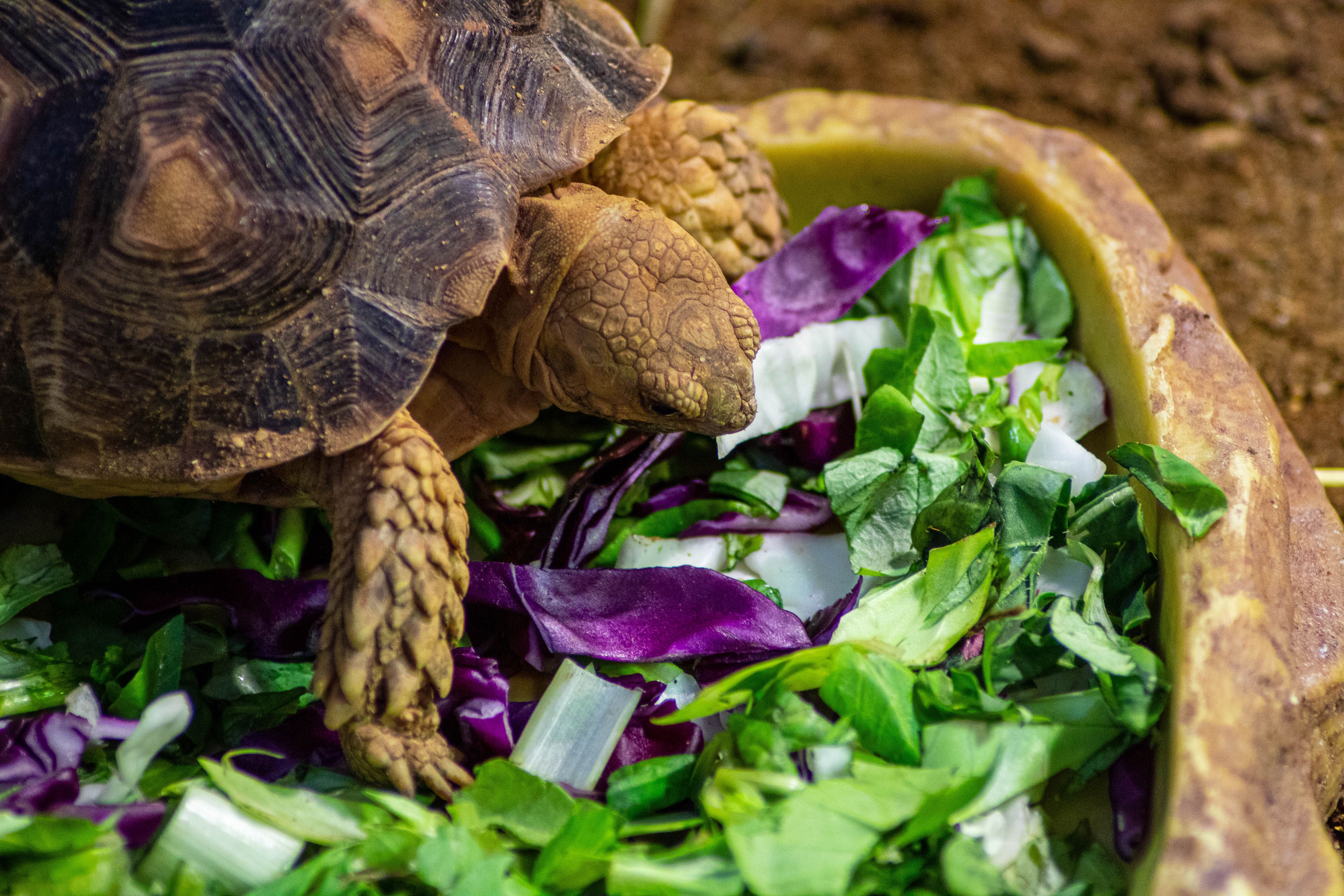
Mediterranean species need weeds and broadleaf greens, no fruit, low protein. Sulcata and Leopard need 90 percent grass and hay. Remove any spinach, kale, pet store iceberg lettuce, dog food, cat food, or commercial "tortoise pellets" used as a base.
Audit Enclosure
Audit enclosure size, hide count, sight-line barriers. Mediterranean species need 8 sq ft minimum (1 tortoise). Sulcatas need 80 sq ft minimum and increase with growth. Add solid walls or backgrounds on visible enclosure sides.
Reweigh and Decide
Eating now? Continue corrected husbandry. Not eating, no weight loss, Mediterranean species, time of year October to March? Likely hibernation cue. Not eating, weight loss over 5 percent, or any clinical signs? Vet within 48 hours.
What Not to Do
- Do not feed iceberg lettuce, supermarket spinach, kale, or fruit as base diet. All cause harm at regular feeding levels.
- Do not feed dog food, cat food, or any meat protein to tortoises. They are herbivorous.
- Do not use sand, calci-sand, walnut shell, or pine shavings. Use cypress mulch, orchid bark, or organic topsoil/play sand mix.
- Do not house two males together. Fighting is constant.
- Do not skip outdoor time when temperatures allow. Even 30 minutes of unfiltered sunlight beats hours of indoor UVB.
- Do not hibernate a sick, underweight, dehydrated, or first-year tortoise.
- Do not hibernate Sulcatas, Leopards, Red-foots, or Yellow-foots, ever.
- Do not use compact, coil, or spiral UVB.
- Do not let UVB tubes go past 12 months.
- Do not force-feed without vet guidance. Aspiration risk is real.
Frequently Asked Questions
The six most common causes are basking temperature too low, weak or expired UVB, hibernation behavior (species-dependent), dehydration, environmental stress, and underlying illness like MBD, respiratory infection, or parasites. Russian and Hermann's tortoises hibernate naturally in cooler months; Sulcatas and Leopards do not.
Basking surface for Russians, Hermann's, and Greeks: 95 to 100°F. Sulcatas and Leopards: 100 to 105°F. Ambient warm side: 80 to 85°F. Cool side: 70 to 75°F. Use an infrared temperature gun on the actual basking surface, not the air above it.
MBD warning signs include soft or pyramided shell, bowed limbs, jaw deformity, soft beak, lethargy, weak movement, and inability to lift the body off the substrate. It develops from calcium and vitamin D3 deficiency, typically due to missing or expired UVB and unsupplemented diets.
Yes, for some species. Russian, Hermann's, Greek, and Marginated tortoises hibernate naturally for 2 to 4 months in fall and winter. Sulcata, Leopard, Red-foot, and Yellow-foot tortoises do not hibernate and refusing food in cooler months means temperatures are too low.
Linear T5 HO UVB tube from Arcadia (12 percent) or Zoo Med ReptiSun (10.0), mounted within 12 to 18 inches of the tortoise. Replace every 12 months. Compact and coil bulbs are not adequate. Outdoor unfiltered sunlight is best when temperatures allow.
Russian tortoises naturally hibernate from October to March. Slowing down and refusing food in fall is normal if the tortoise is over 1 year old, healthy, and in good body condition. Cooler temperatures will reinforce the hibernation cue. Do not hibernate sick or underweight Russians.
A healthy hibernating adult can safely skip food for 2 to 4 months. Non-hibernating species (Sulcata, Leopard) should not go more than 1 to 2 weeks without eating in active months. Juveniles of any species should not skip more than 5 to 7 days.
Mediterranean species: dandelion, plantain, chicory, mallow, hibiscus flowers. Sulcata and Leopard: orchard grass, timothy hay, dried hibiscus, prickly pear. Russians: spring mix without spinach, dandelion, mallow. Soaking in 85°F water for 20 minutes often triggers appetite.
Within 48 hours if you see runny nose or eyes, swelling around limbs, soft or deformed shell, bloody or worm-containing stool, weight loss over 10 percent, no stool for over 14 days, or open-mouth breathing.
The Bigger Picture
Tortoise care collapses or succeeds on three things: correct species identification, correct temperatures, and correct UVB. Get those right and most "not eating" cases solve themselves within a week. Get them wrong and you slide toward MBD on a timeline of months, with the first warning a tortoise that just does not want food. Mediterranean species need a cool dry winter cue. Sulcatas and Leopards never hibernate and refusing food in cooler months means heat is too low. If you also keep other reptiles, the same temperature-and-UVB framework applies across the board. Our guide on bearded dragons that stop eating covers the same diagnostic logic for arid lizards, and our guide on ball pythons refusing food handles the species-specific fasting behavior that confuses new snake owners.
Every tortoise's environment is different based on species, enclosure size, and climate. PawMatch AI factors in your tortoise's species, age, and current setup to recommend the exact UVB tube, basking bulb, substrate, and diet that fit. Free, takes 30 seconds.
Stop Guessing. Get Matched.
Every tortoise is different. PawMatch AI uses your tortoise's species, age, enclosure size, and current setup to recommend the exact UVB tube, basking bulb, substrate, and species-appropriate diet that fit. Free, personalized, takes 30 seconds.
Find My Reptile's Match →