Leopard Gecko Stuck Shed? Safe Removal, Humid Hide Setup, and What Saves Toes and Eyes
Stuck shed in leopard geckos is almost always a humid hide problem, and the toes are the part you cannot ignore. Fix the hide, run the safe removal protocol, and most geckos shed cleanly within one cycle.
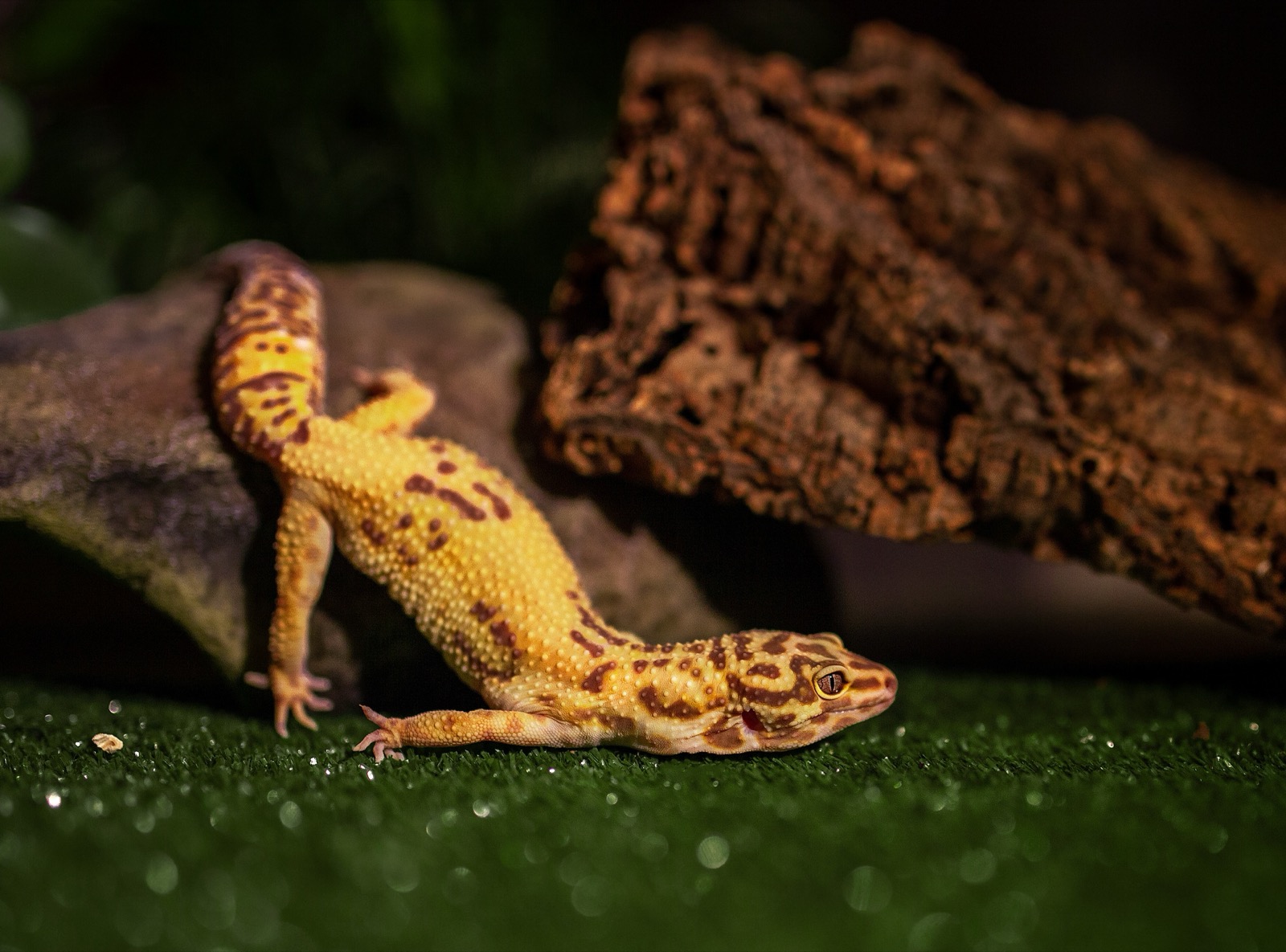
Stuck shed, known clinically as dysecdysis, is the single most common preventable injury in pet leopard geckos. The skin lifts in the body and tail but stays clamped on the toes, eye spectacles, or tail tip. Layered shed acts like a slow tourniquet. Most cases resolve in 10 minutes with a warm soak and a cotton swab. The rest are caused by a missing or dry humid hide, dehydration, no rough surfaces to rub on, low-grade illness, or a tank with too few hides. Fix the environment first, then handle the existing stuck shed gently.
Why Stuck Shed Happens
Leopard geckos are desert-edge animals. Their skin sheds in one large piece, which the gecko lifts by inflating with lymphatic fluid and then physically rubs off against rocks, branches, and the walls of a tight enclosed space. In captivity, the rub-off step fails when there is no moist hide, no rough surfaces, or the gecko is too dehydrated to inflate properly. Once a piece of shed dries on the body, it shrinks and tightens, especially on the toes and tail tip where blood supply is already minimal.
The five mechanisms behind stuck shed:
- Humid hide missing, dried out, or in the wrong temperature zone
- No rough surfaces (slate, cork, branches) to rub against
- Dehydration from no standing water or undergutloaded feeders
- Tank too open with no tight squeeze-through spaces
- Underlying illness (parasites, low body condition) reducing shed energy
The VCA Animal Hospitals guide on leopard gecko husbandry identifies the moist hide as the single most important non-heat element of a leopard gecko setup.
Humid Hide Missing or Failing
The humid hide is a small enclosed box with damp substrate that the gecko enters voluntarily as the shed approaches. Inside, humidity should run at 70 to 80 percent against a tank humidity of 30 to 40 percent. The most common stuck-shed cause is no hide at all. The second most common is a hide placed on the cool side, where humidity rises but temperature is too low to trigger shed entry.
Signs the humid hide is the trigger:
- No moist hide in the tank, or only a "cave" with dry substrate
- Hide placed on cool end, gecko never enters it
- Substrate inside hide is dry to the touch
- Hide opening too large, no enclosed feeling
- Gecko started shedding before owner noticed and added a hide
No Rough Surfaces
Geckos shed by physically peeling old skin against textured surfaces. A bare-bottomed tank with smooth plastic hides offers nothing to rub on, and the gecko ends up with skin still clinging to the head, tail tip, and feet 48 hours later. Slate tile, cork bark, and natural rock create the friction needed.
Signs missing rough surface is contributing:
- Tank décor is all smooth plastic or molded resin
- Substrate is paper towel only, with no textured items
- Stuck shed appears around the head, jaw line, and neck (the first contact zones during rubbing)
Dehydration
Leopard geckos in nature get most of their water from prey and from a brief seasonal humidity rise. In captivity, owners often skip the standing water dish (since geckos rarely drink visibly), and gut-loaded feeders carry less moisture than wild insects. The lymphatic fluid that lifts shed skin needs hydration to work. Dehydrated geckos shed in patches, with skin clinging in dry flakes rather than coming off in a clean sheet.
Signs dehydration is the trigger:
- Skin tenting on the side when gently pinched
- Sunken or wrinkled appearance to the tail base
- Sticky or dry mouth lining
- Mouth held slightly open during rest
- Bowel movements small, dry, or chalky
- Eyes look slightly sunken
Tank Too Open
Wild leopard geckos shed inside tight rock crevices that contact skin on all sides. In captivity, an open hide barely larger than the gecko works far better than a "cave" with an inch of clearance on every side. Without a snug surface, the lifting and rubbing step does not finish.
Signs the tank is too open:
- All hides are dome-style with open under-space
- Only one hide in the tank
- Tank has no contact-tight spaces against the substrate
Underlying Illness
Geckos with parasite loads, low body condition (lipid pads thin on tail and behind eyes), or recovering from injury produce poor sheds because the energy and hydration budget is reduced. Repeated stuck sheds over 3 cycles in a row, despite a correct humid hide, warrant a vet workup.
Signs illness is the trigger:
- Repeated stuck shed across multiple cycles with correct hide
- Weight loss, tail thinning ("rice noodle tail")
- Stool changes, undigested prey in feces
- Lethargy on the warm spot, low appetite
Stuck Shed on the Eye
Eye shed is a special category. Leopard geckos have eyelids, unlike most geckos, and the spectacle (lid covering) sheds with the rest of the body. If shed sticks under the eyelid or on the spectacle surface, mechanical removal at home risks permanent corneal damage. Eye stuck shed is a vet visit, not a home soak project.
Signs of eye shed problems:
- Eye held shut, gecko rubs face on décor repeatedly
- Visible film or papery layer on the eye
- Cloudy eye that does not clear after the shed completes
- Discharge, swelling, or asymmetric eye size
Safe Stuck Shed Removal Protocol
For body, tail, and toe stuck shed, this is the standard home protocol used by ARAV-affiliated reptile vets. Do not adapt it. Each step matters.
Step 1: Prepare the soak. Take a shallow plastic container. Fill with lukewarm water at 85°F (use a thermometer; not "warm to the hand"). Water depth: to the gecko's belly only, never deeper. Cold water shocks. Hot water damages skin. Deep water risks aspiration.
Step 2: Soak for 10 to 15 minutes. Place gecko in. Most will sit calmly. Some will try to climb out, which is normal. Stay with the gecko. Do not leave the room.
Step 3: Inspect after soaking. Remove gecko gently. Pat dry with paper towel. Examine toes, tail tip, and head closely under bright light. Stuck shed will now appear soft, white, and lifted at edges.
Step 4: Roll, do not pull. Take a dampened cotton swab. Gently roll stuck shed off the body and toes from front to back. Skin should release easily. If it resists, stop. Do not pull, peel, or tweeze.
Step 5: Repeat at 24 hour intervals if needed. Do not soak more than once per 24 hours. Excessive soaking causes its own dehydration and stress. If skin does not release after the second soak, schedule a vet visit.
Step 6: Fix the underlying cause. Replace or rebuild the humid hide, add rough surfaces, increase hydration, and correct any tank temperature gradient issues.
7-Day Plan to Prevent Future Stuck Shed
Build or Rebuild the Humid Hide
Plastic container with 2 inch side hole, 1 to 2 inches damp sphagnum moss inside, placed on the warm side. Mist daily.
Verify Warm Side Surface Temperature
Target 88 to 92°F basking, 78 to 82°F ambient warm side, 70 to 75°F cool side. Use an infrared temperature gun. Adjust under-tank heater or basking bulb wattage as needed.
Add Textured Décor
Cork bark, slate tile, sandstone, or grapevine branch. Minimum two textured items in the enclosure.
Provide a Shallow Water Dish
Clean and refill daily. Place on cool side, never directly under the basking bulb.
Gut-Load Feeders
Gut-load 24 hours before feeding. Crickets, dubia, or mealworms with carrot, sweet potato, dark leafy greens, or a commercial gut-load like Repashy SuperLoad.
Inspect All Toes and Tail Tip
Photograph for baseline. Re-inspect after every shed going forward.
Decide If Husbandry Is On Track
If a shed cycle has completed cleanly within 24 to 48 hours, continue. If stuck shed reappears despite a corrected humid hide, schedule a reptile vet visit for parasite screening.
What Not to Do
- Do not pull, peel, or tweeze stuck shed. Tearing skin causes bleeding and infection.
- Do not use oils, Vaseline, mineral oil, or coconut oil. They clog scales and pores.
- Do not soak in deep water. Geckos cannot swim well. Water above belly height is a drowning risk.
- Do not soak in hot water. Above 90°F damages skin.
- Do not skip the humid hide because "the gecko never uses it." The hide is used at night, often unobserved.
- Do not try to remove eye shed at home.
- Do not use sand, calci-sand, walnut shell, or any loose substrate that can stick to wet skin.
- Do not house two leopard geckos together. Mature males will fight, and even females can stress shed cycles by guarding the humid hide.
- Do not skip toe inspection after every shed. Toe loss from layered shed is silent and fast.
- Do not assume a single clean shed cycle means the husbandry is correct. Watch through 2 to 3 consecutive sheds.
Frequently Asked Questions
Stuck shed (dysecdysis) happens when humidity inside the moist hide drops below roughly 70 percent during the shed cycle, the gecko cannot find rough surfaces to rub against, or the gecko is dehydrated. Toes, eyes, and tail tips are the highest-risk spots because the skin is thinnest and circulation is most easily lost.
Soak the gecko in a shallow container of lukewarm water (85°F) for 10 to 15 minutes, with water depth only to the gecko's belly. After soaking, gently roll stuck skin off with a damp cotton swab. Never pull, never use tweezers, never use oils. If skin does not lift after two soaks 24 hours apart, see a reptile vet.
Tank humidity should sit at 30 to 40 percent normally, but the moist hide must run at 70 to 80 percent humidity continuously. Use damp sphagnum moss or paper towel inside a small enclosed hide on the warm side. The gecko enters the hide for several hours before and during the shed.
Yes, and it is the most common preventable injury in pet leopard geckos. Layered shed acts as a tourniquet, cutting blood supply within days to weeks. The toe goes black, dries, and falls off. Inspect toes after every shed, and remove any stuck skin within 48 hours of the shed completing elsewhere on the body.
Use a small sealed plastic container with a 2 inch hole cut in the side. Fill 1 to 2 inches deep with damp sphagnum moss or unbleached paper towels. Place on the warm side of the enclosure so internal temperature sits at 85 to 90°F. Re-mist daily so the moss stays damp but never soaking wet.
Hatchlings and juveniles shed every 1 to 2 weeks. Sub-adults shed every 3 to 4 weeks. Adults shed every 4 to 8 weeks depending on growth, season, and condition. A healthy shed completes in 24 to 48 hours, and most geckos eat the shed skin.
Yes. Wild leopard geckos eat shed skin to recover protein and minerals and to remove a scent trail predators could follow. Captive geckos do the same. If your gecko stops eating its shed, that can be an early sign of illness or low body condition.
Stuck shed over the spectacle or in the eye socket is a vet visit, not a home fix. Trying to remove it can tear the spectacle and cause permanent blindness. Schedule a reptile vet within 48 hours, and run the humid hide on a steady 75 percent humidity in the meantime.
Yes. Dehydrated geckos have less moisture in the lymphatic fluid that lifts the old skin during shedding. Offer fresh water daily, mist the humid hide nightly, and gut-load feeder insects with carrot or sweet potato 24 hours before feeding. Skin tenting on the side or sunken eyes both suggest dehydration.
The Bigger Picture
A leopard gecko with stuck shed is telling you the humid hide failed somewhere in the last week. Toe loss is the cost of ignoring it. Fix the hide, add rough surfaces, hydrate the gecko, and run the shed protocol once. If shed problems repeat through three cycles after the fix, that signals a deeper issue that needs a vet. The same diagnostic logic applies to other reptiles you might keep. Our guide on bearded dragons that stop eating walks through the same temperature-and-UVB framework, and our guide on crested geckos refusing food covers the high-humidity side of gecko husbandry where stuck shed almost never occurs but other problems do. Reptile keeping is a system.
Every gecko's environment is different based on tank size, room temperature, and existing décor. PawMatch AI factors in your gecko's age, weight, and current setup to recommend the exact humid hide, substrate, and gut-load that fit. Free, takes 30 seconds.
Stop Guessing. Get Matched.
Every leopard gecko is different. PawMatch AI uses your gecko's age, weight, enclosure size, and current setup to recommend the exact humid hide, substrate, water dish, and gut-load that fit. Free, personalized, takes 30 seconds.
Find My Reptile's Match →