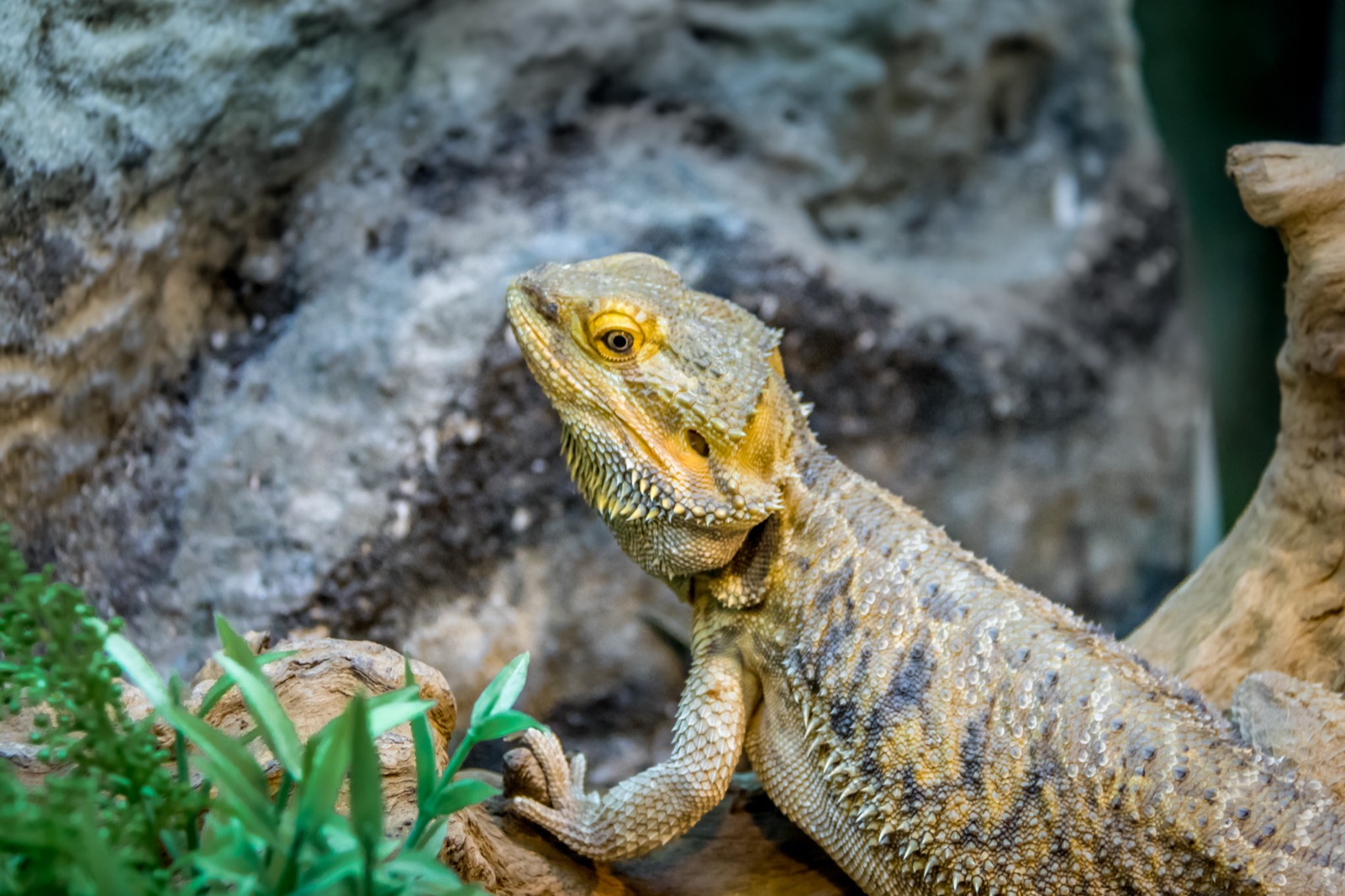
Bearded Dragon Not Eating? The 6 Real Causes and the 7-Day Diagnostic Protocol
A healthy bearded dragon refusing food is almost always a husbandry problem, not a medical one. Find the temperature, UVB, or brumation trigger, fix it, and most dragons start eating again within a week.
A bearded dragon that stops eating triggers panic in most owners. In dragons under 12 months old, the cause is almost always husbandry: basking temperature too low, UVB output expired, or prey size wrong. In dragons over 12 months, brumation is the most common explanation and is not a medical issue. Illness accounts for a minority of cases. Run through the six causes below in order, correct what you find, and most dragons resume eating within 5 to 7 days.
Why Bearded Dragons Stop Eating
Bearded dragons are ectotherms. Their entire digestive system runs on heat. A dragon that cannot reach 95 to 110°F on its basking surface physically cannot digest insect protein, and the body shuts off appetite to prevent rotting food sitting in the gut. This single mechanism explains the majority of cases. Layer on UVB issues (which suppress calcium metabolism and trigger anorexia), seasonal brumation, prey-size mistakes, and the occasional parasite load, and you have a clean diagnostic ladder.
The six causes ranked by frequency in dragons under 3 years old:
- Basking temperature too low or no proper heat gradient
- UVB bulb expired, too far from dragon, or wrong type
- Brumation (in dragons over 12 months old, usually fall and winter)
- Impaction from oversized prey, loose substrate, or dehydration
- Stress from enclosure changes, new pets, or visible reflections
- Underlying illness: parasites, mouth rot, atadenovirus, MBD
The Merck Veterinary Manual lists inappropriate temperature and lighting as the leading cause of anorexia in pet lizards. Most "sick" dragons are actually cold dragons.
Basking Temperature Too Low
Bearded dragons evolved in central Australia where ground surface temperatures regularly hit 110°F. A dragon needs to reach a digestive temperature of around 95 to 105°F (adults) or 100 to 110°F (juveniles) on the actual basking surface, not the air around it. Below this, the gut slows, protein ferments, and appetite vanishes. The air temperature reading on a stick-on dial means almost nothing.
Signs basking temperature is the trigger:
- Dragon basks for long periods but stays flat and dark
- Stools become small, dry, or stop entirely
- Dragon hides more than basks during the day
- Insects offered are watched and ignored
- Behavior worsens in winter as room air drops
UVB Issues
UVB drives vitamin D3 synthesis, which drives calcium absorption, which drives muscle function, appetite, and bone growth. A dragon with weak or no UVB will stop eating, develop tremors, and progress to metabolic bone disease (MBD) within months. Coil and compact UVB bulbs underperform and have caused photo-kerato-conjunctivitis. The reptile community has standardized on linear T5 HO tubes from Arcadia or Zoo Med ReptiSun.
Signs UVB is the trigger:
- Bulb is over 12 months old (even if it still lights up)
- Compact, coil, or spiral UVB bulb in use
- UVB tube mounted behind glass, mesh blocks more than 30 percent of UVB
- Tube shorter than half the tank length
- Dragon trembles when reaching for food, jaw looks soft, limbs bow
Brumation
Brumation is the reptile equivalent of mammalian hibernation. Dragons over 12 months old will often slow or stop eating for 4 to 12 weeks during fall and winter, even with stable indoor conditions, because internal photoperiod and circadian cues are stronger than enclosure conditions. This is normal, not a problem. Reptiles Magazine confirms brumation as a healthy adult behavior that does not require veterinary intervention provided the dragon enters in good body condition.
Signs brumation is the trigger:
- Dragon is over 12 months old
- Time of year is October through March (Northern Hemisphere)
- Dragon sleeps more, hides under décor or substrate, often in the cool end
- Refuses food but maintains weight or loses only 5 to 10 percent
- Eyes look clear, no discharge, no jaw swelling
- Dragon is alert when handled, just sleepy
Impaction
Impaction is a partial or full blockage of the GI tract. Common causes are loose particulate substrate (sand, walnut shell, repti-bark), prey larger than the space between the dragon's eyes, dehydration, or temperature too low to push the meal through. Impacted dragons stop eating, strain to defecate, and progress to lethargy and death if untreated.
Signs impaction is the trigger:
- No stool for 7 to 14 days in a regularly eating dragon
- Visible firm lump along the belly or spine
- Hind limb dragging, partial paralysis
- Straining with no output
- Recent feeding of mealworms, superworms, or large crickets in a juvenile
Stress
Bearded dragons read environment constantly. A move, new tank, new substrate, new cagemate, a reflection in glass, a barking dog in the same room, or even a change in furniture across the room can trigger a stress response that suppresses appetite for 1 to 3 weeks. Stress-induced anorexia in healthy dragons is almost always self-limiting if the trigger is removed.
Signs stress is the trigger:
- Glass surfing (scrambling at the front wall)
- Black beard for long periods with no obvious threat
- Hiding in cool end during the day with no fever or illness
- Sudden anorexia after a tank change, move, or new pet
- Dragon visible to itself in glass at low angles
Underlying Illness
Roughly 10 to 15 percent of non-eating dragons have a medical cause. Common ones are intestinal parasites (pinworms, coccidia), atadenovirus, mouth rot (stomatitis), respiratory infection, yellow fungus (CANV), and impaction complications. These need a reptile-experienced vet, not a general practice. Use ARAV's vet finder to locate one.
Signs illness is the trigger:
- Husbandry verified correct for 14+ days, still not eating
- Sunken eyes, dimpled fat pads behind the eyes
- Yellow or gray plaques inside the mouth
- Mucus from nostrils or mouth, audible breathing
- Loose, smelly, bloody, or worm-containing stool
- Weight loss above 10 percent of body weight
- Black beard that will not lift for over 48 hours
7-Day Diagnostic Protocol
Measure Basking Surface
Buy a digital infrared temperature gun. Measure the basking surface at the spot the dragon actually sits. Record morning, midday, and afternoon temps. Note current UVB bulb brand, type, age, and distance from dragon.
Replace Bulbs If Needed
Install or verify Arcadia 12 percent or Zoo Med ReptiSun T5 HO if missing. Replace any UVB tube over 12 months old. Adjust basking bulb wattage to hit 95 to 110°F surface. Confirm photoperiod is 12 to 14 hours summer, 10 to 12 hours winter.
Remove Loose Substrate
Replace with ceramic tile, sealed slate, paper towel, or non-loop reptile carpet. Give a 15-minute warm bath at 90 to 95°F. Note whether dragon drinks or defecates during the bath.
Cover Three Sides
Cover three sides of the enclosure with solid backgrounds. Move tank if it sits near foot traffic, a TV, or another pet's line of sight. Stop handling for the remainder of the protocol.
Offer High-Value Prey
Offer high-value live prey moved with feeding tweezers: dubia roaches, black soldier fly larvae, or hornworms. No mealworms or superworms in juveniles. Dust with calcium without D3 (5 days per week) or with D3 (2 days per week) depending on UVB setup. Offer chopped collard greens, mustard greens, dandelion greens, or grated butternut squash in a shallow dish.
Weigh the Dragon
Weigh on a digital kitchen scale (gram accuracy). Record. Compare to last known healthy weight if available. Healthy adults sit at 350 to 600 grams; juveniles vary widely by age.
Decide
Eating greens or insects? Continue the corrected husbandry. Not eating, no weight loss, age over 12 months, season is fall or winter? Likely brumation. Continue baseline care and reweigh weekly. Not eating, weight loss over 5 percent, any clinical signs? Book a reptile vet within 48 hours.
What Not to Do
- Do not force-feed insects or slurry without vet guidance. Aspiration pneumonia kills more dragons than the original anorexia would have.
- Do not assume a dragon is sick before verifying basking surface temperature with an IR gun.
- Do not use any compact, coil, or spiral UVB bulb. Linear T5 HO only.
- Do not put two dragons in one enclosure regardless of size, sex pairing, or perceived bond.
- Do not use sand, calci-sand, walnut shell, or any loose substrate for any dragon under 18 months.
- Do not bathe the dragon's head under water. Water in the nostrils causes aspiration.
- Do not give human vitamins, calcium tablets, or "reptile boosters" beyond standard calcium and multivitamin dusting.
- Do not skip the UVB tube replacement at 12 months even if it still lights up. UVB output dies before visible light does.
- Do not handle a stressed or sick dragon "to bond" with it. Handling resets the stress clock to zero.
- Do not feed lettuce, spinach, kale, or avocado. All cause harm at regular feeding levels.
Frequently Asked Questions
The six most common causes are brumation in dragons over 12 months old, basking temperature below 95°F, weak or expired UVB, impaction from oversized prey or loose substrate, environmental stress, and underlying illness like parasites or mouth rot. Husbandry causes account for roughly 80 percent of cases in dragons under 18 months.
A healthy adult with good fat reserves can safely skip food for 1 to 2 months during brumation. A juvenile under 12 months should never go more than 3 to 5 days. Weight loss above 10 percent of body weight or lethargy beyond 7 days requires a reptile vet visit.
Brumating dragons are calm, alert when handled, hold weight steadily, and produce normal stools on active days. Sick dragons lose weight rapidly, show sunken eyes, have non-stop black beard episodes, produce smelly or runny stools, or develop jaw swelling. Brumation rarely occurs before 12 months of age.
Juveniles need 100 to 110°F on the actual basking surface. Adults need 95 to 105°F. The cool side should sit at 75 to 85°F. Nighttime can drop to 65 to 75°F with no light. Measure surface temperature with an infrared temp gun on the basking spot, not the air above it.
Linear T5 HO tubes from Arcadia or Zoo Med last 12 months of usable UVB, then need replacement even if they still produce visible light. Compact and coil bulbs are not recommended. Mount a 22 inch or 34 inch T5 HO 12 percent or 14 percent tube across half the enclosure with no glass or mesh blocking it.
Normal for adults over 18 months. Adult dragons shift to 70 to 80 percent plant matter and 20 to 30 percent insects. If a juvenile refuses insects, the cause is usually temperature too low to digest protein or prey too large. Offer prey no wider than the space between the dragon's eyes.
Yes. A new enclosure, move, change in lighting, new pet in the room, or visible reflection causing a constant threat response can suppress appetite for 1 to 3 weeks. Cover three sides of the tank with backgrounds, move it away from high-traffic areas, and resist handling for 7 to 10 days after any change.
Within 48 hours if you see sunken eyes, no stool for over 14 days, weight loss over 10 percent, jaw swelling, black beard that will not lift, runny or bloody stools, or any seizure activity. Otherwise correct husbandry first and reassess at day 7.
Start with high-value live prey: dubia roaches, black soldier fly larvae, or hornworms moved with feeding tweezers to trigger the strike response. For greens, try fresh collard greens, mustard greens, or grated butternut squash. Avoid mealworms (high chitin, low nutrition) and never use spinach, lettuce, or kale as a base green.
The Bigger Picture
A bearded dragon refusing food is the symptom, not the diagnosis. Run the husbandry checklist before the vet checklist, because the husbandry checklist solves 8 out of 10 cases. Owners who fix lighting, temperature, and substrate in the first 7 days save themselves weeks of guessing and a $400 vet bill. If you also keep other reptiles, the same diagnostic logic applies. Our guides on stuck shed in leopard geckos, ball pythons refusing food, and tortoise feeding strikes walk through the same temperature-first, illness-last decision tree. Reptile husbandry is a system, not a list of products, and the species-specific differences matter more than most pet store advice acknowledges.
Every reptile's environment is different based on enclosure size, room temperature, and lighting setup. PawMatch AI factors in your dragon's age, weight, and current setup to recommend the exact UVB tube, basking bulb, substrate, and feeder insects that fit. Free, takes 30 seconds.
Stop Guessing. Get Matched.
Every bearded dragon is different. PawMatch AI uses your dragon's age, weight, enclosure size, and current setup to recommend the exact UVB tube, basking bulb, substrate, and feeder insects that fit. Free, personalized, takes 30 seconds.
Find My Reptile's Match →